minfeub is back!
[157] Friedrich Nietzsche, *The Birth of Tragedy,* trans. Walter Kaufmann (New York: Vintage, 1967), sec. 9.
[159] [TRANS: “Buggers,” from the Middle French for “Bulgarians,” originally referred to a sect of heretics from Bulgaria suspected of ‘unnatural’ practices, and later became a general term for heretics before taking on its modern meaning.]
[160] On the nature of the epic “library” (its imperial character, the role of priests, the circulation between sanctuaries and cities), see Charles Autran, *Homere et les origines sacerdotales de I’epopee grecque,* 3 vols. (Paris: Denoel, 1938–1944).
[161] See the techniques for the interpretation of books in the Middle Ages, and the extreme attempt by Joachim de Flore, who, on the basis of similarities between the two Testaments, induces from within a third state or proceeding. *L ‘Evangile eternel* (Paris: Rieder, 1928).
[162] For example, Exodus 19:2: “For *they* were departed from Rephidim, and were come to the desert of Sinai, and had pitched in the wilderness, and there *Israel* camped before the mount.”
[164] Louis Althusser, “Ideologic et appareils ideologiques d’Etat,” *La pens’ee,* no. 151 (May-June 1970), pp. 29–35.
[165] In *Problems of General Linguistics,* trans Mary Elizabeth Meek (Coral Gables, Fla.: University of Florida Press, 1971), pp. 217–222, Emile Benveniste speaks of a proceeding, or process *(proces).*
[166] One aspect of Strindberg’s genius was to elevate the couple, and the domestic squabble, to an intense semiotic level, and to make it a creative factor in the regime of signs. This was not the case with Jouhandeau. Klossowski, on the other hand, was able to invent new sources and conflicts for the passional cogito for two, from the standpoint of a general theory of signs; *Les lois de I’hospilalile* (Paris: Gallimard, 1965).
[168] On these two forms of redundancy, see the entry on “Redondance” in Andre Martinet, *La linguistique. Guide alphab’etique* (Paris: Danoel, 1969), pp. 331–333.
[169] Henry Miller, *Sexus,* p. 229. The theme of the idiot is itself quite diverse. It is an explicit part of the cogito according to Descartes, and feeling according to Rousseau. Russian literature, however, takes it down other paths, beyond consciousness or passion.
season two started with the host, picked by rachel. after season 1.5, and as summer starts to end, she wanted to explore some horror movies, and she loved Bong Joon Ho’s THE HOST when she saw it for the first time 2 years ago
[170] Gherasim Luca, *Le chant de la carpe* (Paris: Soleil Noir, 1973), pp. 87–94.
[171] For example, when the whites introduced money to the Siane of New Guinea, the latter started off by translating the bills and coins into two categories of nonconvertible goods. See Maurice Godelier, “Economie politique et anthropologic economique,” *L’Homme,* vol. 14, no. 3 (September-December 1964), p. 123.
[172] On these translations-transformations, see LeRoi Jones, *Blues People* (New York: Morrow, 1963), chapters 3–7.
[174] Mary Barnes and Joseph Berke, *Mary Barnes: Two Accounts of a Journey through Madness* (New York: Harcourt Brace Jovanovich, 1971), p. 233. The failure of the antipsychi-atry experiment of Kingsley Hall apparently was due as much to these internal factors as to external circumstances.
[175] Carlos Castaneda, *Journey to Ixtlan* (New York: Simon and Schuster, 1973), p. 14.
[176] “Generative” and “transformational” are Chomsky’s terms. For him, the transformational is precisely the best and most profound way of realizing the generative; we, however, are using the terms in a different sense.
[177] Michel Foucault has developed, in successive levels, a theory of statements addressing all of these problems. (1) In *The Archaeology of Knowledge,* trans. A. M. Sheridan Smith (New York: Pantheon, 1982), Foucault distinguishes two kinds of “multiplicities,” of content and of expression, which are not reducible to relations of correspondence or causality, but are in reciprocal presupposition. (2) In *Discipline and Punish,* trans. A. M. Sheridan Smith (New York: Vintage, 1975), he looks for an agency capable of accounting for the two imbricated, heterogeneous forms, and finds it in assemblages of power, or micropowers. (3) But these collective assemblages (school, army, factory, hospital, prison, etc.) are only degrees or singularities in an abstract “diagram,” which for its part has only matter and function (the unspecified multiplicity of human beings to be controlled). (4) *The History of Sexuality. Vol.* *l.Anlntro-duction,* trans. Robert Hurley (New York: Pantheon, 1978), takes yet another direction since assemblages are no longer related to and contrasted with a diagram, but rather to a “biopoli-tics of population” as an abstract machine. Our only points of disagreement with Foucault are the following: (1) to us the assemblages seem fundamentally to be assemblages not of power but of desire (desire is always assembled), and power seems to be a stratified dimension of the assemblage; (2) the diagram and abstract machine have lines of flight that are primary, which are not phenomena of resistance or counterattack in an assemblage, but cutting edges of creation and deterritorialization.
[178] Louis Hjelmslev proposed a very important conception of “matter” or “purport” *(sens)* as unformed, amorphous, or formless: *Prolegomena to a Theory of Language,* trans. Francis J. Whitfield (Madison: University of Wisconsin Press, 1969), sec. 13, pp. 47–60, and *Essais linguistiques* (Paris: Minuit, 1971), pp. 58ff. (see also the preface by Francois Rastier, p. 9).
[179] The distinction between indexes, icons, and symbols comes from C. S. Peirce, *Collected Papers,* ed. Charles Hartshorne and Paul Weiss (Cambridge, Mass.: Harvard University Press, 1931–1958). But his distinctions are based on signifier-signified relations (contiguity for the index, similitude for the icon, conventional rule for the symbol); this leads him to make the “diagram” a special case of the icon (the icon of relation). Peirce is the true inventor of semiotics. That is why we can borrow his terms, even while changing their connotations. First, indexes, icons, and symbols seem to us to be distinguished by territoriality-deterritorializa-tion relations, not signifier-signified relations. Second, the diagram as a result seems to have a distinct role, irreducible to either the icon or the symbol. On Peirce’s fundamental distinctions and the complex status of the diagram, one may refer to Jakobson’s analysis, “A la recherche de l’essence du langage,” in *Problemes du langage,* ed. Emile Benveniste (Paris: Gallimard, 1966).
[180] [TRANS: Antonin Artaud, “To Have Done With the Judgement of God,” *Selected Writings,* ed. Susan Sontag (New York: Farrar, Straus and Giroux, 1976), p. 571.]
lots of slow burn buildup until the big reveal that a major plot element that was diverting like 2/3 the playtime turned out to be not real, and then the protag got a lobotomy that destroyed all the stupid parts of his brain so he was competent now… i still don’t get who or what is supposed to be “host"ing what. it’s good that the family members are able to help one another at least
[181] [<sub>TRANS</sub>: Jules Cotard, *Etard sur les maladies cerebrates et mentales* (Paris: Brail-liere, 1891).]
[182] [TRANS: Dr. Schreber’s *Memoirs,* quoted by Sigmund Freud, *Notes on a Case ofPara-noia,* vol. 12, *Standard Edition,* trans. James Strachey (London: Hogarth Press, 1957), p. 17.]
[183] William Burroughs, *Naked Lunch* (New York: Grove Press, 1966), p. 131.
[184] The opposition program-phantasy appears clearly in the work of Michel de M’uzan, in relation to a case of masochism. See M’uzan in *La sexualit’e perverse,* ed. Isle and Robert Barande et al. (Paris: Payot, 1972), p. 36. Although he does not specifically discuss this opposition, M’uzan uses the notion of the program to question the themes of Oedipus, anxiety, and castration.
[185] See Kurt Lewin’s description of the flow of meat in the American family, “Psychological Ecology,” *Field Theory in Social Science,* ed. Dorwin Cartwright (New York: Harper and Brothers, 1951), pp. 170–187.
[186] Albert Dalcq, *L’oeufet son dynamisme organisateur* (Paris: Albin Michel, 1941), p. 95: “Forms are contingent upon kinematic dynamism. It is secondary whether or not an orifice forms in the germ. All that counts is the process of immigration itself; what yields an orifice fissure or primitive line is not invagination, but pure chronological and quantitative variations.”
[189] [TRANS: *Jouissance:* “pleasure, enjoyment, orgasm.” In Lacanian psychoanalysis, the object of desire is irrevocably lost and the subject eternally split. *Jouissanceis* doubly impossible: life is a *manque-a-jouir,* read as “lack of enjoyment,” because the true object of desire is unattainable; and it is a *manque-a-jouir,* read as “a lack to be enjoyed,” because *jouissance* as the orgasmic plenitude of union with a substitute object means the annulment of the constitutionally split subject. One of the necessary terms, the subject or the object, is always missing.]
[190] Roger Dupouy, “Du masochisme,” *Annales m’edico-psychologiques,* series 12, vol. 2 (1929), p. 405.
[192] On courtly love, and its radical immanence rejecting both religious transcendence and hedonist exteriority, see Rene Nelli, *L’erotique des troubadours* (Paris: Union Generale d’Editions, 1974), in particular, vol. l,pp. 267, 316, 358, and 370, and vol. 2, pp. 47, 53, and 75. (Also vol. 1, p. 128: one of the major differences between chivalric love and courtly love is that for “knights the valor by which one merits love is always *external* to love,” whereas in the system of courtly love, the test is essentially *internal* to love; war valor is replaced by “sentimental heroism.” This is a mutation in the war machine.)
[193] Robert Van Gulik, *Sexual Life in Ancient China* (Leiden: Brill, 1961); and Jean-Francois Lyotard’s discussion of it, *Economie libidinale* (Paris: Minuit, 1974), pp. 241 -251.
-avery
[194] Gregory Bateson, *Steps to an Ecology of Mind* (New York: Ballantine Books, 1972), p. 113.
[195] Artaud, *H’eliogabale,* in *Oeuvres Completes* (Paris: Gallimard), pp. 50–51. It is true that Artaud still presents the identity of the One and the Multiple as a dialectical unity, one that reduces the multiple by gathering it into the One. He makes Heliogabalus a kind of Hegelian. But that is a manner of speaking, for from the beginning multiplicity surpasses all opposition and does away with dialectical movement.
[196] [TRANS: Artaud, “The Body Is the Body,” trans. Roger McKeon, *Semiotext(e), Anti-Oedipus,* vol. 2, no. 3 (1977), p. 59.]
[197] Artaud, *The Peyote Dance* (translation of *Les Tarahumaras),* trans. Helen Weaver (New York: Farrar, Straus and Giroux, 1976), pp. 38–39 [translation modified].
[198] [TRANS: Carlos Castaneda, *Tales of Power (New* York: Simon and Schuster, 1974), p. 125.]
[202] Josef von Sternberg, *Funin a Chinese Laundry(Nev/* York: MacMillan, 1965), p. 324. [TRANS: The English version of this phrase reads “merciful darkness.”]
[203] [TRANS: “Blumfeld. An Elderly Gentleman.” *The Complete Stories of Franz Kafka,* ed. Nahum N. Glazer (New York: Schocken, 1983), pp. 183–205.]
[204] On this ballet, see Jean Barraque’s *Debussy* (Paris: Seuil, 1977), which cites the text of the argument, pp. 166–171.
[205] See Otto Isakower, “Contribution a la psychopathologie des phenomenes associes a I’endormissement,” *Nouvelle revue de psychanalyse,* no. 5 (Spring 1972), pp. 197–210; Bertram D. Lewin, “Le sommeil, la bouche et l’ecran du reve,” ibid., pp. 211–224; and Rene Spitz, with the collaboration of W. Godfrey Cobliner, *The First Year of Life* (New York: International Publishers, 1965), pp. 75–82.
[206] Henry Miller, *Tropic of Capricorn* (New York: Grove Press, 1961), pp. 121–123.
I liked this one!
[207] Klaatsch, “L’evolution du genre humain,” in Kreomer, *L’Univers et I’humanit’e,* vol. 2: “In vain, we tried to find a trace of red edging around the lips of live, young chimpanzees, which resemble man so closely in all other respects.... How would the face of the most gracious young woman look if her mouth was a stripe between two white borders?... In addition, the pectoral region of the anthropoid possesses the two nipples of the mammary glands, but folds of fat comparable to the breasts never form.” And Emile Devaux’s formula in *Trois problemes: I’espece, I’instinct, rhomme(Paris:* Le Francois, 1933), p. 264: “The child made the woman’s breast, and the mother the child’s lips.”
[208] Face exercises play an essential role in the pedagogical principles of J.-B. de la Salle. Even Ignacio de Loyola integrated his teaching landscape exercises or “compositions of place” relative to the life of Christ, hell, the world, etc. As Barthes points out, this involves skeletal images subordinated to a language, but also active schemas to be completed, colored in, like those found in catechisms and devotional handbooks *[Sade, Fourier, Loyola,* trans. Richard Miller (New York: Hill and Wang, 1976)—Trans.]
[209] Chretien de Troyes, *The Story of the Grail,* trans. Robert White Linker (Chapel Hill: University of North Carolina Press, 1952), pp. 88–89. A similar scene, dominated by the “machinery” of the boat, is found in Malcolm Lowry’s novel *Ultramarine* (Philadelphia: Lippincott, 1962), pp. 159–172: a pigeon drowns in waters infested by sharks, “as if a red leaf should fall on a white torrent” (p. 170), and this inevitably evokes the image of a bloody face. Lowry’s scene is imbedded in such different elements and is so particularly organized that there can be no question of influence by Chretien de Troyes’s scene, only confluence with it. This makes it an even better confirmation of the existence of a veritable black hole or red mark-white wall abstract machine (snow or water).
[210] [TRANS: Continued in 10, “1730: Becoming-Intense ...,” pp. 232–309]
[211] Sergei Eisenstein, *Film Form and Film Sense,* trans. Jay Leyda (New York: Meridian Books, 1957), p. 195–199: “‘The kettle began it...’ Thus Dickens opens his *Cricket on the Hearth....* What could be further from films!... But, strange as it may seem, movies also were boiling in that kettle.... As soon as we recognize this kettle as a typical close-up, we exclaim:’... of course this is the purest Griffith.’... Certainly, this kettle is a typical Griffith-esque close-up. A close-up saturated, we now become aware, with typically Dickens-esque ‘atmosphere,’ with which Griffith, with equal mastery, can envelop the severe face of life in *Way Down East,* and the icy cold moral face of his characters, who push the guilty Anna onto the shifting surface of a swirling ice-break” (the white wall again).
[212] Jacques Lizot, *Le cercle desfeux* (Paris: Seuil, 1976), pp. 34ff.
[213] On the stranger grasped as Other, see Andre Haudricourt, “Nature et culture dans la civilisation de l’igname: l’origine des clones et des clans,” *L’Homme* vol. 4, no. 1 (January-April 1964), pp. 98–102. And Robert Jaulin, *Gens de soi, gens de I’autre* (Paris: Union Generate d’Editions, 1973), preface, p. 20.
[214] Maurice Ronai demonstrates that the landscape, the reality as well as the notion, is tied to a very particular semiotic system and very particular apparatuses of power: this is one of the sources of geography, as well as a principle behind its political subordination (the landscape as “the face of the fatherland or nation”). See “Paysages,” in *H’erodote,* no. 1 (January-March 1976), pp. 125–159.
[215] See Jacques Mercier, *Ethiopian Magic Scrolls,* trans. Richard Pevear (New York: Braziller, 1979). And “Les peintures des rouleaux protecteurs ethiopiens,” *Journal of Ethiopian Studies,* vol. 14, fasc. 2 (Summer 1974), pp. 89–106 (“The eye stands for the face which stands for the body.... The pupils are drawn in the inner spaces.... That is why we must speak of directions of magic meaning based on eyes and faces, with the use of traditional decorative motifs such as cross-hatching, check patterns, four-pointed stars, etc.”). The power of Negus, with his ancestry going back to Solomon and his court of magicians, was based on his ember-eyes, operating like a black hole, angelic or demonic. Mercier’s analyses in their entirety constitute an essential contribution to the analysis of facial functions.
[216] For Eisenstein’s own distinction between his conception of the close-up and Griffith’s, see *Film Form and Film Sense.*
I enjoyed the slow start and build up, and the revelation of the fish critter was very scenic. It felt like their were themes that didn’t last film wide, and instead more so in sections; the start felt like a discussion over the consequences of pollution, the end discussing problems of the american military complex faffing about where they really shouldn’t be. The middle felt a bit more messy to me however, the threat of the “virus” was interesting, and although I enjoyed seeing how things unfolded in film, I was reminded of the issues with the covid outbreak and the distrust of scientists in the film and lack of public concern (escaping a hospital while supposedly infected with a virus) was… iffy. The action, horror, and family themes were nice though, and I enjoyed watching the experience :3
[217] This is a recurring theme in horror novels and science fiction: the eyes are in the black hole, not the opposite (“I see a luminous disk emerging from the black hole, resembling eyes”). Comic books, *Circus* No. 2, for example, depict black holes populated by faces and eyes, and the traversing of that black hole. On the relation of eyes to holes and walls, see the texts and drawing of Jean-Luc Parant, in particular, *Lesyeux MMDVI* (Paris: Bourgois, 1976).
[218] See Jean Paris’s analyses, *L’espace et le regard* (Paris: Seuil, 1965), vol. 1, chapter 1 (also, the evolution of the Virgin and the variation in the relations between her face and that of the infant Jesus: vol. 2, chapter 2).
[219] D. H. Lawrence, “Melville’s ‘Typee’ and ‘Omoo,’” *Studies in Classic American Literature* (New York: Thomas Seltzer, 1923), p. 197. Lawrence’s essay begins with a lovely distinction between terrestrial and maritime eyes.
[223] Wilhelm Reich’s *Character-Analysis,* trans. Theodore P. Wolfe (New York: Farrar, Straus and Giroux, 1970), considers the face and faciality traits to be among the first pieces of character “armor” and the first ego resistances (the “occular ring,” followed by the “oral ring”). The organization of these rings occurs on planes perpendicular to the “orgonotic streaming” and oppose the free movement of this streaming throughout the body. Hence the importance of eliminating the armor and “dissolving the rings.” See pp. 370ff.
[225] D. H. Lawrence, *Kangaroo* (London: William Heinemann, 1964), p. 339.
[226] See Jules Amedee Barbey d’Aurevilly, *The Diaboliques,* trans. Ernest Boyd (New York: Knopf, 1925). Of course, the work of Maupassant is not limited to tales; he also wrote novellas, or novels containing elements of the novellas. For example, the episode of Lison in chapter 4 of *Une vie:* “It was at the time of Aunt Lison’s sudden impulse.... It was never spoken of again, and remained as though enveloped in fog. One evening, Lise, then twenty, threw herself into the water without anyone having an inkling why. Nothing in her life or manners, could have allowed one to predict this act of madness.”
[227] Vladimir Propp, *Morphology of the Folktale,* 2<sup>nd</sup> ed., trans. Laurence Scott (Austin: University of Texas Press, 1968).
[229] [TRANS: “In the Cage,” *The Novels and Tales of Henry James* (Fairfield, N. J.: Augustus M. Kelley, 1979), vol. 11, p. 469.]
[230] Nathalie Sarraute, in “Conversation and Sub-conversation,” *The Age of Suspicion,* trans. Maria Jolas (New York: Braziller, 1963), shows how Proust analyzes the smallest movements, glances, or intonations. However, he apprehends them through memory, he assigns them a “position,” he thinks of them as a sequence of causes and effects; “he rarely... tried to relive them and make them relive for the reader in the present, while they were forming and developing, like so many tiny dramas, each one of which has its adventures, its mystery and its unforeseeable ending” (p.92).
[231] [TRANS: The French translation consulted by the authors reversed the meaning of this passage. The original reads: “She knew at last so much that she had quite lost her earlier sense of merely guessing. There were no different shades of distinctions—it all bounded out.” *In the Cage, The Novels and Tales of Henry James,* vol. 11, p. 472.]
8/12 (originally a 9, downranked after reflecting on lobotomy)
[232] S0ren Kierkegaard, *Fear and Trembling,* trans. Walter Lowrie (Princeton, N.J.: Princeton University Press, 1954), pp. 46ff.
[233] [<sub>TRANS</sub>: Scott Fitzgerald, “The Crack-up,” in *The Crack-up. With Other Uncollected* *Pieces,* ed. Edmund Wilson (New York: New Directions, 1956), p.69.]
[235] Pierrette Fleutiaux, *Histoire du gouffre et de la lunette et autres nouvelles* (Paris: Jul-liard, 1976), pp. 9–50.
[236] In another novella in the same collection, “Le dernier angle de transparence” (The last angle of transparency). Fleutiaux distinguishes three lines of perception, but without applying a preestablished schema. The hero has *molar perception,* which takes in overall aggregates and clear-cut elements, well-distributed areas of fullness and emptiness (this perception is coded, inherited, and overcoded by the walls: Don’t miss you chair, etc.). But he is also caught up in a *molecular perception* composed of fine and shifting segmentations and autonomous traits, where holes appear in what is full and microforms in emptiness, between two things, where everything “teems and stirs” with a thousand cracks. The hero’s problem is that he cannot make up his mind between the two lines and constantly jumps from one to the other. Will he be saved by a third line of perception, the *perception of escape,* a “hypothetical direction barely hinted at” by the angle of the two others, the “angle of transparency” opening a new space?
[237] Fernand Deligny, *Cahiers de I’immuable,* vol. 1, *Voix et voir, Recherches,* no. 8 (April 1975).
[238] Henri Laborit wrote a book “in praise of flight,” *Eloge de lafuite* (Paris: Laffont, 1976). In it, he demonstrates the biological importance of lines of flight among animals, but his approach is too formalistic; among human beings, he thinks flight is associated with values of the imaginary functioning to increase one’s “information” about the world.
[240] Leon Shestov, *Chekhov and Other Essays* (Ann Arbor: University of Michigan Press, 1966), pp. 8–9 [translation modified to agree with the French edition cited by the authors—Trans].
[241] Jacques Lizot, *Le cercle des Feux* (Paris: Seuil, 1976), p. 118
[242] Claude Levi-Strauss, *Structural Anthropology,* trans. Claire Jacobson and Brooke Grundfest Schoeft (New York: Basic Books, 1963): “Do Dual Organizations Exist?” pp. 132–163.
[243] See two exemplary studies in *African Political Systems,* ed. Meyer Frotes and E. E. Evans-Pritchard (New York: Oxford University Press, 1978): Fortes, “The Political System of the Tellensi of the Northern Territories of the Gold Coast,” pp. 239–271, and Evans-Pritchard, “The Nuer of the Southern Sudan,” pp. 272–296.
-recima from minfueb season 2
[244] Georges Balandier analyzes the ways in which ethnologists and sociologists define this opposition: *Political Anthropology,* trans. A. M. Sheridan Smith (New York: Pantheon, 1970), pp. 137–143.
[245] On the initiation of a shaman and the role of the tree among the Yanomami Indians, see Jacques Lizot, *Le cercle des feux,* pp. 127–135: “Between his legs a hole is hastily dug in which they place the base of the pole they erect there. Turaewe draws imaginary lines on the ground radiating in all directions. He says, ‘These are the roots.’ ”
[246] The State, therefore, is not defined solely by the type of public powers it has, but also as a resonance chamber for private as well as public powers. It is for this reason that Althusser says: “The distinction between public and private is a distinction internal to bourgeois law, and valid in the subordinate domains where bourgeois law exercises its powers. The domain of the State eludes it because it is beyond Law.... It is on the contrary the foundation for any distinction between the public and the private.” “Ideologie et appareils ideologiques d’Etat,” *LaPensee,* no. 151 (June 1970), pp. 29–35.
[247] Jean-Pierre Vernant, *Mythe etpens’ee chez les Grecs* (Paris: Maspero, 1971–1974), vol. 1, part 3 (“When it becomes communal, when it is erected in the public and open space of the agora and no longer inside private residences... the hearth *[foyer:* also, focus, focal point— Trans.] expresses the center as common denominator of all of the houses constituting the *polis”;* p. 210).
[248] Paul Virilio, *L’insecurite du territoire* (Paris: Stock, 1975), pp. 120, 174–175. On “castrametation”: “Geometry is the necessary foundation for a calculated expansion of State power in space and time; conversely, this supplies the State with an ideal, sufficient figure, provided that the figure is ideally geometrical.... But Fenelon, voicing his opposition to the State policies of Louis XIV, exclaimed: ‘Beware the bewitchments and diabolical attributes of geometry!”’
[249] Meyer Fortes analyzes the difference among the Tellensi between “guardians of the earth” and chiefs. This distinction between powers is fairly widespread among primitive societies; but the important thing is that it is organized in such a way as to prevent the powers from resonating. For example, according to Louis Berthe’s analysis of the Baduj of Java, the power of the guardian of the earth, on the one hand, is considered to be passive and feminine but, on the other hand, is assigned to the eldest son: this is not an “intrusion of kinship into the political order” but on the contrary “a requirement of a political order translated in kinship terms” in order to prevent the establishment of a resonance leading to private property. See Berthe, “Aines et cadets, l’alliance et la hierarchie chez les Baduj,” *L’Homme,* vol. 5, nos. 3/4 (July-December 65), pp. 189–223.
[250] Franz Kafka, *The Castle,* trans. Willa and Edwin Muir (New York: Knopf, 1976), especially chapter 15 (Barnabas’s statements [the phrase quoted is on p. 228—Trans]). The parable of the two offices—molar and molecular—does not just have a physical interpretation, as in Eddington, but a properly bureaucratic one as well.
[251] The strength of Jean-Pierre Faye’s book, *Langages totalitaires* (Paris: Hermann, 1972), is that it illustrates the multiplicity of these focuses, both practical and semiotic, on the basis of which Nazism was constituted. That is why Faye is the first both to do a rigorous analysis of the concept of the totalitarian State (in its Italian and German origins) and to refuse to define Italian fascism and German Nazism by that concept (which operates on a different plane than the “subjacent process”). Faye goes into all of these points in *La critique du langage et son economie* (Paris: Galilee, 1973).
[252] On the complementarity between the “macropolitics of security” and the “micropoli-tics,” see Virilio, *L’insecurite du territoire,* pp. 96, 130, 228–235. The microorganization of permanent stress in large modern cities has frequently been noted.
[253] Valery Giscard d’Estaing, speech of June 1, 1976, before the Institut des Hautes Etudes de Defense Nationale (complete text in *Le Monde,* June 4, 1976).
woah, my first minfeub review :0
[254] On the “flow with mutant power” and the distinction between the two kinds of money, see Bernard Schmitt, *Monnaie, salaires et profits* (Paris: Castella, 1980), pp. 236, 275–277.
[255] Michel Lelart, *Le dollar. Monnaie Internationale* (Paris: Albatros, 1975), p. 57.
[256] Take Foucault’s analysis, in *Discipline and Punish,* trans. A. M. Sheridan Smith (New York: Vintage, 1975), of what he calls the “microphysics of power.” First, it is indeed a question of miniaturized mechanisms, or molecular focuses operating in detail or in the infinitely small and forming any number of “disciplines” in the school, army, factory, prison, etc. (see pp. 138ff.). But second, these segments themselves, and the focuses operating within them at the molecular level, present themselves as the singularities of an “abstract” diagram coextensive with the entire social field, or as quanta deducted from a flow of a nonspecific nature— the nonspecific flow being defined by “a multiplicity of individuals” to be controlled (see pp. 205ff. [translation modified]).
[257] On “quantitative sinfulness,” quanta, and the qualitative leap, one may refer to the microtheology constructed by Sdren Kierkegaard in *The Concept of Dread,* trans. Walter Lowrie (Princeton, N.J.: Princeton University Press, 1957).
[258] According to Tarde, psychology is quantitative, but only insofar as it studies the desire and belief components of sensation. And logic is quantitative when it does not restrict itself to forms of representation, but extends to degrees of belief and desire, and their combinations; see *La logique sociale* (Paris: Alcan, 1893).
[259] On all of these points, see especially Maurice Dobb, *Studies in the Development of* *Capitalism,* rev. ed. (New York: International Publishers, 1964), and Georges Duby, *The Early Growth of the European Economy: Warriors and Peasants from the Seventh to Twelfth Century,* trans. Howard E. Clarke (London: Weidenfeld & Nicolson, 1974).
[260] Rosa Luxemburg, in “Social Reform or Revolution,” and “Mass Strike, Party and Trade Unions,” in *Selected Political Writings,* ed. Dick Howard (New York: Monthly Review, 1971), formulated the problem of the differences and relations between masses and classes, but from a still-subjective point of view: masses as the “instinctual basis of class consciousness” (see Nicolas Boulte and Jacques Moiroux, “Masse et Parti,” *Partisans,* no. 45, *Rose Luxemburg vivante* [December-January 1969], pp. 29–38. Alain Badiou and Francois Balmes advance a more objective hypothesis: masses are “invariants” that oppose the State-form in general and exploitation, whereas classes are the historical variables that determine the concrete State, and, in the case of the proletariat, the possibility of its effective dissolution; *De I’ideologie* [Paris: Maspero, 1976]). But it is difficult to see, first of all, why masses are not themselves historical variables, and second, why the word is applied only to the exploited (the “peasant-plebeian” mass), when it is also suitable for seigneurial, bourgeois masses—or even monetary masses.
[261] Jules Michelet, *Histoire de France au seizieme siecle* in *Oeuvres Completes,* vol. 7, ed. Paul Viallaneix (Paris: Flammarion, 1971-).
[262] Henri Pirenne, *Mohammed and Charlemagne,* trans. Bernard Miall (New York: Norton, 1939), p. 22.
[263] See Emile Felix Gautier, *Genseric, roi des Vandales* (Paris: Payot, 1932). (“Precisely because they were the weakest, eternally being pushed from behind, they were forced to go the farthest.”)
how exciting :D
[264] Totalitarianism is not defined by the size of the public sector because in many cases there is still a liberal economy. What defines it is the artificial constitution of “closed vessels,” particularly monetary and industrial. It is primarily in this sense that Italian fascism and German Nazism were totalitarian States, as demonstrated by Daniel Guerin in *Fascism and Big Business,* trans. Frances and Mason Merrill (New York: Pioneer Publishers, 1939), chapter 9.
[265] Foucault, *Discipline and Punish,* p. 27: “These relations go right down into the depths of society, they are not localized in the relations between the state and its citizens or on the frontier between classes and they do not merely reproduce... the general form of the law or government....They define innumerable points of confrontation, focuses of instability, each of which has its own risks of conflict, of struggle, and of an at least temporary inversion of the power relation.”
[267] On these aspects of banking power, see Suzanne de Brunhoff, *L ‘offre de monnaie. Critique d’un concept* (Paris: Maspero, 1971), especially pp. 102–131.
[268] Carlos Castaneda, *The Teachings of Don Juan* (Berkeley: University of California Press, 1971), pp. 57–60.
[269] Maurice Blanchot, *L’amiti’e*(Paris: Gallimard, 1971), p. 232.
[270] F. Scott Fitzgerald, “The Crack-up,” in *The Crack-up. With Other Uncollected Pieces,* ed. Edmund Wilson (New York: New Directions, 1956), pp. 77–78, 81.
[271] [TRANS: See 12, “1227: Treatise on Nomadology,” Proposition IX, pp. 416–423.]
[272] Klaus Mann, *Mephisto,* trans. Robin Smith (New York: Random House, 1977), pp. 202–204. This kind of declaration abounds, at the very moment when the Nazis were succeeding. See Goebbels’s famous formulations: “In the world of absolute fatality in which Hitler moves, nothing has meaning any longer, neither good nor bad, time nor space, *and what other people call success cannot be used as a criterion....* Hitler will probably end in catastrophe”; *Hitler parle a ses generaux* (Paris: Albin Michel, 1964). This catastrophism can be reconciled with considerable satisfaction, good conscience and comfortable tranquillity. There is a whole bureaucracy of catastrophe. On Italian fascism, one may consult, in particular, the analysis of Maria-Antonietta Macciochi, “Sexualite feminine dans I’ideologie fasciste,” *Tel Quel,* no. 66 (Summer 1976), pp. 26–42: the women’s death squad, the public display of widows and mothers in mourning, the slogan *(mots d’ordre)* “Coffins and Cradles.”
[273] Paul Virilio, *L’insecurity du territoire,* chapter 1. Although Hannah Arendt identifies Nazism and totalitarianism, she expressed this principle of Nazi domination: “Their idea of domination was something that no state and no mere apparatus of violence can ever achieve, but only a movement that is constantly kept in motion”; *The Origins of Totalitarianism* (New York: Harcourt, Brace and World, 1966), p. 326; even the war, and the danger of losing the war, acted as accelerators (pp. 325–326, 394ff, 41 Off., 462ff).
; 10.1730: Becoming-Intense, Becoming-Animal, Becoming-Imperceptible
okay so the movie. the movie was… interesting. there where a lot of seperate ideas and concepts that, although they did overlap to form a decently cohesive whole, still felt a little bit scatterbrained to me. alongside that it’s tone felt a bit flip floppy, going from feeling rather grim and serious to silly and whimsical constantly in a way that did not feel particularly orchestrated and moreso just based on what vibe the directors were feeling in that moment.
[274] On the complementarity between series and structure, and how it differs from evolutionism, see Henri Daudin, *Cuvier et Lamarck. Les classes zoologiques et Tid’ee de serie animale,* vol. 2 *of Etudes d’histoire des sciences naturelles* (Paris: Alcan, 1926); and Michel Foucault, *The Order of ‘Things* (NewYork: Vintage, 1970).
[275] See Carl Jung, *Symbols of Transformation,* trans. R. F. C. Hull (New York: Harper, 1962), and Gaston Bachelard, *Lautr’eamont* (Paris: Librairie Jose Corti, 1939).
[276] Claude Levi-Strauss, *Totemism,* trans. Rodney Needham (Boston: Beacon Press, 1963), p. 78.
[277] Jean-Pierre Vernant in *Problemes de la guerre en Grece ancienne (Civilisations et societes,* no. 11), ed. Jean-Pierre Vernant (The Hague: Mouton, 1968), pp. 15–16.
[278] On the opposition between sacrificial series and totemic structure, see Levi-Strauss, *The Savage Mind (Chicago:* University of Chicago Press, 1966), pp. 223–228. Despite all of his severity toward the series, Levi-Strauss recognizes the compromise between the two themes: structure itself implies a very concrete feeling for affinities (pp. 37–38) and is based on two series between which it organizes homologies of relations. In particular, “becoming-historical” can bring complications or degradations that replace these homologies with resemblances and identifications between terms (see pp. 115ff., and what Levi-Strauss calls the “flipside of totemism”).
[279] Jean Duvignaud, *L’anomie. Heresie et Subversion* (Paris: Ed. Anthropos, 1973).
[280] [TRANS: H. P. Lovecraft, “Through the Gates of the Silver Key,” in *The Dream-Quest of Unknown Kadath* (New York: Ballantine Books, 1970), pp. 191–192.]
[281] Hugo von Hofmannsthal, *Lettres du voyageur a son retour,* trans. Jean-Claude Schneider (Paris: Mercure de France, 1969), letter of May 9, 1901.
[282] *A nton Reiser* (extracts) in *La legende dispers’ee. A nthologie du romantisme allemand* (Paris: Union Generate d’Editions, 1976), pp. 36–43.
[283] [TRANS: *A Universal History of Infamy,* trans. Norman Thomas di Giovanni (New York: Dutton, 1972); Jorge Luis Borges and Margarita Guerrero, *Manual de zoolog’ia fantastica* (Mexico City: Fondo de Cultura Economica, 1957), p. 9. The *lobizbn* is a fantastic creature of Uruguayan folklore to which many shapes are attributed.]
i also felt like there was some thinly veiled political commentary going on beneath the regular plot (that was still fine just nothing particularly interesting to talk about in my opinion). though i could not put my finger on what exactly the movie was trying to convey with it’s messaging, the most i could discern was that it had to do with us - korea relations. though maybe i am looking too deep into it cuz it mostly felt like just a fun monster movie for teenagers.
[284] On the man of war, his extrinsic position in relation to the State, the family, and religion, and on the becomings-animal, becomings-wild animal he enters into, see Dumezil, in particular, *Mythes et dieux des Germains* (Paris: E. Leroux, 1939); *Horace et les Curiaces* (Paris: Gallimard, 1942); *The Destiny of the Warrior,* trans. Alf Hiltebeital (Chicago: University of Chicago Press, 1970); *Mythe et epopee* (Paris: Gallimard, 1968–1973), vol. 2. One may also refer to the studies on leopard-man societies, etc., in Black Africa; it is probable that these societies derive from brotherhoods of warriors. But after the colonial State prohibited tribal wars, they turned into crime associations, while still retaining their territorial and political importance. One of the best studies on this subject is Paul Ernest Joset, *Les societes secretes des hommes-Teopards en Afrique noire* (Paris: Payot, 1955). The becomings-animal proper to these groups seem to us to be very different from the symbolic relations between human and animal as they appear in State apparatuses, but also in pre-State institutions of the totemism type. Levi-Strauss clearly demonstrates that totemism already implies a kind of embryonic State, to the extent that it exceeds tribal boundaries *(The Savage Mind,* pp. 157ff.).
[285] [TRANS: Kafka, “Josephine the Singer, or the Mouse Folk,” in *The Complete Stories of* *Franz Kafka,* ed. Nahum N. Glazer (New York: Schocken, 1983).]
[286] Georges Canguilhem, *On the Normal and the Pathological,* trans. Carolyn R. Fawcett, intro. Michel Foucault (Boston: Reidel, 1978), pp. 73–74.
[287] D. H. Lawrence: “I am tired of being told there is no such animal.... If I am a giraffe, and the ordinary Englishmen who write about me and say they know me are nice well-behaved dogs, there it is, the animals are different.... You don’t love me. The animal that I am you instinctively dislike”; *The Collected Letters ofD. H. Lawrence,* vol. 2, ed. Harry T. Moore (New York: Viking, 1962), letter to J. M. Murry, May 20, 1929, p. 1154.
[288] [TRANS: Herman Melville, *Moby Dick,* chapter 36, “The Quarter-Deck.”]
[289] Rene Thorn, *Structural Stability and Morphogenesis,* trans. D. H. Fowler (Reading, Mass.: Benjamin Fowler/Cummings, 1975), p. 319.
[290] Edward Leach, *Rethinking Anthropology (New* York: Humanities Press, 1971), pp. 18–25.
[291] [TRANS: Emile Erckmann and Alexandre Chatrian, *Hugues-le-loup* (Paris: J. Bonaventure, n.d.).]
[293] See Jacques Lacarriere, *Les hommes ivres de dieu* (Paris: Fayard, 1975).
[294] Pierre Gordon, in *Sex and Religion,* trans. Renee and Hilda Spodheim (New York: Social Science Publishers, 1949), studied the role of animal-men in rites of “sacred defloration.” These animal-men impose a ritual alliance upon filiative groups, themselves belong to brotherhoods that are on the outside or on the fringes, and are masters of contagion and epidemic. Gordon analyzes the reaction of the villages and cities when they begin to fight the animal-men in order to win the right to perform their own initiations and order their alliances according to their respective filiations (for example, the fight against the dragon). We find the same theme, for example, in Genevieve Calame-Griaule and Z. Ligers, “L’homme-hyene dans la tradition soudanaise,” *L’Homme,* 1, 2 (May-August 1961), pp. 89–118: the hyena-man lives on the fringes of the village, or between two villages, and can keep a lookout in both directions. A hero, or even two heroes with a fiancee in each other’s village, triumphs over the man-animal. It is as though it were necessary to distinguish two very different states of alliance: a demonic alliance that imposes itself from without, and imposes its law upon all of the filiations (a forced alliance with the monster, with the man-animal), and a consensual alliance, which is on the contrary in conformity with the law of filiations and is established after the men of the villages have defeated the monster and have organized their own relations. This sheds new light on the question of incest. For it is not enough to say that the prohibition against incest results from the positive requirements of alliance in general. There is instead a kind of alliance that is so foreign and hostile to filiation that it necessarily takes the position of incest (the man-animal always has a relation to incest). The second kind of alliance prohibits incest because it can subordinate itself to the rights of filiation only by lodging itself, precisely, between two distinct filiations. Incest appears twice, once as a monstrous power of alliance when alliance overturns filiation, and again as a prohibited power of filiation when filiation subordinates alliance and must distribute it among distinct lineages.
oh also some small tidbits cuz i didn’t know where else to put this;
[295] [<sub>TRANS</sub>: See Fitzgerald, “The Crack-up,” in *The Crack-up. With Other Uncollected* *Pieces,* ed. Edmund Wilson (New York: New Directions, 1956). The allusion to Faust is to Goethe, *Faust,* Part I, lines 1323–1324.]
[296] Richard Matheson and Isaac Asimov are of particular importance in this evolution (Asimov extensively develops the theme of symbiosis).
[297] Carlos Castaneda, *Tales of Power* (New York: Simon and Schuster, 1974), p. 159.
[298] [TRANS: Lovecraft, “Through the Gates of the Silver Key,” p. 197.]
[299] See D. H. Lawrence, the first and second poems of *Tortoises* (New York: T. Selzer, 1921).
[300] [TRANS: Virginia Woolf, *The Waves* (New York: Harcourt Brace Jovanovich, 1931), p. 139.]
[301] See the Inquisition manual, *Le marteau des sorciers* (1486), ed. H. Institoris and J. Sprengler (Paris: Plon, 1973), vol. l,p. 10,andvol. 2, p. 8. The first and simplest case is that of Ulysses’ companions, who believed themselves, and were believed to have been, transformed into pigs (or again, King Nebuchadnezzar, transformed into an ox). The second case is more complicated: Diomedes’ companions do not believe they have been changed into birds, since they are dead, but demons take over birds’ bodies and pass them off as those of Diomedes’ companions. The need to distinguish this more complex case is explained by phenomena of transfer of affects; for example, a lord on a hunting excursion cuts off the paw of a wolf and returns home to find his wife, who had not left the house, with a hand cut off; or a man strikes cats, and the exact wounds he inflicts turn up on women.
[302] On the problem of intensities in the Middle Ages, the proliferation of theses on this topic, the constitution of kinetics and dynamics, and the particularly important role of Nicholas Oresme, see Pierre Duhem’s classic work, *Le systeme du monde* (Paris: A. Hermann & Fils, 1913–1959), vols. 7–9 *(La physiqueparisienne au XlVesiecle).*
[303] Etienne Geoffroy Saint-Hilaire, *Principes dephilosophie zoologique*(Paris: Picton et Didier, 1930). And on particles and their movements, *Notions synth’etiques, historiques et physiologiques de philosophie naturelle* (Paris: Denain, 1838).
[304] Vladimir Slepian, “Fils de chien,” *Minuit,* no. 7 (January 1974). We have given a very simplified presentation of this text.
-
why was the movie called host??? i interpreted this as having something to do with the aforementioned thinly veiled political commentary about us-korea bonds that i percieved to be there but like, on it’s surface nothing in this movie even vaguely alluded to a host?
[305] See Roger Dupouy, “Du masochisme,” *Annales M’edico-psychologiques,* series 12, vol. 2 (1929), p. 405.
[306] This is sometimes written “eccei ty,” deriving the word from *ecce,* “here is.” This is an error, since Duns Scotus created the word and the concept from *haec,* “this thing.” But it is a fruitful error because it suggests a mode of individuation that is distinct from that of a thing or a subject.
[307] Michel Tournier, *Les meteores* (Paris: Gallimard, 1975), chapter 23, “L’ame deployee.”
[308] [TRANS: On *Aeon* versus *chronos,* see Deleuze, *Logique du sens* (Paris: Minuit, 1969), especially series 23, pp. 190–197.]
[309] Pierre Boulez, *Conversations with Celestin Deliege* (London: Eulenberg Books, 1976), pp. 68–71 (“It is not possible to introduce phenomena of tempo into music that has been calculated only electronically, in ... lengths expressed in seconds or microseconds”; p. 70).
[310] Ray Bradbury, *The Machineries of Joy (New* York: Simon and Schuster, 1964), p. 53.
[311] [TRANS: Virginia Woolf, *Mrs. Dalloway* (New York: Harcourt Brace and World, 1925), p. 11.]
[312] Gustave Guillaume has proposed a very interesting conception of the verb. He distinguishes between an interior time, enveloped in the “process,” and an exterior time pertaining to the distinction between epochs *(Epoques et niveaux temporels dans lesysteme de la conjugaisonfrancaise, Cahiers de linguistique structurale* [Universite de Laval, Quebec], no. 4 <verbatim>[1955]).</verbatim> It seems to us that these two poles correspond respectively to the infinitive-becoming, Aeon, and the present-being, Chronos. Each verb leans more or less in the direction of one pole or the other, not only according to its nature, but also according to the nuances of its modes and tenses, with the exception of “becoming” and “being,” which correspond to both poles. Proust, in his study of Flaubert’s style, shows how the imperfect tense in Flaubert takes on the value of an infinitive-becoming: *Chroniques* (Paris: Gallimard, 1927), pp. 197–199.]
[313] On the problem of proper names (in what sense is the proper name outside the limits of classification and of another nature, and in what sense is it at the limit and still a part of classification?), see Alan Henderson Gardiner, *The Theory of Proper Names,* 2<sup>nd</sup> ed. (New York: Oxford University Press, 1957), and Levi-Strauss, *The Savage Mind,* chapter 7 (“Time Regained”), pp. 217–244.
[314] We have already encountered this problem of the indifference of psychoanalysis to the use of the indefinite article or pronoun among children: as early as Freud, but more especially in Melanie Klein (the children she analyzes, in particular, Little Richard, speak in terms of “a,” “one,” “people,” but Klein exerts incredible pressure to turn them into personal and possessive family locutions). It seems to us that Laplanche and Pontalis are the only ones in psychoanalysis to have had any inkling that indefinites play a specific role; they protested against any overrapid interpretive reduction: “Fantasme originaire,” *Les temps modernes,* no. 215 (April 1964), pp. 1861, 1868.
-
oh my god the vaccine stuff aged poorly after covid lmfao, some of the stuff they were saying was actually so crazy in retrospect. and the whole plot point about the virus and the vaccine being fake just felt deeply unserious in 2026
[315] See the subjectivist or personalist conception of language in Emile Benveniste, *Problems in General Linguistics,* trans. Mary Elizabeth Meek (Coral Gables, Fla.: University of Miami Press, 1971), chapters 20 (“Subjectivity in Language,” pp. 223–230) and 21 (“Analytical Philosophy and Language,” pp. 231–238), especially pp. 220–221 and 225–226.
[316] The essential texts of Maurice Blanchot serve to refute the theory of the “shifter” and of personology in linguistics. See *L’entretien infini* (Paris: Gallimard, 1969), pp. 556–567. And on the difference between the two propositions, “I am unfortunate” and “he is unfortunate,” or between “I die” and “one dies,” see *La part du feu* (Paris: Gallimard, 1949), pp. 29–30, and *The Space of Literature,* trans. Ann Smock (Lincoln: University of Nebraska Press, 1982), pp. 90, 122, 126. Blanchot demonstrates that in all of these cases the indefinite has nothing to do with “the banality of daily life,” which on the contrary would be on the side of the personal pronoun.
[317] [TRANS: These quotes, the first from Nietzsche, the second from Kafka, are quoted more fully in 12, “1227: Treatise on Nomadology,” p. 353.]
[318] For example, Francois Cheng, *Chinese Poetic Writing,* trans. Donald A. Riggs and Jerome P. Seaton (Bloomington: Indiana University Press, 1982), his analysis of what he calls “the passive procedures,” pp. 23–42.
[319] See the statements of the “repetitive” American musicians, particularly Steve Reich and Philip Glass.
[320] Nathalie Sarraute, in *The Age of Suspicion,* trans. Marie Jolas (New York: Braziller, 1963), shows how Proust, for example, is torn between the two planes, in that he extracts from his characters “the infinitesimal particles of an impalpable matter,” but also glues all of the particles back into a coherent form, slips them into the envelope of this or that character. See pp. 50, 94–95.
[321] See the distinction between the two Planes in Artaud. One of them is denounced as the source of all illusions: *The Peyote Dance* (translation of Las *Tarahumaras),* trans. Helen Weaver (New York: Farrar, Straus and Giroux, 1976), pp. 12–13.
[322] Robert Rovini, introduction to Friedrich Holderlin, *Hyperion* (Paris: 10/18,1968).
[323] We have referred to an unpublished study of Kleist by Mathieu Carriere.
[324] “Where did the title of your second book, *A Year From Monday,* come from?” “From a plan a group of friends and I made to meet each other again in Mexico ‘a year from next Monday.’ We were together on a Saturday. And we were never able to fulfil that plan. It’s a form of silence.... The very fact that our plan failed, the fact we were unable to meet does not mean that everything failed. The plan wasn’t a failure”; John Cage and Daniel Charles, *For the Birds* (Boston: Marion Boyers, 1981), pp. 116–117.
okaaay those were all my thoughts thankyu for reading :3
[325] That is why we were able to take Goethe as an example of a transcendental plane. Goethe, however, passes for a Spinozist; his botanical and zoological studies uncover an immanent plane of composition, which allies him to Geoffrey Saint-Hilaire (this resemblance has often been pointed out). Nonetheless, Goethe retains the twofold idea of a development of form and a formation-education of the Subject; for this reason, his plane of immanence has already crossed over to the other side, to the other pole.
[326] On all of these points (proliferations-dissolutions, accumulations, indications of speed, the affective and dynamic role), see Pierre Boulez, *Conversations with Celestin Deliege,* pp. 21–22, 68–71. In another text, Boulez stresses a little-known aspect of Wagner: not only are the leitmotifs freed from their subordination to the scenic characters, but the speeds of development are freed from the hold of a “formal code” or a tempo (“Le temps re-cherche,” in *Das Rheingold Programmheft,* vol. I [Bayreuth, 1976], pp. 3–11). Boulez pays homage to Proust for being one of the first to understand this floating and transformable role of Wagnerian motifs.
[327] The themes of speed and slowness are most extensively developed in *The Captive:* “To understand the emotions which they arouse, and which others even better-looking do not, we must realise that they are not immobile, but in motion, and add to their person a sign corresponding to that which in physics denotes speed... to such beings, such fugitive beings, their own nature and our anxiety fasten wings”; vol. 3 *oi Remembrance of Things Past,* trans. C. K. Moncrieff, Terence Kilmartin, and Andreas Mayor (New York: Random House, 1981), pp. 86–87, 88.
[328] [TRANS: The word translated as “proximity” is *voisinage,* which Deleuze and Guattari draw from set theory. The corresponding mathematical term in English is “neighborhood.”]
[329] Louis Wolfson, *Leschizo et les langues,* preface by Gilles Deleuze (Paris: Gallimard, 1970).
[330] Rene Scherer and Guy Hocquenghem, *Co-ire, Recherche,* no. 22 (1976), pp. 76–82: see their critique of Bettelheim’s thesis, which considers the becomings-animal of the child merely an autistic symbolism that expresses the anxiety of the parents more than any reality of the child. See Bruno Bettelheim, *The Empty Fortress* (New York: Free Press, 1967).
[331] Philippe Gavi, “Les philosophes du fantastique,” *Liberation,* March 31, 1977. For the preceding cases, what we must arrive at is an understanding of certain so-called neurotic behaviors as a function of becomings-animal, instead of relegating becomings-animal to a psychoanalytic interpretation of behaviors. We saw this in relation to masochism (and Lolito explains that the origin of his feats lies in certain masochistic experiences; a fine text by Christian Maurel conjugates a becoming-monkey and a becoming-horse in a masochistic pairing). Anorexia would also have to be understood from the point of view of becoming-animal.
[333] See Trost, *Visible et invisible* (Paris: Arcanes) and *Librement m’ecanique* (Paris: Minotaure): “She was simultaneously, in her sensible reality and in the ideal prolongation of her lines, like the projection of a human group yet to come.”
[334] See the examples of structural explanation proposed by Jean-Pierre Vernant, in *Problemes de la guerre en Grece ancienne,* pp. 15–16.
[335] On transvestism in primitive societies, see Bruno Bettelheim (who offers an identificatory psychological interpretation), *Symbolic Wounds* (Glencoe, 111.: Free Press, 1954), and especially Gregory Bateson (who proposes an original structural interpretation), *Naven: A Survey of the Problems Suggested by a Composite Picture of the Culture of a New Guinea Tribe Drawn from Three Points of Views,* 2<sup>nd</sup> ed. (Stanford, Calif.: Stanford University Press, 1958).
~ noëlle
[337] *The Diary of Virginia Woolf,* ed. Anne Olivier Bell (London: Hogarth Press, 1980), vol. 3, p. 209: “The idea has come to me that what I want now to do is to saturate every atom.” On all of these points, we make use of an unpublished study on Virginia Woolf by Fanny Zavin.
[338] [TRANS: Sdren Kierkegaard, *Fear and Trembling,* trans. Walter Lowrie (Princeton, N.J.: Princeton University Press, 1954), p. 104.]
[339] Ibid., .p. 49. *Fear and Trembling* seems to us to be Kierkegaard’s greatest book because of the way it formulates the problem of movement and speed, not only in its content, but also in its’style and composition.
[341] Carlos Castaneda, *Journey to Ixtlan* (New York: Simon and Schuster, 1973), pp. 297ff.
[342] Leslie Fiedler, *The Return of the Vanishing American* (New York: Stein and Day, 1968). Fiedler explains the secret alliance of the white American with the black or the Indian by a desire to escape the molar form and ascendancy of the American woman.
[343] Henri Michaux, *Miserable Miracle: Mescaline,* trans. Louise Varese (San Francisco: City Lights, 1963), p. 87: “The horror of it was that I was nothing but a line. In normal life one is a sphere, a sphere that surveys panoramas.... Now only a line... the accelerated line I had become.” See Michaux’s line drawings. In the first eighty pages of *The Major Ordeals of the Mind, and the Countless Minor Ones,* trans. Richard Howard (New York: Harcourt Brace Jovanovich, 1974), Michaux further develops the analysis of speeds, molecular perceptions, and “microphenomena” or “microoperations.”
[344] [TRANS: A rewriting of Freud’s famous phrase, “Where id was, there ego shall be” *(New Introductory Lectures, Standard Edition,* vol. 22, p. 80), and Lacan’s earlier rewriting of it in “The Freudian Thing,” *Ecrits,* trans. Alan Sheridan (New York: Norton, 1977), pp. 128–129,136.]
[346] Michaux, *Miserable Miracle* (“Remaining Master of One’s Speeds,” pp. 87–88).
[347] On the possibilities of silicon, and its relation to carbon from the point of view of organic chemistry, see the article, “Silicium,” in the *Encyclopedia Universalis.*
[348] Luc de Heusch shows that it is the man of war who brings the secret: he thinks, eats, loves, judges, arrives in secret, while the man of the State proceeds publicly. See *Le roi ivre ou I’origine de VEtat* (Paris: Gallimard, 1972). The idea of the State secret is a late one and assumes that the war machine has been appropriated by the State apparatus.
WWELCOME BACK TO MINFEUB SEASON 2 BABY
[349] In particular, Georg Simmel. See *The Sociology ofGeorg Simmel,* trans. Kurt H. Wolff (Glencoe, 111.: Free Press, 1950), chapter 3.
[350] Paul Ernest Joset clearly notes these two aspects of the secret initiatory society, the Mambela of the Congo: on the one hand, its relation of influence over the traditional political leaders, which gets to the point of a transfer of social powers; and on the other hand, its de facto relation with the Anioto, as a secret hindsociety of crime or leopard-men (even if the Anioto are of another origin than the Mambela). See *Les societes secretes des hommes-leopards en Afrique noire,* chapter 5.
[351] On the psychoanalytic conceptions of the secret, see *Du secret, Nouvelle revue de psychanalyse,* no. 14 (Fall 1976); and for the evolution of Freud on this subject, the article by Claude Girard, “Le secret aux origines,” pp. 55–83.
[352] Bernard Pingaud shows, on the basis of the exemplary text of Henry James, “The Figure in the Carpet” *[The Novels and Tales of Henry James* (New York: C. Scribner’s Sons, 1907–1917), vol. 15—Trans.], how the secret jumps from content to form, and escapes both: *Du secret,* pp. 247–249. This text has been frequently commented upon from the viewpoint of psychoanalysis; above all, J.-B. Pontalis, *Apres Freud* (Paris: Gallimard, 1968). But psychoanalysis remains prisoner to a necessarily disguised content and a necessarily symbolic form (structure, absent cause ...), at a level that defines both the unconscious and language. That is why, in its aesthetic or literary applications, it misses the secret *in* an author, as well as the secret <em>oj</em>an author. The same goes for the secret of Oedipus: they concern themselves with the first two kinds of secret but not with the second, which is nevertheless the most important.
[353] On the fogginess of the idea of majority, see Kenneth Arrow’s two famous themes, “the Condorcet effect” and the “theorem of collective decision.”
[354] See William Faulkner, *Intruder in the Dust (New* York: Vintage, 1948), p. 216. Speaking of Southern whites after the Civil War (not only the poor but also the old monied families), Faulkner writes, “We are in the position of the German after 1933 who had no other alternative but to be a Nazi or a Jew.”
[355] The subordination of the line to the point is clearly evident in the arborescent schemas: see Julien Pacotte, *Le reseau arborescent, scheme primordial de la pensee* (Paris: Hermann, 1936), and the status of centered or hierarchical systems according to Pierre Rosenthiehl and Jean Petitot, “Automate asocial et systemes acentres,” *Communications,* no. 22 (1974), pp. 45–62. The arborescent schema of majority could be presented as follows:
[356] A line of becoming, in relation to the localizable connection of A and B (distance), or in relation to their contiguity:
[357] *The Diary of Virginia Woolf,* vol. 3, p. 236 (Wednesday, November 28, 1928). The same thing applies to the works of Kafka, in which childhood blocks function as the opposite of childhood memories. Proust’s case is more complicated because he performs a mixture of the two. The situation of the psychoanalyst is to grasp memories or phantasies, but never childhood blocks.
[358] For example, in the system of memory, the formation of a memory implies a diagonal that turns present A into representation A’ in relation to the new present B, and into A” in relation to C, etc.:
ok get this. on 9 february 2000 some american thought 480 botles of formaldehyde were getting a little dusty so ordered his korean assistant to pour every single bottle down the drain into the han river in korea. little does he know this creates a giant monster 6 years from now. this is not a political message don’t think about that.
<br>See Edmund Husserl, *The Phenomenology of Internal Time-Consciousness,* ed. Martin Heidegger, trans. James S. Churchill, intro. Calvin O. Schrag (Bloomington: Indiana University Press, 1964), pp. 48–50.
[359] Friedrich Nietzsche, *Untimely Meditations,* trans. R. J. Hollingdale (New York: Cambridge University Press, 1983), “On the Uses and Disadvantages of History for Life,” sec. 1, pp. 63–64.
[360] On all of these themes, see Pierre Boulez. (1) On how transversals always tend to escape horizontal and vertical coordinates of music, sometimes even drawing “virtual lines,” see *Notes of an Apprenticeship,* ed. Paule Thevenin, trans. Robert Weinstock (New York: Knopf, 1968), pp. 231 -232,295–301,382–383. (2) On the idea of the sound block or “block of duration,” in relation to this transversal, see *Boulez on Music Today,* trans. Susan Bradshaw and Richard Bennett (Cambridge, Mass.: Harvard University Press, 1971), pp. 55–59. (3) On the distinction between points and blocks, “punctual sets,” and “aggregative sets” with varying individuality, see “Sonate que me veux-tu?”, *Mediations,* no. 7 (1964). The hatred of memory appears frequently in Boulez; see “Eloge de l’amnesie,” *Musique enjeu,* no. 4 (1971), pp. 5–14, and “J’ai horreur du souvenir,” in *Roger Desormiere et son temps,* ed. Denise Mayer and Pierre Souvtchinsky (Monaco: Ed. du Rocher, 1966). Confining ourselves to contemporary examples, one finds analogous declarations in Stravinsky, Cage, Berio. Of course, there is a musical memory that is tied to coordinates and is exercised in social settings (getting up, going to bed, beating a retreat). But the perception of a musical “phrase” appeals less to memory, even of the reminiscence type, than to an extension or contraction of perception of the encounter type. It should be studied how each musician sets in motion veritable *blocks of forgetting:* for example, what Jean Barraque calls “slices of forgetting” and “absent developments” in the work of Debussy; *Debussy* (Paris: Seuil, 1977), pp. 169–171. One can refer to a general study by Daniel Charles, “La musique etl’oubli,” *Traverses,* no. 4 (1977), pp. 14–23.
[361] Roland Barthes, “Rasch,” in *The Responsibility of Forms,* trans. Richard Howard (New York: Hill and Wang, 1985), pp. 300–302, 308–309.
[362] There are many differences among painters, in all respects, but also a common movement: see Wassily Kandinsky, *Point and Line to Plane* in vol. 2 of *Complete Writings on Art,* ed. Kenneth C. Lindsay and Peter Vergo (Boston: G. K. Hall, 1982), pp. 524–700; and Paul Klee, *On Modern Art,* trans. Paul Findlay, intro. Herbert Reed (London: Faber, 1966). The aim of statements like those of Mondrian on the exclusive value of the vertical and the horizontal is to show the conditions under which the vertical and horizontal are sufficient to create a transversal, which does not even have to be drawn; for example, coordinates of unequal thickness intersect inside the frame and extend outside the frame, opening a “dynamic axis” running transversally (see Michel Butor’s comments in *Repertoire* [Paris: Minuit, 1960—], vol. 3, “Le carre et son habitant”). One can also consult Michel Fried’s article on Pollock’s line, *Three American Painters* (Cambridge, Mass.: Fogg Art Museum, 1965), and Henry Miller’s discussion of Nash’s line, *On Turning Eighty* (London: Village Press, 1973).
[363] “There was something tense, exasperated to the point of intolerable anger, in his good-humored breast, as he played the finely-spun peace-music. The more exquisite the music, the more perfectly he produced it, in sheer bliss; and at the same time, the more intense was the maddened exasperation within him”; D. H. Lawrence, *Aaron’s Rod* (New York: Thomas Seltzer, 1922), p. 16.
[364] Although Luciano Berio indicates otherwise, it seems to us that his work, *Visage,* is composed according to the three states of faciality: first, a multiplicity of sound bodies and silhouettes, then a short symphonic and dominant organization of the face, and finally a launching of probe-heads in all directions. However, there is no question here of music “imitating” the face and its avatars, or of the voice constituting a metaphor. Instead, the sounds accelerate the deterritorialization of the face, giving it a properly acoustical power, and the face reacts musically by in turn inducing a deterritorialization of the voice. This is a molecular face, produced by electronic music. The voice precedes the face, itself forms the face for an instant, and outlives it, increasing in speed—on the condition that it is unarticulated, asignifying, asubjective.
[365] Will Grohman, *Paul Klee* (New York: Harry N. Abrams, n.d.): “Somewhat paradoxically he remarked that perhaps it had been his good fortune to develop painting, at least on the formal plane, to the stage reached in music by Mozart” (p. 71).
[366] Dominique Fernandez, *La rose des Tudors* (Paris: Julliard, 1976) (and the novel *Porporino* [Paris: Grasset, 1974]). Fernandez cites pop music as a timid return to great English vocal music. It would be necessary to take into consideration techniques of circular breathing, in which one sings breathing in as well as out, or of sound filtering using zones of resonance (nose, forehead, cheekbones—a properly musical use of the face).
[367] Marcel More, *Le dieu Mozart et le monde des oiseaux* (Paris: Gallimard, 1971).
some stupid fucking idiot and his family of wasters and drunks and bronze olympic medalists go on a vengeful crusade against the giant fish that ate the idiot’s kid and nobody believes anybody and there’s a virus, anyone who touched the fish is infected!! lockdown lockdown lockdown!!! but it’s all misinformation (don’t tell anyone) we got confused and now we have to lobotomise this guy so he doesn’t spill the beans. this isn’t political either please stop thinking about that.
[368] As we have seen, imitation can be conceived either as a resemblance of terms culminating in an archetype (series), or as a correspondence of relations constituting a symbolic order (structure); but becoming is not reducible to either of these. The concept of mimesis is not only inadequate, it is radically false.
[369] Francois Truffaut, *Hitchcock(New* York: Simon and Schuster, 1967): “I took the dramatic licence of not having the birds scream at all” (p. 224).
[370] See Ernesto de Martino, *La terredu remords* (Paris: Gallimard, 1966), pp. 142–170. Martino, however, retains an interpretation based on the archetype, imitation, and identification.
[371] Jean Claude *Larouche, Alexis le trotteur* (Montreal: Ed. du Jour, 1971). They quote this account: “He didn’t play music with his mouth like one of us; he had a huge harmonica we couldn’t even play.... When he played with us, he would decide all of a sudden to double us. In other words, he doubled the beat; in the time we played one beat, he played two, which required extraordinary wind” (p. 95).
[372] [TRANS: See Kafka, *The Castle,* trans. Willa and Edwin Muir (New York: Knopf, 1976).]
[374] Andre Tetry, *Les outils chez les etres vivants* (Paris: Gallimard, 1948), the chapter on “musical instruments,” with bibliography. An animal’s movement or labor may make noise, but we speak of a musical instrument whenever animals use apparatuses whose sole function is to produce various sounds (the musical character, to the extent that it is determinable, is quite variable, as is the case with the vocal apparatus of birds; there are veritable virtuosos among insects). From this standpoint, we distinguish: (1) stridulatory apparatuses, of the stringed instrument type: the rubbing of a rigid surface against another surface (insects, crustaceans, spiders, scorpions, pedipalps); (2) percussive apparatuses, of the drum, cymbal, or xylophone type: direct application of muscles to a vibratory membrane (crickets and certain fish). Not only is there an infinite variety of apparatuses and sounds, but the same animal varies its rhythm, tonality, intensity according to still more mysterious urgencies. “It then becomes a song of anger, anxiety, fear, triumph, love. When there is keen excitation, the rhythm of the stridulation varies: in *Crioceris lilii,* the frequency of the rubbing goes from 228 strokes per minute to 550 or more.”
[375] Gisele Brelet, “Musique contemporaine en France,” in *Histoire de la musique,* ed. Roland Manuel, “Pleiade” (Paris: Gallimard, 1977), vol. 2, pp. 1166.
[376] A text by Henry Miller for Varese, *The Air-ConditionedNightmare* (New York: New Directions, 1945), pp. 176–177.
[377] Fernand Deligny, *Voix et Voir, Recherches,* no. 8 (April 1975), on the way in which, among autistic children, a “line of drift” deviates from the customary path and begins to “vibrate,” “toss about,” “yaw.”
[378] Paul Klee, *On Modern Art,* trans. Paul Findlay, intro. Herbert Reed (London: Faber, 1966), p. 43 [translation modified to agree with the French version cited by the authors]. See Henri Maldiney’s comments in *Regard, parole, espace* (Lausanne: L’Age d’homme, 1973), pp. 149–151.
the americans deploy “agent orange” to subdue the monster and it kinda works but then it really doesn’t. it just kills all the protestors protesting about the chemical warfare in which the USA in engaging on foreign soil. the monster is killed by all members of the fucked up no-good bronze olympic medalist famly coming together to stab it with a road sign (the american army is incapable of this STOP thinking about it!!!)
[379] On the musical nome, the ethos, and the ground or land, notably in polyphony, see Joseph Samson in *Histoire de la musique,* ed. Roland Manuel (Paris: Gallimard, 1977), vol. 2, pp. 1168–1172. One may also refer to the role in Arab music of the “maqam,” which is both a modal type and a melodic formula: Simon Jargy, *La musique arabe* (Paris: PUF, 1971), pp. 55ff.
[380] Gaston Bachelard, *La dialectique de la dur’ee* (Paris: Bovin, 1936), pp. 128–129. Emphasis added.
[381] Jakob Johann von Uexkiill, *Mondesanimauxet mondehumain* (Paris: Gonthier, 1965).
[382] “Their glorious dress is constant.... The coloring of coral fish is distributed in large, sharply contrasting areas of the body. This is quite different from the color patterns not only of most fresh-water fish but of nearly all less aggressive and less territorial fish.... Like the colors of the coral fish, the song of the nightingale signals from a distance to all members of its species that a territory has found an owner.” Konrad Lorenz, *On Aggression,* trans. Marjorie Kerr Wilson (New York: Harcourt, Brace and World, 1966), pp. 19–20.
[383] Irenaus Eibl-Eibesfeldt, *Ethology,* trans. Erich Klinghammer (New York: Holt, Rinehart and Winston, 1975): on monkeys, p. 487; on rabbits, p. 346; on birds, p. 171: “Zebra finches with colorful plumage maintain a certain distance from one another, while all-white birds of the same species perch much closer together.”
[384] W. H. Thorpe, *Learning and Instinct in Animals* (London: Methuen, 1956), p. 364 (Fig. 2).
[385] Lorenz has a constant tendency to present territoriality as an effect of intraspecific aggression; see *On Agression,* pp. 38–39, 42–43, 53–54, 161–162.
[386] On the aesthetic and vital primacy of “having,” see Gabriel Tarde, *L’opposition universelle* (Paris: Alcan, 1897).
[387] Details on Messiaen’s conceptions of bird song, his evaluation of its aesthetic qualities, and his methods for both reproducing it and using it as a material are to be found in Claude Samuel, *Conversations with Olivier Messiaen,* trans. Felix Aprahamian (London: Stainer and Bell, 1976), and in Antoine Golea, *Rencontres avec Olivier Messiaen* (Paris: Julliard, 1961). In particular, on why Messiaen does not use a tape recorder or sonograph as ornithologists usually do, see Samuel, pp. 61–63.
[389] On all of these points, see Claude Samuel, *Conversations,* chapter 4. On the “rhythmic character,” see pp. 36–39.
film was mid, i thought it would be way grosser and scarier but it was just 👍 ok. the family won because they too were mid and i like that. main guy got lobotomised without anaesthesia and walked it off. i like him. rip uncle
[390] Pierre Boulez, “Le temps re-cherche,” in *Das Rheingold Programmheft,* vol. 1 (Bayreuth, 1976), pp. 5–15.
[391] [<sub>TRANS</sub>: Proust, *The Captive,* vol. 3 *of Remembrance of Things Past,* trans. C. K. Scott Moncrief, Terence Kilmartin, and Andreas Mayor (New York: Random House, 1981), p. 156. Translation modified.]
[392] On mannerism and chaos, baroque dances, and the relation of schizophrenia to mannerism and dance, see Evelyne Sznycer, “Droit de suite baroque,” in *Schizophrenic et art,* ed. Leo Navratil (Paris: Ed. Complexe, 1978).
[393] Lorenz, *On Aggression,* pp. 39–40. On the three rhythmic personages defined respectively as active, passive, and witness, see Messiaen and Golea, *Rencontres,* pp. 90–91.
[394] [TRANS: Mircea Eliade, *Patterns in Comparative Religion,* trans. Rosemary Sheed (New York: World, 1963), pp. 242–243.]
[395] [TRANS: This “close embrace” of energies recalls Proust’s description of Vinteuil’s little phrase; *The Captive,* p. 262.]
[396] On “the primary intuition of the earth as a religious form” (p. 242), see Eliade, *Patterns in Comparative Religion,* pp. 245ff.; on the center of the territory, see pp. 374ff. Eliade makes it clear that the center is simultaneously outside the territory, very difficult to attain, and inside the territory, within our immediate reach.
[397] Biologists have often made a distinction between two factors of transformation: those of the mutation type, and processes of isolation or separation, which may be genetic, geographical, or even psychical. Territoriality would be a factor of the second type. See Lucien Cuenot, *L’espece*(Paris: G. Doin, 1936).
[398] Paul Geroudet, *Lespassereaux,* 3 vols. (Paris: Delachaux et Niestle, 1951–1957), vol. 2, pp. 88–94.
[399] In *On Aggression,* Lorenz makes a clear distinction between “anonymous flocks” such as schools of fish, which form milieu blocks; “local groups,” where recognition occurs only inside the territory and, at its strongest, between “neighbors”; and finally, societies founded on an autonomous “bond.”
rating: yeah 👍 alright 👍
[400] K. Immelmann, *Beitr’age zu einer vergleichenden Biologie australischer Prachtfinken, Zoologische Jahrbucher; Abteilung fur Systematik, Okologie und Geographic de Tiere,* 90 (1962).
[401] Eibl-Eibesfeldt, *Ethology,* p. 225: “Carrying nesting material for nest building evolved into the male courtship actions using grass stems. This was again secondarily reduced in some species and became rudimentary, while at the same time the song, which originally served the function of staking out a territory, also underwent a change in function. These animals are gregarious and are not really territorial. Instead of courting with grass stems, these males sing softly while sitting next to the females.” Eibl-Eibesfeldt, however, interprets the grass-stem behavior as a vestige.
[402] See *L’Odyss’ee sous-marine de I’equipe Cousteau,* film no. 36, *La marche des langoustes* (L. R. A.), commentary by Cousteau-Diole: spiny lobsters along the northern coast of the Yucatan Peninsula sometimes leave their territories. They assemble, at first in small groups, before the first winter storm, and before any sign detectable by human instruments. When the storm comes, they form long march processions, in single file, with a leader that is periodically relieved and a rearguard (the speed of the march is five-eighths of a mile per hour, for sixty miles or more). This migration does not seem to be associated with egg laying, which does not take place until six months later. Hernnkind, a lobster specialist, hypothesizes that this is a “vestige” from the last ice age (more than 10,000 years ago). Cousteau leans toward a more current interpretation, even mentioning the possibility that it is a premonition of a new ice age. The factual issue is that in this exceptional case the lobsters’ territorial assemblage opens onto a social assemblage, and that this social assemblage is connected to cosmic forces, or, as Cousteau says, “pulsations of the earth.” But “the enigma remains entirely unsolved,” all the more so because this lobster procession occasions a slaughter by fishermen, and also because lobsters cannot be tagged since they shed their shells.
[403] The best book of nursery rhymes, and on nursery rhymes, seems to be *Les complines de langue francaise,* with the commentary by editors Jean Beaucomot, Franck Guibat, et al. (Paris: Seghers, 1970). The territorial character of nursery rhymes appears in such privileged examples as “Pimpanicaille,” two distinct versions of which exist in Gruyeres on “the two sides of the street” (pp. 27–28); but it is a nursery rhyme in the strict sense only when there is a distribution of specialized roles in a game, and the formation of an autonomous game assemblage that reorganizes the territory.
[404] Nikolaas Tinbergen, *The Study of Instinct* (Oxford: The Clarendon Press, 1969).
[405] On the one hand, the experiments of W. R. Hess have shown that there is not a cerebral center but instead points that are concentrated in one zone and disseminated in another, and are capable of inciting the same effect; conversely, the effect may change according to the duration and intensity of the excitation of a point. On the other hand, E. von Hoist’s experiments on “deafferented” fish demonstrate the importance of central nervous coordination in fin rhythms; Tinbergen’s schema takes these interactions into account only secondarily. The hypothesis of a “population of oscillators” or a “pack of oscillating molecules” forming systems of articulation from the inside, independent of any common measure, is most compelling in view of the problem of circadian rhythms. See A. Reinberg, “La chronobiologie,” *Sciences,* vol. 1(1970); and T. van den Dreissche and A. Reinberg, “Rythmes biologiques,” in *Encyclopedia Universalis,* vol. 14, p. 572: “It does not seem possible to reduce the mechanism of circadian rhythmicity to a simple sequence of elementary processes.”
[406] Jacques Monod, *Chance and Necessity,* trans. Austryn Wainhouse (New York: Vintage, 1972): on indirect interactions and their nonlinear character, pp. 69–71 and 76–77; on corresponding molecules that are least two-headed, pp. 68–69; on the inhibiting or releasing character of these interactions, pp. 63–67. Circadian rhythms also depend on these characteristics (see the chart in the *Encyclopedia Universalis* under “Rhythmes biologiques”).
[407] Eugene Dupreel elaborated a set of original notions, “consistency” (in relation to “precariousness”), “consolidation,” “interval,” “intercalation.” See *Theorie de la consolidation: La cause et I’intervalle* (Brussels: M. Lamertin, 1933); *La consistance et la probabilite objective* (Brussels: Academie Royale de Belgique, 1961); *Esquisse d’une philosophic des valeurs* (Paris: Alcan, 1939); Bachelard, in *La dialectique de la dur’ee,* draws on Dupreel.
[408] [TRANS: *The Diary of Virginia Woolf* ed. Anne Olivier Bell (London: Hogarth Press, 1980), vol. 3, p. 209.]
[409] On the song of the chaffinch, and the distinction between the “subsong” and “full song,” see Thorpe, *Learning and Instinct,* pp. 420–426.
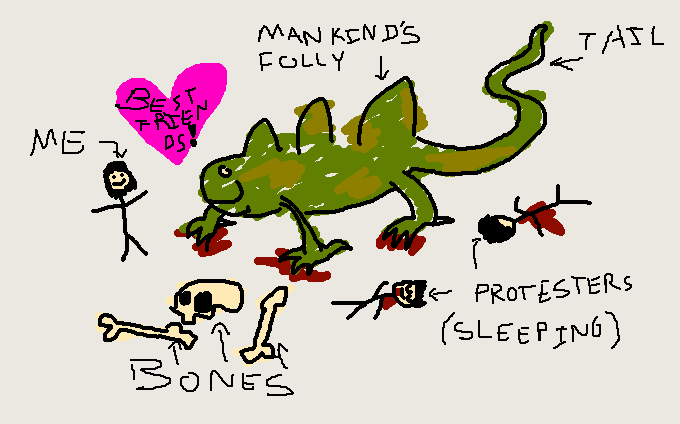
[410] Alexander James Marshall, *Bower-Birds* (Oxford: The Clarendon Press, 1954).
[411] Thorpe, *Learning and Instinct,* p. 426. In this respect, songs present an entirely different problem than calls, which are often not very differentiated, and quite similar from species to species.
[412] Raymond Ruyer, *La genesedes formes vivantes* (Paris: Flammarion, 1958), chapter 7.
[413] In particular, on widow birds *(Viduinae),* parasitic birds whose territorial song is species-specific and whose courtship song is learned from their adoptive host, see J. Nicolai, *Der Brutparasitismus der Viduinae, Z. Tierps.,* vol. 21 (1964).
[414] The participation of a black hole in an assemblage appears in numerous examples of inhibition, or fascination-ecstasy, notably in the peacock: “The male peacock spreads his tail feathers.... Then he bends the spread-out tail forward and points downward with his beak, while his head is still upright. As a result, the female runs in front of him and pecks in a searching manner on the ground in the focal point of the concave mirrorlike shape of the fanned tail. The male peacock points, so to speak, with his fanned-out tail toward imaginary food,” Eibl-Eibesfeldt, *Ethology,* p. 116. But the peacock’s focal point is no more imaginary than the finch’s grass stem is a vestige or symbol; it is an assemblage converter, the passage to a courtship assemblage, in this instance, effected by a black hole.
[416] Francow *Meyer, Problematique de revolution* (Paris: PUF, 1954).
[418] Female birds, which do not normally sing, start singing when they are administered male sex hormones, “and they will sing the song of the species on which they have become imprinted.” Eibl-Eibesfeldt, *Ethology,* p. 265.
[419] [TRANS: Klee, *On Modern Art,* p. 43. Translation modified to agree with the French translation cited by the authors.]
[421] See *Renaissance, manierisme, baroque, Actes du Xle stage international de Tours* (Paris: Vrin, 1972), part 1, “Periodizations.”
[422] Proust, *Swann’s Way,* in vol. 1 *of Remembrance of Things Past,* p. 382 [translation modified—Trans.].
-grombo
[423] See the ambiguous role of the friend at the end of *Das Lied von der Erde.* Or Eichen-dorff s poem in Schumann’s lied, *Zwielicht (in* Opus 39): “If you have a friend in this world, do not trust him at this hour, for even if he is kind in eye and mouth, he dreams of war in deceitful peace.” (On the problem of the One-Alone, or “solitary Being,” in German romanticism, see Holderlin, “Le cours et la destination de l’homme en general,” trans. Emmanuel Marineau, *Poesie,* no. 4 <verbatim>[1978],</verbatim> pp. 6–22.)
[424] “The people in Mussorgsky’s *Boris* do not form a true crowd; at times one group sings, then another, and then a third, each in turn, and most often in unison. As for the people in *Maitres chanteurs,* it is not a crowd but an army that is powerfully organized in the German manner and marches in rows. What I would like is something sparser, more divided, more relaxed, more impalpable, something in appearance inorganic and yet at bottom ordered.” Quoted by Jean Barraque, *Debussy* (Paris: Seuil, 1977), p. 159. This problem—how to do a crowd—obviously recurs in other arts also, painting, cinema, etc. One may refer in particular to the films of Eisenstein, which proceed by this type of very special group individuation.
[425] On the relations between the cry, the voice, the instrument, and music as “theater,” see Berio’s statements introducing his records. One will recall the eminently musical Nietzschean theme of a multiple cry of all superior men, at the end of *Thus Spoke Zarathustra.*
[426] On Bartok’s chromaticism, see Gisele Brelet’s study in *Histoire de la musique,* vol. 2, pp. 1036–1072.
[427] In his book on Debussy, Barraque analyzes the “dialogue of the wind and the sea” in terms offerees instead of themes: pp. 153–154. See Messiaen’s statements on his own works: sounds are no longer anything more “than vulgar means of expression intended to make durations measurable.”
[428] Odile Vivier describes Varese’s procedures for treating sound matter, in *Varese* (Paris: Seuil, 1973): the use of pure sounds acting as a prism (p. 36); mechanisms of projection onto a plane (pp. 45 and 50); non-octave-forming scales (p. 75); the “ionization” procedure (pp. 98ff.); the theme of sound *molecules,* the transformations of which are determined by forces or energies *(passim).*
[429] See the interview with Stockhausen on the role of synthesizers and the effectively “cosmic” dimension of music, in *Le Monde,* July 21,1977: “Work with very limited materials and integrate the universe into them through a continuous variation.” Richard Pinhas has written an excellent analysis of the possibilities of synthesizers in this regard, in relation to pop music: “Input, Output,” *in Atem,* no. 10 (1977).
[430] The definition of fuzzy aggregates brings up all kinds of problems because one cannot appeal to a local determination: “The set of all objects on this table” is obviously not a fuzzy set. Mathematicians concerned with the question speak only of “fuzzy subsets” because the reference set must always be an ordinary set. See Arnold Kaufmann, *Introduction to the Theory of Fuzzy Subsets,* foreword L. A. Zadeh, trans. D. L. Swanson (New York: Academic Press, 1975), and Hourya Sinacoeur, “Logique et mathematique du flou,” *Critique,* no. 372 (May 1978), pp. 512–525. In considering fuzziness as the characteristic of certain sets, our point of departure was a functional, as opposed to a local, definition: sets of heterogeneous elements that have a territorial, or rather territorializing, function. But this is a nominal definitiion that does not take “what happened” into account. The real definition can come only at the level of processes affecting the fuzzy set; a set is fuzzy if its elements belong to it only by virtue of specific operations of consistency and consolidation, which themselves follow a special logic.
[431] Paul Klee, *On Modern Art,* p. 53: “The legend of the childishness of my drawing must have originated from those linear compositions of mine in which I tried to combine a concrete image, say that of a man, with the pure representation of the linear element. Had I wished to present man ‘as he is,’ then I should have had to use such a bewildering confusion of lines that pure elementary representation would have been out of the question. The result would have been vagueness beyond recognition.”
[432] Paul Virilio, *L’insecurite du territoire* (Paris: Stock, 1975), p. 49. Henry Miller develops this theme in *The Time of the Assassins. A Study ofRimbaud*(Norfolk, Conn.: J. Laughlin, 1956), and in the text he wrote for Varese, “Lost! Saved!” *(The Air-Conditioned Nightmare* [New York: New Directions, 1945]). It is undoubtedly Miller who has taken the modern figure of the writer as cosmic artisan the farthest, particularly in *Sexus.*
i originally saw it on film at a movie theater and had to bike back home in the middle of night across a bridge
[433] On the relation of colors to sound, see Messiaen and Samuel, *Conversations,* pp. 15–17. Messiaen faults drug users for oversimplifying the relation, which they make into a relation between a noise and a color, instead of isolating complexes of sounds-durations and complexes of colors.
[434] On the crystal, or the crystalline type, added and subtracted values, retrograde motion, see also Messiaen’s texts in Samuel, *Conversations,* and those of Paul Klee in his diary, *The Diaries of Paul Klee, 1898–1918,* ed. and intro. Felix Klee (Berkeley: University of California Press, 1964).
[435] See Roland-Manuel’s article, “L’evolution de l’harmonie en France et le renouveau de 1880” (pp. 867–879), and the article by Delage on Chabrier (pp. 831–840), in *Histoire de la musique,* vol. 2. And especially, Brelet’s article on Bartok: “Are not the difficulties learned music experiences in utilizing popular music due to this antinomy between melody and theme? Popular music is melody, in its fullest sense, melody persuading us that it is self-sufficient and is in fact synonymous with music itself. How could it not refuse to bend to the learned development of a musical work pursuing its own ends? Many symphonies inspired by folklore are only symphonies *about* a popular theme, to which the learned development remains alien and exterior. The popular melody could never constitute a true theme; and that is why, in popular music, the melody is the entire work, and why once it is over it has no other resource than to repeat itself. But can’t the melody transform itself into a theme? Bartok solves this problem, which was thought insoluble” (p. 1056).
[436] Marcel More, *Ledieu Mozart etlemondedesoiseaux*(Paris: Gallimard, 1971), p. 168. And, on the crystal, pp. 83–89.
[437] See Alban Berg’s famous analysis of “Reverie” in *Ecrits* (Paris: Ed. du Rocher, 1957), pp. 44–64. 12.1227: Treatise on Nomadology—the War Machine
[438] Georges Dumezil, *Mitra-Varuna* (Paris: Gallimard, 1948 [forthcoming in English translation from Zone Books]). On *nexum* and *mutuum,* the bond and the contract, see pp. 118–124.
[439] “The first pole of the State (Varuna, Uranus, Romulus) operates by magic bond, seizure, or immediate capture: it does not wage battles, and has no war machine, it binds, and that is all.” Its other pole (Mitra, Zeus, Numa) appropriates an army but imposes upon it juridical and institutional rules that become nothing more than a piece in the State apparatus: thus Mars-Tiwaz is not a warrior god, but a god who is a “jurist of war.” See Dumezil, *Mitra-Varuna,* pp. 113ff., 148ff., 202ff.
[440] Dumezil, *The Destiny of the Warrior,* trans. Alf Hiltebeital (Chicago: University of Chicaga Press, 1970).
[441] For the role of the warrior as one who “unties” and opposes both the magic bond and the juridical contract, see Dumezil, *Mitra-Varuna,* pp. 124–132. See also the analysis *of furor* in the works of Dumezil.
[442] [TRANS: The first quote is from Friedrich Nietzsche, *The Genealogy of Morals,* second essay, sect. 17, trans. Walter Kaufmann and R. J. Hollingdale (New York: Vintage, 1967), p. 86; the second is from Franz Kafka, “An Old Manuscript,” *The Complete Stories,* ed. Nahum N. Glazer (New York: Schocken, 1983), p. 416.]
it was funny seeing it at a theater esp. bc i didn’t know it was a comedy at first, and the opening makes it seem like a very serious movie, especially because i had to see it for a college class, & when you’re around strangers, it can be a bit hard to laugh when you’re not totally sure what you’re seeing
[443] Luc de Heusch emphasizes the public nature of Nkongolo’s actions, in contrast to the secrecy of the actions of Mbidi and his son; in particular, the former eats in public, whereas the others hide during their meals. Later, we will see the essential relation of the war machine with the secret, which is as much a matter of principle as a result: espionage, strategy, diplomacy. Commentators have often underlined this link. *Le roi ivre ou I’origine de I’Etat* (Paris: Gallimard, 1972).
[444] For an analysis of the three sins in the cases of the Indian god Indra, the Scandinavian hero Starcatherus, and the Greek god Hercules, see Dumezil, *Mythe et epopee,* vol. 2, pp. 17–19 (Paris: Gallimard, 1971). See also Dumezil, *The Destiny of the Warrior.*
[445] Dumezil, *Mitra-Varuna,* p. 13 5. Dumezil analyzes the dangers and causes of the confusion, which could be due to economic variables. See pp. 153, 159.
[447] On Ajax and the tragedy of Sophocles, see the analysis of Jean Starobinski, *Trois Fureurs* (Paris: Gallimard, 1974). Starobinski explicitly raises the question of war and the State.
[448] These themes are analyzed by Mathieu Carriere in an as yet unpublished study of Kleist.
[449] Pierre Clastres, *Society against the State,* trans. Robert Hurley (New York: Uri-zen, 1977), and “Archeologie de la violence: la guerre dans les societes primitives” and “Malheur du guerrier sauvage” in *Recherches d’anthropologie politique* (Paris: Seuil, 1980), pp. 171 -208, 209–248. In the last text, Clastres depicts the destiny of the warrior in primitive society and analyzes the mechanism that prevents the concentration of power (in the same way that Mauss demonstrated that the potlatch was a mechanism preventing the concentration of wealth).
[450] Jacques Meunier, *Les gaminsde Bogota* (Paris: Lattes, 1977), p. 159 (“blackmail for dispersion”) and p. 17 7: if necessary, “it is the other street children who, by means of a complicated interplay of humiliations and silence, get the idea across that he must leave the gang.” Meunier emphasizes the degree to which the fate of the ex-gang member is jeopardized: not only for health reasons, but because he finds it hard to integrate himself into the criminal underworld, a society too hierarchical, too centralized, too centered on organs of power for him to fit into (p. 178). On child gangs, see also the novel by Jorge Amado, *Capitaes de areia* (Sao Paolo: Livraria Martins, 1944).
[451] See I. S. Bernstein, “La dominance sociale chez les primates” in *La Recherche,* no. 91 (July 1978).
[452] Clastres, *Society against the State,* p. 169: “The emergence of the State brought about the great typological division between Savage and Civilized man; it created the unbridgeable gulf whereby everything was changed, for, on the other side, Time became History.” In order to account for this emergence, Clastres cites first a demographic factor (“but there is no question of replacing an economic determinism with a demographic determinism”; p. 180), then the possibility of a warring machine (?) running amok; he also cites, more unexpectedly, the indirect role of a certain mode *of prophetic speech,* which, directed first against the “chiefs,” produces a formidable new kind of power. But one obviously cannot prejudge more elaborated solutions Clastres might have found for this problem. On the possible role of prophetic speech, refer to Helene Clastres, *La terre sans mal, le prophetisme tupi-guarani* (Paris: Editions du Seuil, 1975).
[453] Michel Serres, *La naissance de la physique dans le texte de Lucrece. Fleuves et turbulences* (Paris: Minuit, 1977). Serres was the first to make the first three points given in the text; the fourth seems to follow from them.
so it was a really different experience seeing it this time, the absurdity really shines. i love the hazmat guy strolling into frame as the father talks, the camera focuses on him, he faceplants, alludes to the news, mom’s spaghetti, chaos
[454] [TRANS: According to Serres, the *clinamen,* or declination of the atom, is the “minimal angle leading to the formation of a vortex, and appears by chance in a laminar flow” *(La naissance de la physique,* p. 14). The *clinamen* is the angle between a curve and its tangent, or “the smallest [angle] one can make, preventing anything from coming between the two lines which form it.... In other words, the angle appears at the same time as curvature” (p. 18). “The *clinamen* is a differential” (p. 11).]
[455] [TRANS: A flow is laminar when, “no matter how small we make the layers (or lamellae) into which we divide the flow, they remain strictly parallel to one another in their movements”; Serres, ibid., p. 12.]
[456] [TRANS: *Turba* “designates a multitude, a large population, confusion and tumult.” *Turbo* “is a round form in movement... a revolving cone or vortical spiral.” “The origin of things and the beginning of order consists simply in the subtle passage from *turba* to *turbo”;* Serres, ibid., pp. 38–39.]
[457] This is the distinction Pierre Boulez makes between two kinds of space-time in music: in striated space, the measure can be irregular or regular, but it is always assignable; in smooth space, the partition, or break, “can be effected at will.” *Boulez on Music Today,* trans. Susan Bradshaw and Richard Bennett (Cambridge, Mass.: Harvard University Press, 1971), p. 85.
[458] Greek geometry is thoroughly marked by the opposition between these two poles, the theorematic and problematic, and by the relative triumph of the former: in his *Commentary of the First Book of Euclid’s Elements,* trans, and intro. Glenn R. Murrow (Princeton, N.J.: Princeton University Press, 1970), Proclus analyzes the difference between the poles, taking the Speusippus-Menaechmus opposition as an example. Mathematics has always been marked by this tension also; for example, the axiomatic element has confronted a problematic, “intuitionist,” or “constructivist” current emphasizing a calculus of problems very different from axiomatics, or any theorematic approach. See Georges Bouligand, *Le d’eclin des absolus mathematico-logiques* (Paris: Ed. d’Enseignement Superieur, 1949).
[459] Paul Virilio, *L’insecurite du territoire* (Paris: Stock, 1975), p. 120: “We know that the youth of geometry, geometry as free, creative investigation, came to an end with Archimedes.... The sword of a Roman soldier cut the thread, tradition says. In killing geometrical creation, the Roman State lay the foundation for the geometrical imperialism of the West.”
[460] With Monge, and especially Poncelet, the limits of sensible, or even spatial, representation (striated space) are indeed surpassed, but less in the direction of a symbolic power *(puissance)* of abstraction than toward a transspatial imagination, or a transintuition (continuity). See Leon Brunschvicg’s commentary on Poncelet, *Les etapes de la philosophic mathematique* (Paris: PUF, 1947).
[461] Michel Serres *(La naissance de la physique,* pp. 105–107) analyzes the opposition d’Alembert-Bernoulli from this point of view. More generally, what is at issue is the difference between two models of space: “In the Mediterranean basin there is a shortage of water, and he who harnesses water rules. Hence that world of physics in which the conduit is essential, and the *clinamen* seems like freedom because it is precisely a turbulence that rejects forced flow. Incomprehensible to scientific theory, incomprehensible to the master of the waters.... Hence the great figure of Archimedes: the master of floating bodies and military machines” (p. 106).
[462] See Ben veniste, “The Notion of Rhythm in Its Linguistic Expression” in *Problems in General Linguistics,* trans. Mary Elizabeth Meek (Coral Gables, Fla.: University of Miami Press, 1971), pp. 281–288. This text, often considered decisive, seems ambiguous to us because it invokes Democritus and atomism without dealing with the hydraulic question, and because it treats rhythm as a “secondary specialization” of the form of the body (p. 286).
[463] Anne Querrien, *Devenir fonctionnaire ou le travail de I’Etat* (Paris: Cerfi). We have drawn from this book, as well as from unpublished studies by Anne Querrien.
when we view this as a post-pandemic movie, i think it’s easy to see the absence of a virus as proof that it’s right-wing coded. i think if you squint, it could be right-wing in that the father learns family values and how to protect his adopted son or whatever…
[464] See Raoul Vergez, *Les illumines de I’art royal. Huit siecles de compagnonnages* (Paris: Julliard, 1976), p. 54. [TRANS: In the present context, *trait* refers to the cutting line followed by the artisan and to the working sketch of the construction under way. Vergez gives the following definition: “The Trait is a kind of graphic poem derived from geometry, which indicates the building plan in sketches drawn with precision on the ground, showing sections, elevations and all other projections, the three dimensions of a volume”; p. 86.]
[465] Gerard Desargues, *Oeuvres* (Paris: Leiber, 1864). See also the text by Michel Chasles *[Apercu historique sur I’origine et le developpement de methodes en geometrie...* (Brussels: M. Hayez, 1837)—Trans.], which establishes a continuity between Desargues, Monge, and Poncelet as the “founders of a modern geometry.”
[466] Anne Querrien, *Devenir fonctionnaire,* pp. 26–27: “Is the State founded upon the collapse of experimentation?... The State is not under construction, its construction sites must be short-lived. An installation is made to function, not to be socially constructed: from this point of view, the State involves in the construction only those who are paid to implement or command, and who are obliged to follow the model of a preestablished experimentation.”
[467] On the question of the “Colbert lobby,” see Daniel Dessert and Jean-Louis Journet, “Le Lobby Colbert. Un royaume, ou une affaire de famille?” *Annates,* 30, no. 6 (November-December 1975), pp. 1303–1336.
[468] See Ibn Khaldun, *The Muqaddimah: An Introduction to History,* trans. Franz Rosenthal (Princeton, N J.: Princeton University Press, 1967). One of the essential themes of this masterpiece is the sociological problem of the esprit de corps, and its ambiguity. Ibn Khaldun contrasts bedouinism (the bedouin life-style, not the ethnic group) with sedentarity or city living. The first aspect of this opposition is the inverted relation between the public and the secret: not only is there a secrecy of the bedouin war machine, as opposed to the publicity of the State city dweller, but in the first case “eminence” is based on a secret solidarity, while in the second case the secret is subordinated to the demands of social eminence. Second, bedouinism brings into play both a great purity and a great mobility of the lineages and their genealogy, whereas city life makes for lineages that are very impure, and at the same time rigid and fixed: Solidarity has a different meaning at either pole. Third, and this is the main point, bedouin lineages mobilize an esprit de corps and integrate into it, as a new dimension: this is *asablyah,* or *ikhtilat,* from which the Arabic word for socialism is derived (Ibn Khaldun stresses the absence of any “power” residing in the tribal chief, who has no State constraints at his disposal). On the other hand, in city living the esprit de corps becomes a dimension of power and is adapted for “autocracy.”
[469] The principal texts of Husserl are *Ideas,* trans. W. R. Gibson (New York: Humanities Press, 1976), part 1, sec. 74, and *Edmund Husserl’s Origin of Geometry: An Introduction,* trans. John P. Leavey, Jr., ed. David B. Allison (Stoney Brook, N.Y.: N. Hayes, 1978) (with Derrida’s very important commentary, pp. 118–132). On the issue of a vague yet rigorous science, we may refer to the formula of Michel Serres, in his commentary on the geometrical figure called the *salinon:* “It is rigorous, anexact. And not precise, exact or inexact. Only a metrics is exact” *(Naissance de la physique,* p. 29). Gaston Bachelard’s book *Essai sur la connaissance approch’ee* (Paris: Vrin, 1927) remains the best study of the steps and procedures constituting a rigor of the anexact, and of their creative role in science.
[470] Gilbert Simondon has contributed much to the analysis and critique of the hylo-morphic schema and of its social presuppositions (“form corresponds to what the man in command has thought to himself, and must express in a positive manner when he gives his orders: form is thus of the order of the expressible”). To the form-matter schema, Simondon opposes a dynamic schema, that of matter endowed with singularities-forces, or the energetic conditions at the basis of a system. The result is an entirely different conception of the relations between science and technology. See *L’individu et sa genese physico-biologique* (Paris: PUF, 1964).
[471] In *Timaeus,* 28–29, Plato entertains for an instant the thought that Becoming is not simply the inevitable characteristic of copies or reproductions, but could itself be a model rivaling the Identical and the Uniform. He states this hypothesis only in order to reject it; for it is true that if becoming is a model, not only must the duality of the model and the copy, of the model and reproduction, disappear, but the very notions of model and reproduction tend to lose all meaning, [TRANS: Deleuze develops this point in “Plato and the Simulacrum,” trans. Rosalind Krauss, *October,* 27 (Winter 1983), pp. 45–56. See especially p. 53.]
[472] [TRANS: Friedrich Nietzsche, *The Will to Power,* trans. Walter Kaufmann (New York: Vintage, 1968), sec. 630(1885), p. 336.]
[473] The situation is in fact more complex than that, and gravity is not the only feature of the dominant model: there is heat in addition to gravity (already in chemistry, combustion is coupled with weight). Even so, the problem was to know to what extent the “thermal field” deviated from gravitational space, or on the contrary was integrated with it. Monge is a typical example; he began by grouping heat, light, and electricity as “variable affections of bodies,” the concern of “specific physics,” while general physics would deal with extension, gravity, and movement. It was only later that Monge unified all of the fields under general physics (Anne Querrien).
but the virus dimension doesn’t come down to scientists being too woke, (the cross-eyed US Military dude made it clear that the scientists had no knowledge of the conspiracy) rather it’s more an outgrowth of government overreach by media hysteria. i think the parallel, instead of an illusory pandemic, would be the WMD fears in Iraq. sure, there’s something there, but it’s not at all what is being claimed, and the media is an active participant in the fantasy
[475] Carlos Castaneda, *The Teachings of Don Juan* (Berkeley: University of California Press, 1971), p. 88.
[476] Albert Lautman has shown quite clearly how Riemann spaces, for example, admit a Euclidean conjunction making it possible at all times to define the parallelism of two neighboring vectors; this being the case, instead of exploring a multiplicity by legwork, the multiplicity is treated as though “immersed in a Euclidean space with a sufficient number of dimensions.” See *Les sch’emas de structure* (Paris: Hermann, 1938), pp. 23–24, 43–47.
[477] In Bergson, the relations between intuition and intelligence are very complex, and they are in perpetual interaction. Bouligand’s theme is also relevant here: the dualism of the two mathematical elements, the “problem” and the “global synthesis,” is developed only when they enter a field of interaction in which the global synthesis defines the “categories” without which the problem would have no general solution. See *Le d’eclin des absolus math’ematico-logiques.*
[478] Marcel Detienne, in *Les maitres de v’erit’e dans la Grece archdique* (Paris: Maspero, 1973), clearly articulates these two poles of thought, which correspond to the two aspects of sovereignty according to Dumezil: the magico-religious speech of the despot or of the “old man of the sea,” and the dialogue-speech of the city. Not only are the principal character types of Greek thought (the Poet, the Physicist, the Philosopher, the Sophist, etc.) situated in relation to these poles, but Detienne interposes between the two poles a distinct group, the Warriors, which brings about transition or evolution.
[479] There exists a Hegelianism of the right that lives on in official political philosophy and weds the destiny of thought to the State. Alexandre Kojeve (“Tyranny and Wisdom,” in Leo Strauss, *On Tyranny* [New York: Free Press of Glencoe, 1963]) and Eric Weil *(Hegel et I’Etat. Philosophiepolitique* [Paris: Vrin, 1974]) are its recent representatives. From Hegel to Max Weber there developed a whole line of reflection on the relation of the modern State to Reason, both as rational-technical and as reasonable-human. If it is objected that this rationality, already present in the archaic imperial State, is the *optimum* of the governors themselves, the Hegelians respond that the rational-reasonable cannot exist without a minimum of participation by everybody. The question, rather, is whether the very form of the rational-reasonable is not extracted from the State, in a way that necessarily makes it right, gives it “reason” *(lui donner necessairement “raison”).*
[480] On the role of the ancient poet as a “functionary of sovereignty,” see Dumezil, *Servius et la Fortune* (Paris: Gallimard, 1943), pp. 64ff., and Detienne, *Les maitres de v’erit’e,* pp. 17ff.
[481] See Michel Foucault’s analysis of Maurice Blanchot and the form of exteriority of thought: “La pensee du dehors,” *Critique,* no. 229 (June 1966), pp. 523–548.
[482] Nietzsche, *Schopenhauer as Educator,* in *Untimely Meditations,* trans. R. J. Hollingdale (Cambridge: Cambridge University Press, 1983), pp. 177–178.
[483] A curious text of Karl Jaspers, entitled *Descartes und die Philosophie* (Berlin: W. de Gruyter, 1956), develops this point of view and accepts its implications.
[484] Kenneth White, *Intellectual Nomadism.* The title of the second volume of this unpublished work is *Poetry and Tribe.*
so to diagnose whether it’s left or right, the question would be what is the film’s reasoning for this government overreach in the first place. i don’t know enough about korea, but it seems to me that the primary concern is not safety, but maintaining national appearances
[485] [TRANS: Arthur Rimbaud, *A Season in Hell,* trans. Louise Varese (Norfolk, Conn.: New Directions, 1952), pp. 9, 13, 17, 39.]
[486] Anny Milovanoff, “La seconde peau du nomade,” *Nouvelles litt’eraires,* no. 2646 (July 27, 1978), p. 18: “The Larbaa nomads, on the border of the Algerian Sahara, use the word *triga,* which generally means road or way, to designate the woven straps serving to reinforce the cords holding the tent to the stakes.... In nomad thought, the dwelling is tied not to a territory but rather to an itinerary. Refusing to take possession of the land they cross, the nomads construct an environment out of wool and goat hair, one that leaves no mark at the temporary site it occupies.... Thus wool, a soft material, gives nomad life its unity.... Nomads pause at the representation of their journeys, not at a figuration of the space they cross. They leave space to space.... Woolly polymorphism.”
[487] See W. Montgomery Watt, *Mohammed at Medina* (London: Oxford University Press, 1956), pp. 85–86, 242.
[488] Emmanuel Laroche, *Histoire de la ratine “Nem “ en grec ancien* (Paris: Klincksieck, 1949). The root “Nem” indicates distribution, not allocation, even when the two are linked. In the pastoral sense, the distribution of animals is effected in a nonlimited space and implies no parceling out of land: “The occupation of shepherd, in the Homeric age, had nothing to do with a parceling of land; when the agrarian question came to the foreground, in the time of Solon, it was expressed in an entirely different vocabulary.” *To take to pasture* (nemo) refers not to a parceling out but to a scattering, to a repartition of animals. It was only after Solon that Nomos came to designate the principle at the basis of the laws and of right (Thesmo’i and Dike), and then came to be identified with the laws themselves. Prior to that, there was instead an alternative between the city, or polis, ruled by laws, and the outskirts as the place of the nomos. A similar alternative is found in the work of Ibn Khaldun: between *hadara* as city living, and *badiya* as nomos (not the town, but the preurban countryside, the plateau, steppe, mountain, or desert).
[489] Arnold Toynbee, *A Study of History* (New York: Oxford University Press, 1947), abridged by D. C. Somerwell, vol. 1, pp. 164–186: “They flung themselves upon the Steppe, not to escape beyond its bounds but to make themselves at home on it” (p. 168).
[490] See Pierre Hubac, *Les nomades* (Paris: La Renaissance du Livre, 1948), pp. 26–29 (although Hubac tends to confuse nomads and migrants).
[491] On the nomads of the sea, or of the archipelago, Jose Emperaire writes: “They do not grasp an itinerary as a whole, but in a fragmentary manner, by juxtaposing in order its various successive stages, from campsite to campsite in the course of the journey. For each of these stages, they estimate the length of the crossing and the successive changes in direction marking it.” *Les nomades de la mer* (Paris: Gallimard, 1954), p. 225.
[492] Wilfred Thesiger, *Arabian Sands* (London: Longmans, Green, 1959), pp. 112–113, 125, 165–166.
[493] See the two admirable descriptions, of the sand desert by Wilfred Thesiger and of the ice desert by Edmund Carpenter, in *Eskimo* (Toronto: University of Toronto Press, 1964): the winds, and tactile and sound qualities; the secondary character of visual data, particularly the indifference of the nomads to astronomy as a royal science; and yet the presence of a whole minor science of qualitative variables and traces.
[494] EmileFelixGautier,*Le passe del’AfriqueduNord (Paris:* Payot, 1952), pp. 267–316.
-rachel
[495] From this perspective, Clastres’s analysis of Indian prophetism can be generalized: “On one side, the chiefs, on the other, and standing against them, the prophets.... And the prophetic machine worked perfectly well since the *karai* were able to sweep astonishing masses of Indians along behind them.... the insurrectional act of the prophets against the chiefs conferred on the former, through a strange reversal of things, infinitely more power than was held by the latter.” *Society against the State,* pp. 184–185.
[496] One of the most interesting themes of the classic work by Paul Alphandery *(La chretiente et Videe de croisade* [Paris: Albin Michel, 1959] is his demonstration that the changes in course, the pauses, the detours were an integral part of the Crusade: “this army of crusaders that we envision as a modern army, like those of Louis XIV or Napoleon, marching with absolute passivity, obeying the will of a diplomatic officer and staff. Such an army knows where it is going, and when it makes a mistake, it is not for lack of reflection. A history more attentive to differences accepts a more realistic image of the army of the Crusade. The army of the Crusade was freely, sometimes anarchically alive.... This army was motivated from within, as a function of a complex coherence by virtue of which nothing happened by chance. It is certain that the conquest of Constantinople had its reason, necessity and a religious character, like the other deeds of the Crusades” (vol. 2, p. 7). Alphandery shows in particular that the idea of a battle against the Infidel, *at any point,* appeared early on, along with the idea of liberating the Holy Land (vol. 1, p. 219).
[497] Modern historians have been inspired to fine analyses by this confrontation between the East and the West, which began in the Middle Ages (and is tied to the question, Why did capitalism develop in the West and not elsewhere?). See especially Fernand Braudel, *Capitalism and Material Life, 1400–1800,* trans. Miriam Kochan (New York: Harper and Row, 1967), pp. 97–108; Pierre Chaunu, *L’expansion europeenne du Xllle au XVe siecle* (Paris: PUF, 1969), pp. 334–339 (“Why Europe? Why not China?”); Maurice Lombard, *Espaces et reseaux du hautMoyen Age* (The Hague: Mouton, 1971), chapter 8 (and p. 219: “What is called deforestation in the East is named clearing in the West. The first deep cause of the shift of the dominant centers from the East to the West is therefore a geographical reason: forest-clearing proved to have more potential than desert-oasis”).
[498] Marx’s observations on the despotic formations of Asia have been confirmed by the African analyses of Max Gluckman, *Custom and Conflict in Africa* (Glencoe, 111.: Free Press, 1959): at the same time immutability of form and constant rebellion. The idea of a “transformation” of the State indeed seems to be a Western one. And that other idea, the “destruction” of the State, belongs much more to the East and to the conditions of a nomad war machine. Attempts have been made to present the two ideas as successive phases of revolution, but there are too many differences between them and they are difficult to reconcile; they reflect the opposition between the socialist and anarchist currents of the nineteenth century. The Western proletariat itself is perceived from two points of view: as having to seize power and transform the State apparatus (the point of view of labor power), and as willing or wishing for the destruction of the State (this time, the point of view of nomadization power). Even Marx defines the proletariat not only as alienated (labor) but as deterritorialized. The proletariat, in this second perspective, appears as the heir to the nomad in the Western world. Not only did many anarchists invoke nomadic themes originating in the East, but the bourgeoisie above all were quick to equate proletarians and nomads, comparing Paris to a city haunted by nomads (see Louis Chevalier, *Laboring Classes and Dangerous Classes in Paris during the First Half of the Nineteenth Century,* trans. Frank Jellenck [New York: H. Fertig, 1973], pp. 362–366).
[499] See Lucien Musset, *Les invasions. Le secondassaut* (Paris: PUF, 1965), for example, the analysis of the Danes’ three “phases,” pp. 135–137.
[500] Paul Virilio, *Speed and Politics,* trans. Mark Polizzotti (New York: Semiotext[e], 1986), pp. 12–13 *andpassim.* Not only is the “town” unthinkable apart from the exterior flows with which it is in contact, and the circulation of which it regulates, but specific architectural aggregates, the fortress, for example, are veritable transformers, by virtue of their interior spaces, which allow an analysis, prolongation, or restitution of movement. Virilio concludes that the issue is less confinement than the management of the public ways, or the control of movement. Foucault was already moving in this direction with his analysis of the *naval hospital* as operator and filter; see *Discipline and Punish,* trans. A. M. Sheridan Smith (New York: Vintage, 1975), pp. 143–146.
[501] On Chinese, and Arab, navigation, the reasons behind their failure, and the importance of this question in the East-West “dossier,” see Braudel, *Capitalism and Material Life,* pp. 300–309, and Chaunu, *L’expansion europeenne,* pp. 145–147.
[502] Virilio gives a very good definition of the fleet in being and its historical consequences: “The fleet in being... is the permanent presence in the sea of an invisible fleet able to strike no matter where and no matter when ... it is a new idea of violence that no longer comes from direct confrontation... but rather from the unequal properties of bodies, evaluation of the number of movements allowed them in a chosen element, permanent verification of their dynamic efficiency....Henceforth it is no longer a question of crossing a continent or an ocean from one city to the next, one shore to the next. The fleet in being creates ... the notion of displacement without destination in space and time.... The strategic submarine has no need to go anywhere in particular; it is content, while controlling the sea, to remain invisible ... the realization of the absolute, uninterrupted, circular voyage, since it involves neither departure nor arrival....If, as Lenin claimed,‘strategy means choosing which points we apply force to,’ we must admit that these ‘points’, today, are no longer geostrategic strongpoints, since from any given spot we can now reach any other, no matter where it might be... *geographic localization* seems to have definitively lost its strategic value, and, inversely, that this same value is attributed to the *delocalization of the vector,* of a vector in permanent movement”; *Speed and Politics,* pp. 38,40–41,134–135. Virilio’s texts are of great importance and originality in every respect. The only point that presents a difficulty for us is his assimilation of three groups of speed that seem very different to us: (1) speeds of nomadic, or revolutionary, tendency (riot, guerrilla warfare); (2) speeds that are regulated, converted, appropriated by the State apparatus (management of the public ways); (3) speeds that are reinstated by a worldwide organization of total war, or planetary overarmament (from the fleet in being to nuclear strategy). Virilio tends to equate these groups on account of their interactions and makes a general case for the “fascist” character of speed. It is, nevertheless, his own analyses that make these distinctions possible.
[503] Jean-Pierre Vernant in particular has analyzed the connection between the Greek city-state and a homogeneous geometrical extension, *Mythe et pensee chez les Grecs* (Paris: Maspero, 1971 -1974), vol. 1, part 3. The problem is necessarily more complicated in relation to the archaic empires, or in relation to formations subsequent to the classical city-state. That is because the space in question is very different. But it is still the case that the number is subordinated to space, as Vernant suggests with regard to Plato’s ideal state. The Pythagorean or Neoplatonic conceptions of number envelop imperial astronomical spaces of a type other than homogeneous extension, but they maintain the subordination of the number; that is why Numbers become *ideal,* but not strictly speaking “numbering.”
[504] Dumezil stresses the role played by the arithmetic element in the earliest forms of political sovereignty. He even tends to make it a third pole of sovereignty. See *Servius et la Fortune* and *Le troisieme souverain* (Paris: Maisonneuve, 1949). But the role of this arithmetic element is, rather, to organize a matter; in so doing it submits that matter to one or the other of the two principal poles.
[505] Karl von Clausewitz stresses the secondary role of geometry, in tactics and in strategy: *On War,* trans. Michael Howard, Peter Paret, and Bernard Brodie (Princeton, N. J.: Princeton University Press, 1976), pp. 214–216 (“The Geometrical Factor”).
[506] See one of the most profound ancient texts relating the number and direction to the war machine, Ssu-ma Ch’ien, *The Records of the Grand Historian,* trans. Burton Watson (New York: Columbia University Press, 1961), vol. 2, pp. 155–193 (“The Account of the Hsiung-nu”).
[507] Frank Herbert, *Children of Dune* (New York: Berkley Books, 1977), p. 212. One may refer to the characteristics proposed by Julia Kristeva to define the numbering number: “arrangement,” “plural and contingent distribution,” “infini-point,” “rigorous approximation,” etc. *Semeiotike. Recherches pour une semanalyse* (Paris: Seuil, 1969), pp. 293–297.
[508] Boris Iakovlevich Vladimirtsov, *Le regime social des Mongols,* trans. Michel Carsow (Paris: Maisonneuve, 1948). The term used by Vladimirtsov, “antrustions,” is borrowed from the Saxon regime, in which the king’s *company,* or “trust,” was composed of Franks.
[509] A particularly interesting case is that of a special body of smiths among the Tuareg, called the *Enaden* (the “Others”); the Enaden are thought to have been originally Sudanese slaves, Jewish settlers in the Sahara, or descendants of the knights of Saint Louis. See Rene Pottier, “Les artisans sahariens du metal chez les Touareg,” in *Techniques et civilisations,* vol. 1 *(M’etaux et civilisations),* no. 2 (1945), pp. 31–40.
[510] Feudalism is no less a military system than so-called military democracy; but both systems assume an army integrated into some kind of State apparatus (for feudalism, it was the Carolingian land reform). It is Vladimirtsov who developed a feudal interpretation of the nomads of the steppe, whereas Mikhail Griaznov, *The Ancient Civilization of Southern Siberia,* trans. James Hogarth (New York: Cowles, 1969), leans toward military democracy. But one of Vladimirtsov’s main arguments is that the organization of the nomads becomes feudal precisely to the extent that it is in disintegration, or is integrated into the empires it conquers. He himself remarks that in the beginning the Mongols did not organize the sedentary land they took over into fiefs, true or false.
[511] J. F. C. Fuller, *Armament and History* (New York: Charles Scribner’s Sons, 1945), p. 5.
[512] Paul Virilio, “Metempsychose du passager,” *Traverses,* no. 8 (May 1977), pp. 11–19. Virilio, however, asserts that there was an indirect transition from hunting to war: when women served as “portage or pack” animals, which already enabled the hunters to enter into a relation of “homosexual duel” transcending the hunt. But it seems that Virilio himself invites us to make a distinction between *speed,* as projector and projectile, and *displacement,* as transport and portage. The war machine is defined from the first point of view, while the second relates to the public sphere. The horse, for example, is not a part of the war machine if it serves only to transport men who dismount to do battle. The war machine is defined by action, not transport, even if the transport reacts upon the action.
[513] J. F. C. Fuller, *Armaments and History,* pp. 137ff., shows that the First World War was first conceived as an offensive war of movement based on artillery. But artillery was turned against artillery, forcing immobility. It was not possible to reinstate mobility in the war through “ever-increasing shell fire” (p. 138) since the craters made the terrain all the harder to negotiate. The solution, to which the English, and General Fuller in particular, made decisive contributions, came in the form of the tank: the tank, a “landship” (p. 139), reconstituted a kind of maritime or smooth space on land, and “superimposed naval tactics on land warfare” (p. 140). As a general rule, military response is never in kind: the tank was the response to artillery, the helicopter to the tank, etc. This makes for an innovation factor in the war machine that is very different from innovation in the work machine.
[514] On this general distinction between the two models, “work-free action,” “consuming force/conserving force,” “real effect/formal effect,” etc., see Martial Gueroult’s exposition, *Dynamique et metaphysique leibniziennes* (Paris: Les Belles Lettres, 1934), pp. 55, 119 ff., 222–224.