Minfeub watched The Battle Of Algiers this week. rachel picked it while chatting with avery about what to watch this week, since discussion landed on old french films, and this came to mind after walking past a poster for it outside her french classroom hundreds of times. (she knows it’s actually italian)
space is the substance, that the figure is something substantial, because all science is concerned with substance ; further it cannot be denied that geometry is a science. You replied that you could produce the place in which Aristotle had denied that geometry was a science sooner than I would produce that in which he affirmed it. I do not indeed doubt, illustrious sir, that there are some places of Aristotle which can be drawn or twisted to this purpose, but yet I think that these are overthrown by a very large number of his other expressions. For what is more frequent in all the books of the "Analytics" than examples of geometers, so that he seems to have wished geometrical demonstrations to be, as it were, the measure of the rest. Now the more ignoble is absurdly constituted the measure of the more noble. And so meanly, indeed, did the Scholastics think of mathematics at first, that they made every effort to exclude mathe- matics from the number of the pei'fect sciences, principally by means of this argument, because it does not always demonstrate from causes. But if we consider the matter more accurately, it will appear that it does demonstrate from causes. For it demonstrates figures from motion : from the motion of the point is produced the line, from the motion of the line the surface, from the motion of the surface the body. From the motion of the right line upon right lines arises the rectangle. From the motion of a right line about an immovable point arises the circle, etc. The constructions of figures, therefore, are motions ; now from constructions relations (affectiones) con- cerning the figures are demonstrated. Therefore from motion, and consequently a priori, and from cause. Geometry, therefore, is a true science. Therefore with Aristotle's consent its subject, namely space, will be a substance. Nor is it so very absurd that geometry treats of the substantial form of bodies. For laehold the passage of Aristotle, 13 " Met." chap. 3, in which he expressly says that geometry abstracts from matter, from the final and the efficient cause; in accordance with which supposition it follows that he treats either of the substantial or accidental form. But he does not treat of the accidental, because the accidental form in its own real definition involves the subject or matter in which it is, although Aristotle nevertheless says that geometry abstracts from matter. Therefore geometry treats of the substantial form. Hence there immediately arises in my mind as I write these things a certain beautiful harmony of the sciences, the matter, of course, having been accurately con- sidered : theology or metaphysics treats of the efficient cause of things, namely mind ; moral philosophy (whether practical or civil, for, as I learned from you, it is one and the same science) treats of the final cause of things, namely the good ; mathematics (I mean the pure, for the rest is a part of physics) treats of the form or idea of things, namely figure ; physics treats of the matter of things, and of the
single affection resulting from its combination with other causes, namely motion. For the mind in order to obtain for itself a good and pleasing figure and position of things, supplies motion to matter. For matter by itself is devoid of motion. For the origin of all motion is mind, as Aristotle also rightly saw.
For to come to this point, Aristotle seems nowhere to have pictured to himself any such substantial forms, which are in themselves the cause of motion in bodies, as the Scholastics conceive ; he indeed defines nature as the origin of motion and rest, and form and matter he calls nature, but form in a higher degi-ee than matter, but from this what the Scholastics mean (^oolunt) does not follow, that form is a certain immaterial entity, irrational nevertheless in bodies, which itseH spontaneously without the impact of an external thing gives motion downwards to a body, for example, to a stone. For the form, indeed, is a cause and source of motion, but not at fii'st. For a body is not moved, except from the outside, as Aristotle rightly not only says, but also demonstrates ; for example, a globe may be in a plane, if it is once at rest it wiU not move of itself forever, unless in consequence of an added external impulsor, for example, another body. If this now approaches, the second body is the source of the impressed motion, but the figure, namely globosity, is the source of the motion taken up, for if globosity were absent, having been produced by chance according to circumstances, the body would not yield to the second body so easily. From this it is evident that the scholastic concept does not follow from the defi- nition of the Aristotelian form. Form, therefore, is the source of motion in its own body, and body itself is the source of motion in another body, I confess ; but the primary source of motion is the primary and in reality from matter abstracted form (which at the same time is efficient), namely mind. Hence liberty and spontaneity occur in minds alone. Therefore it is not absurd that of the substan- tial forms mind only is called the primary source of motion, the others having their motion from mind. And by this argument he ^ ascends to the first mover. To this objection you give a twofold reply ; first, this argument can avail nothing with Epicurus, who bestows upon his atoms per se downward motion. I admit that this argument can avail nothing with him, unless it be previously demon- strated to him that this itself is absurd and impossible, namely, that a body has motion from its own self, a thing which Cicero also if I am not mistaken already at that time did in his books " De natura Deorura," gracefully laughing at Epicurus because he introduced in this way something without cause and reason in his hypotheses. For in the nature of things nothing is down save as regards us,
and so there is no reason why any body should move m this rather than in that direction (plagam). Therefore we shall easily answer Epicurus, denying that wliatever is moved is moved by another outside itself, and shall vindicate the laboring certainty of the existence of God. Second, you object that Aristotle seems to have reasoned not so much from this axiom that the som-ce of all motion is outside the moved body, as from the other that progress into infinity is not granted. But in truth, most noble sir, consider carefully whether or not either connection of ideas is needed. For unless it is admitted that what is moved extraneously is moved, plainly we shall arrive at no progress, still less at infinity ; for the opponent will resist steadfastly from the beginning and any given body will reply that it is itself suflicient to produce its own motion through its own substantial form, and needs therefore no mover, much less the first. Therefore that ladder will tumble down as soon as the first step, and as it were the foundation, is taken away. Then also Epicurus was wont to admit progress into infinity ; there- fore we must consider not so much what Epicurus admits or does not admit, as what can certainly be demonstrated. The Aristotelian philosophy, the inevitable res'ult of the reformed philosophy itself, must be briefly touched upon.i It is plain that what must be dis- cussed by the theologians must be discussed by the philosophers also. The holy fathers illustrated the Holy Scripture by the best interpretations : soon the moidcs obscured them by superstitions. The light of souls having arisen, the reformed theology is three- fold: the one heretical, which rejects the scriptures themselves, as of the fanatics ; the second schisoiatical, which harmonizes the an- cient fathers, the doctors of the church, with the sacred scripture and the primitive church, as of the Evangelicals.^ In like manner the Greek interpreters ^ illustrated Aristotle, the Scholastics obscured
1 The Latin text reads: " Aristotelicam philosophiam reformatfe ipsius philosophi-e inevitabilis eventas breviter attingenda est." Gerhardt's note reads ; " In diesem Satze feblt etwas," i.e. In this sentence something is want- ing. Erdmann gives tlie following : "Observ. Thomasii. Sic scriptura erat a librario, sed biat alias baec periodus: nee lectioneni ejus constituo," i.e. Note of Tbomasius. Thus it was written by the copyist, but this sentence is other- wise lacking : I do not determine its reading. — Tb.
2 Gerliardt's note reads: "Aucb liier scheint etwas zu felilen," i.e. Here also something appears to be wanting. Erdmann gives the following : " Observ. Thomasii. Etiam hie aliquid deest ; datur enim pro triplici tbeologia tantum duplex. Scripsisse puto : alia sebismatica, alia vera, quae priscos Patres, etc. Confer sequentem," i.e. Note of Tliomasius. Here also something is wanting; for, instead of the threefold theology, only a twofold is given. I think he wrote : the second schismatic, the third true, which the ancient Fathers, etc. Cf. the following. — Tr.
3 Gerhardt reads, " interpretes " ; Erdmann, "Patres." — Tk.
him with trifles. The light having arisen, the reformed philosophy is threefold: the first stupid, like tliat of Paracelsus,^ Ilehnont,^ and of the others who utterly reject Aristotle ; the second bold, which with small regard for the ancients, nay with open contempt for them, render(sj * (their) its own meditations even when good sus- pected, such as that of Descartes ; the third true, by whom Aristotle is recognized as a great man and in most things right.
The reformed philosophy having just been reconciled with Aris- totle, it now remains to show its truth per se, precisely as the Chris- tian religion can be proved both from reason and hi.story and from the sacred Scripture. But it must be proved that no entities are given in the world besides mind, space, matter, motion. Mind I call thinking being. Space is a primarily extended entity or mathemati- cal body, which manifestly contains nothing else than three dimen- sions, and is also that universal place of all things. Matter is a secondarily extended entity, or that which besides extension or math- ematical body has also physical body, that is, resistance, avTiTv-n-iav, density, the power of filling {repletivltatem) space, impenetrability, which consists in this, that it is compelled by the approach of another such being to move or to stop the other; from which nature of im- penetrability therefore motion flows, flatter therefore is an entity which is in space or an entity coextensive with space. Motion is a change of space. But figure, magnitude, position, number, etc., are not entities really distinct from space, matter, and motion, but only conditions (haiitudines) amid space, matter, motion, and their parts made by the supervenient mind. I define figure further as the ter- minus of extension, magnitude as the number of parts in the exten- sion. I define number as one, and one, and one, etc., or unities. Position is reduced to figure, for it is a formation (confguratio) of many (figures). Time is nothing else than magnitude of motion. And since every magnitude is a number of parts, what wonder Aristotle defined time as the number of motion ? But thus far ter- mini only have been explained, and the sense in which we use them set forth, but nothing as yet proved. Now let us show that there is no need of any other things in order to explain the phenomena of the
1 Theophrastus Paracelsus, li73-1541. On his philosophy, cf. Stock], Gesch. d. Philos. d. MLttelalters, III. [Vol. 4], 4;J0^52 ; Lasswitz, Gench. d. Atomistik, 1, 298-306. —Tr.
woa that film was so cool
2 Joh. Bapt. Van Helmont, 1577-1IJ44. On his philosophy, cf. Stockl, Gesch. d. Philo.^. d. Mittelalters, III. [Vol. 4], i5?,-iTi ; Lasswitz, Gesch. d. Atomistik, 1,343-351. — Tr.
5 The Latin text reads, " suas suspectas reddunt," as though the writer had in mind those holding the view ratlier than the view itself with which the sentence began, and In consistency with which beginning the verb should have been " reddit." — Te.
world and to assign theii- causes, nay, also that there can be no other things, although if we show that there is no need of other things besides mind, matter, space, and motion, by this very thing it will be shown that the hypotheses of the moderns who employ these things alone in the assignment of phenomena are the better. For it is a defect in an hypothesis to assume unnecessary things. Now that all things in the entire world can indeed be explained from these alone, the reading of the modern philosophers sufEciently teaches, and it is evident from the considerations which I put down a little before when I was showing the possibility of an Aristotelic harmony. Then it must also be noted that these hypotheses are the better which are the clearer. Now, indeed, the human mind can imagine nothing else than mind (when, namely, it thinks of itself), space, matter, motion, and what results from these when united with each other ; whatever else you add are words only, which can be named and variously combined with each other, but cannot be explained and understood. For who can imagine to himself a being which partakes of neither ex- tension nor thought? What need therefore to posit souls of animals and plants, the incorporeal forms of the elements, the substantial forms of the metals, devoid of extension ? More correctly there- fore Campanella ' in his book " De Sensu rerum et Magia," and Marcus Marci,^ " De Ideis operatricibus," falsely indeed, yet in agreement nevertheless with their hypotheses, attributed to these substantial forms of inanimate things, deprived of extension, sejise, knowledge, imagination, will. Nor is the occult philosophy of Agrippa,^ who adds an Angel as it were an obstetrician to everything, unlike it, nor the discussions of Scaliger irepl Swa/xioi's irXacrTtx^s and its intelligence. Thus it returns to as many little gods (demicidos) as substantial forms, and to a race almost iroXv^eicr/xdv. For hence is attributed to them appetite, and the natural instinct from which also follows natural cognition, hence these axioms : Nature does nothing in vain, everything shuns its own destruction, like takes pleasure in like, matter desires a nobler form, and others of this description, since nevertheless there is, in truth, in nature no wisdom, no appetite, but a beautiful Order springs out of it, because it is the clock of God. From these considerations it is evident that the hypotheses of the reformed pliilosophy are superior to the scholastic hypotheses for this
1 Tommaso Campanella, 1508-1639. Brief account of his views is given in Lasswitz, Gesch. d. Aiomistik, 1, 340-343. Cf., also, Stuck), Gesch. d. Philos. d. Mittelaltei's, III. [Vol. 4], 343-366. — Tr.'
8 Heinrich Cornelius Agrippa von Nettesheira , USO-l.f'vw. His Opera omnia, Lugduni, 1000; the De occulta pidlosophia m Vol. 1. For an account of his views, cf. Stockl, Gesch. d. Philos. d. Mlttelalters, III. [Vol. 4], 412^20; Lasswitz, Gesch. d. Atomisilk, 1, 290-293. — Tr.
reason, because they are not superfluous, while, on the other hand, they are clear.
It remains for us to prove by more subtle reasoning that other entities than those I have mentioned cannot indeed be assumed in explaining the nature of bodies. It will be done thus: All call that body which is endowed with some sensible quality, then out of the sensible qualities many can be taken away, provided never- theless that the body remains. For although a body is deprived of aU color, odor, taste, yet it is called a body. For you will grant that air, for example, is a body, although it is transparent, and so not colored, besides it is devoid of taste, and for the most part also of both odor and sound. Therefore the qualities visible, audible, and those of taste and smell, may be cast aside as least constitutive of the nature of body. To tactile qualities, therefore, everything returns. And indeed these primary qualities — heat, moisture, dry- ness, cold — can each be absent ; heat can be absent from water, moisture from the earth, drjmess from the air, cold from the fire, and yet any of these is a body. The other tactile qualities — for example, smoothness, lightness, tenacity, etc., are acknowledged even by you not to belong to the constitutive nature of a body, for this very reason, because they are called secondary, and so have arisen from others, and further because there is no one of them which cannot be absent from a body. There remains, therefore, to be sought for some sensible quality which is competent to all and single bodies and from which as it were by a sign men may distinguish body from non-body. This without doubt is density (crassities), or avTirvwia, taken with extension. "Whatever men certainly think extension is (although in truth it always is body and has dvrtTuTria, although insensible to us, yet perceptible by the intellect), they do not at once call that body, for they sometimes think that it is a mere appearance^ and ^avTttcr/ia. But whatever they not only see but also touch, that is, in which they find avTiTwia, that they call body ; but whatever lacks avTiTv-n-M, that they deny to be body. In the two, therefore, men both educated and uneducated place the nature of body, in extension and ivnTv-rria taken together ; they take that from sight, this from touch ; whence also from the union of both senses we are wont to be certified concerning things that they are not phantasmata. ^ But extension is nothing else than existence in space; avTiTUTrta is the inability to exist with another in the same space, but the one or the other (alterutrum) must be moved or keep quiet. From these con- siderations it is evident that the nature of body is constituted by extension and antitypy, and since there is nothing in things without cause, nothing even must be assumed in bodies, the cause of which cannot be made to appear from their primai-y constitutive principles. Now the cause cannot be made to appear from these except through
their definitions. Nothing, therefore, is to be assumed in bodies which does not flow from the definition of extension and antitypy. But there flow from this definition only magnitude, figure, position, number, mobility, etc. Motion itself does not flow from these. Whence, properly speaking, motion is not given in bodies as a real entity in them, but I have demonstrated that whatever moves is continually created, that bodies at any instant in assignable motion are some- thing, at any intervening time between the instants in assignable motion are nothing, a thing which was unheard of till now, but which is plainly necessary and will shut the mouth of the atheists. From these considerations it is evident that the explanation of all qualities and changes must be taken from magnitude, figure, motion, etc., and that heat, color, etc., are nothing but subtile motions and figures. As to what remains, I dare aflarm that atheists, socinians, naturalists, sceptics, would never have been truly met unless by this established philosophy ; which I indeed believe a gift of God given to the old age of the world as an unique plank by which pious and prudent men are about to save themselves in the shipwreck of the now overhanging atheism. However small my knowledge of learned men after a little time, I nevertheless tremble as often as I think how many men at the same time intellectual and absolutely atheistic I have met. And there is flying through the hands of men an unknown book of Bodin^ (and would, as I wish in the case of Naudreus, it was never to be published), powerful certainly, which he calls, " Arcana sublimium," in which he is the professed enemy of the Christian religion. The dialogues of Vaniuus - are child's play when compared with it. I have read it carefully, and I thank God from my heart, because he furnished me with those defences of
1 .Jean Bodin, 1530-1596 or 1597, the eminent writer on Political Science, and advocate of tolerance in religion, jDublished his greatest work, — "the first elaborate attempt in modern times to construct a system of political science," — Les six Livres tie la lii'piiblique, at Paris, 1D76. His Universss naturx tlieairmn appeared at Hanover, 1C05, the Preface dated February 25, 159C. For some account of its doctrine, cf. Lasswitz, Gesch. d. Atomistik, 1, 326- o27, 411-413. G. E. Guhrauer publislied an Abstract, in German, with a partial translation of tlie Latin text, of his very famous MS., here referred to by Leibnitz, the Colloquium heptaplomeres cle abdiiis rerum sublimium arca- nis, Berlin, 1841, and the complete original text, from a MS. in the Giessen Library, was edited and publislied by L. Noack, Schwerin, 1S57. The work is "a conversation between seven learned men, — a Jew, a Mahometan, a Lutheran, a Zwinglian, a Roman Catholic, an Epicurean, and a Theist " ; and "the conclusion to which they are represented as eomiug is, that they will live together in charity and toleration and cease from further disputa- tions as to religion." — Tr.
^Lucilio Vauini, 1585-1()19, who called himself by the name, among others, of .Julius C^sar, was a disciple of Pompouatins (cf. ante, p. 581, n. 1). He denied the immortality of the soul, and advocated a doctrine of pantheistic
there were women and like they did smuggling because if ur a woman ur immune to crime its pretty badass and there was also like the p squad idk what they were doing. I dont know what the film was called and i do wish i had more historical knowledge so i could contextualize everything, but i enjoyed the film
philosophy (in which I should be ungrateful, if I should deny that I owed much to you), by which I repelled his weapons with no difficulty. The labor of the distinguished Spizel is to be praised, which he now again expends in eradicating atheism. His letter on this subject, recently published (in these nine days), I think you have seen. Hear what happeired to me in connection with him. I had written some time when at leisure, a leisure nevertheless disturbed in the inn, about two sheets, in which I was discussing the demonstration more accurately than usual of the immortality of the soul and the existence of God. These I had sent to my friend. Through him they came into the hands of the Most Rev- erend Spener,! pastor at Frankfort, a neglected yet deserving author. Spener sent them to Spizel ; ^ Spizel placed them at the end of that recent letter of his to Ant. Reiser ^ on the eradication of atheism, under the title " Confessio naturfe contra atheistas." I do not blame him, but I am grieved, because that ax^Siov was so very incorrectly printed ; that sorites, especially, by which I tried to demonstrate the immortality of the soul, was thrown into strange confusion by the misplacing of its opening lines. Spizel acknowl- that he was ignorant of the author. I desire a judgment
naturalism. He published De admirandis naturse reginm dexque mortaUum. arcanis, lib. quat., Paris, 1616. His philosopliical works, translated into French by Rousselot, appeared at Paris, 1841. Leibnitz, in a letter to Sebas- tian Kortholt, March 15, 1713, says: " Apologiam Vannini nondum vidi, neo maguopere dignam legi piito. Scripta ejus parvi momenti sunt, sed homo ineptus, imo stultus comburi non merebatui, claudi jure poterat, ne alios iuficeret" (Dutens, 5, 321). — Tr.
1 Philip Jacob Spener, 1635-170.5, was chief pastor of the Lutheran church at Frankfort-on-the-Main, from 1666-1686, first Court-chaplain at Dresden, 1686-1691, and rector of St. Nicolas, in Berlin, with the title ol " Cousistorial- rath," from 1691. He directed the foundation of the University of Halle in 1691. Though, according to Ritschl, Gesch. d. Pietismus, 2, 163, Bonn, 1884, " himself not a Pietist," Spener has justly been called " the father of Pietism." He was a voluminous author. Two letters ol Leibnitz to Spener are given by Dutens, 5, 467^68. — Tr.
2 Theophil Gottlieb Spitzel, or Spizel, 1639-1691, a German pastor and poly- historian, was deacon ol St. James's church, Augsburg, in 1662 and pastor from 1682 to 1690. " As a theologian, in spite of his many-sided and universal sci- entific interests, he remained well-nigh unfruitful." Leibnitz refers to the matter here alluded to again in his letter to Spizel, December 12-22, 1669 ; cf. Dutens, 5, 343. The Confessio Natural contra Atheistas first appeared as a Postscriptum in Theo. Spizelii de Atheismo eradicando ad Virum prmstantis- simum Dr. Antonium Reiseram, Augtistanum, etc., Epistola. . . . August. Vindel. 1669.— Tr.
3 Anton Reiser, 1628-1686, a learned and distinguished Lutheran theologian, was an earnest defender of evangelical truth. He published De oricjine, pro- gressv, et ineremento antitheismi seu Atheismi, Augsburg, 1669, 8vo ; Index Mas. bibliothecse Augustanm, Augsburg, 1675, 4to. — Tk.
concerning the reasoning itself of the demonstration. Nor do I seek praise, but criticism, since it is important to religion that it be not perfunctorily defended. Although meanwhile I seem to myself to have penetrated far more deeply into both. For neither the thoughts which I have thrown out since that time concerning perpetual creation in motion, nor the inmost nature of thinking being or mind, are brought together therein. 1 wi'ote you at one time about the society which certain Germans are starting. It will show its existence by a German paper published by the book- seller Goezius with the title "Collegium Philadelphicum." But to me it seems a pleasant dream, like tlie society of the Red Cross. It is wonderful how great a dissension in Parnassus that Schurz- fleisch 1 who is with you excited. I very much wish to know what the great men witli you by whom he hopes he will be advanced, think of this specimen. Boeder ^ threatens that one from the court. The author of the " Itinerarium politicum" which is now appearing is without doubt Burgoldensis,^ that commentator on the "Instru- mentum pacis." I am astounded at the audacity of the man.
As for the rest, most illustrious sir, I have discoursed the more
1 Konrad Samuel Schurtzfleisch, 1641-1708, was Professor of History at Wittenberg, and because of bis great learning was given tlie nickname of a living library and a walking museum. Wliile at Wittenberg be publisbed, under tbe name of Eubulus Theosdatus Sarckmasius, a pamplilet, JiifUcia da novissimis prudeiitiie civilis Scriptorihus, Leipzig, 1G()9, in whicb he freely ex- pressed bis opinion of the most celebrated German jurisconsults, and which aroused against bim many adversaries. He continued tbe history of Sleidan (cf. ante, p. 114, a. 1). — Tk.
2 .Jobann Heinrioh Boeder, 1611-1692, Professor of Eloquence at Strasshurg and Upsala, and afterwards of History at Strasshurg, was author of many commentaries on classical authors and of works of history, politics, criticism, morals, etc. Among them were : De jure GalHce in Lotharingimn, Strass- hurg, 1663; Ad Grotlum de jure belli et pads dissert., V., 1665. The Elector of Mayence appointed him "conseiller " in 1662, and the next year the Em- peror Ferdinand III. bestowed on bim the same title and made him Count Palatine. — Tk.
3 Pbilippus Andrea Oldenburgerus, the anagram of which is Burgoldensis, a pupil of H. Conring, was Professor of Law and History at Geneva, where he died in 1678. He published a large number of valuable works, some of them under assumed names, among which are : Itinerarium Germanim Politieum, modemam prsecipuarum Aularum Imperii faclem reprsesentans, Cosmopoli (Geneva) , 1668, 12mo ; Limnxus enucleatus, an abstract of Limne', Be jure imperii Romano-gerrtianici, Geneva, 1670, fol. ; Notitia Imperii, sive Discur- sns in Instrumentum Pacis Osnabrur/o-Monasteriensis (this work under the name of Burgoldensis) , Freistadt, 1669, 4to. Of the Itinerarium Oermaniie Puliticuiii, Morbof , Polyhistoria, 2, 497, says : " in quo multa est rerum inep- tissimarum farrago, quibus nonnunquam immiscentur aliqua notatu non in- digna, sed lectore prudente opus est, qui cum judicio ilia legere posit." The freedom with which the author spoke of the political interests and vices of the German courts led to the interdiction of his book. It was, nevertheless.
very chic; very on fleek, and as per my decree i do speak: ten out of twelve, would watch again after a video essay on the topic
at length of this whole matter to you for this reason, because I had no more learned and equitable judge of these things. Since you have examined all the recesses of the ancients and do not despise the discoveries of the moderns when deserving, you alone of all can best examine this and also illustrate them. For you rightly judge, that although new opinions are brought forth and their truth most evidently shown, yet from the views publicly received we must scarcely ever depart, a thing which we should not strive for if the Scholastics had done it. Farewell, ornament of our country, and do not bring to an end {absolve) your noble thoughts (for many are both begun and at the same time perfected with rare felicity of mind), but produce them.
The primary matter '^ of Aristotle is identical with the subtile matter of Descartes. Each is divisible to infinity. Each is per se lacking in form and motion, and each receives forms through motion. Each receives motion from mind. Each is formed into certain rings (gyros), and there is no more solidity in the vortices of Aristotle than of Descartes. Each has solidity from motion, because nothing drives it asunder, although Descartes himself has not assigned this cause of solidity. Each ring (gyrus) extends (propagat) the action im- pressed through motion on account of the continuity of matter into another riirg. For Aristotle also, no less than Descartes or Hobbes, derives all particulars from the motion alone of universal rings. Whence Aristotle adds intelligences only to the principal rings, because from the impacts of these rings the actions of the others follow. In this Aristotle erred, because he made the earth the centre of the universe and of all gyrations. But he should be par- several times reprinted. In Ft. IV. of his Thesaurus rerum publicarum totius orbis, Geneva, 1675, 4 vols., 8vo, he repudiated the errors and condemned the reprehensible expressions which he had employed in the earlier work. Of the Discursus in Jnstrumentum Pads, Lenglet du Fresnoy remarks : " a bold and learned piece." — Tr.
1 Gerhardt, Leibniz. pUlos. Schrift., 7, 259-60. In his Einleituna, ibid., 251, 6. says : " The fragment, n. I., which was written, perhaps, at the time of the composition of the Hypothesis phijsica (l(i71), contains a comparison of the metaphysics of Aristotle and Descartes, what Leibnitz borrowed from both, and what he has added of his own." — Tr.
2 Upon a bit of paper without date and superscription, proceeding according to the handwriting from the earliest period. — Gerhardt' s Note. — Tr.
doned for this, because philosophy was not yet sufficiently instructed by observations.
To these I now add, that primary matter if at rest is nrjthing. This also is a statement which certain Scholastics have obscurely made, that primary matter also has existence from form. . Of this fact there is demonstration. Because whatever does not think, is nothing. But that in which there is no variety also does not think. In like manner : If primary matter moves in one direction, that is, in parallel lines, it is at rest, and consequently is nothing. All tilings are full, because prin)ary matter and space is the same thing. Therefore every motion is circular, either composed of circulars or at least returning into itself, ilany circulations mutually hinder each other, or mutually lead into each other. Many circulations try to unite in one or all bodies tend to rest, that is, annihilation. If bodies are tvilliout mind, it is impossible for motion to have been eternal.^ From universal conflicting circulations are produced particular bodies. Matter is actually divided into infinite parts. There are infinite creatures in any given body whatever. All bodies cohere among themselves. All ar' indeed forcibly separated (distrahuntur) from all, but not loithout resii ance. There are no atoms, or bodies whose parts are never forcibly separated. There are two principles by which motion is changed : compositions of efforts (co7iatumn), and compositions . . [a word and two lines are in consequence of the destruction of the paper illegible. — Gerhardt] .
DEMONSTKATIOlSr AGAINST ATOMS TAKEN" FROM THE CONTACT OF ATOMS'^
Definition I. A thing is distinguished from other things in two ways, either through itself, or extrinsically. Through itself a thing Is distinguished from another, when a method of distinguishing through the consideration alone of the thing is used, no operation or change being made in the thing. Extrinsically, when by external application something new is produced in the thing, which does not appear iS
1 Over the words, " motum iuisse ieternutn," Leibnitz has written, " potest clirainui sine fine," i.e. can be diminished without end. — Gerhardl's Note. — Tr.
•- Gerhardt, Leibniz, philos. Schrift., 7, 284-28S; Stein, Leibniz, u. Spinoza, Beilago XIV., pp. 325-328. — Tk.
-recima from minfeub
another. Thus the sphere and the cube can be distinguished both by consideration and also by operation ; by consideration, because in the sphere no angles are found, of which there are eight in the cube; by operation, as, if both are placed upon an inclined plane, the sphere will descend the plane by rolling, the cube by sliding.
Axiom. Whatever is distinguishable extrinsically from another, is also distinguishable through itself. ^
For example, let there be two coins from the same stamp {typo), one of true gold, the other of false, -which may be easily distinguished extrinsically by the blow of the hammer. I say even before the blow, by an attentive consideration, differences in the composition itself of each would be detected by the naked or equipped eye, and although the keenness of vision could not reach thither, yet differ- ences exist within and can be detected by some more acute creature (for example, by an angel). ^
Observation. Certain bodies are mutually separated violently from each other.
Conceded Hypothesis. Matter is uniform, or, motion and figure Excepted, everywhere like itself.
Definition II. An Atom is a body which cannot be broken.
Postulate. If there are atoms, we may assume them of any figure and size whatever and in any position whatever.
Let us assume (by the postul.) three atoms, A, B, C, of which A is cubical, but B and C are triangular prisms, composing the cube D, similar and equal to the former A. The cube D cannot (by the conceded hypothesis) be distinguished from the cube A. Therefore they cannot be distinguished extrinsically (by Axiom I.). If there- fore other bodies strike against the cube D, they will be able either to separate the atoms B and C, or they will not be able. If able to separate them, then the same bodies striking in the same way against
lOn the margin of the Ms., Leibnitz has remarked: "Whatever is dis- tinguishable in itself, is also distinguishable extrinsically. If two bodies are similar through a third similar body, they cannot be distinguished. If two bodies are similar, but mutually unequal per se, they can be distinguished, no third body even being assumed. Similar and equal bodies cannot be dis- tinguished extrinsically, nay, rather, in any way, and so are one and the same." — Gerhardt's Note. — Tr.
2 Stein here inserts in his text the following marginal gloss, wantmg m Gerhardt's text: "Hie ostenditur ex hypothesi Atomistica sequi, quod novae Atomi nasci possint, nee tamen iterum dissolvi contra uaturfe morera," i.e. Here it is shown to follow from the Atomistic hypothesis, that new atoms can be produced, but nevertheless cannot again be dissolved contrary to the law of nature. — Tb.
a portrait into french colonial brutality - most of the flesh of the movie is rather bleak, violence and retaliation in the name of control versus freedom, with civilians of all stripes caught in the middle, and the depths the french stoop to to put the rebels down. the ending changes the tone into something hopeful by pointing out the populous uprising that happened 3-5 years later, though it feels vaguely non-sequitur to the events of the movie itself
the cube A will be able violently to separate the same into parts, for otherwise A and B might be distinguished extrinsically (by Defin. 1.), the contrary of which has been shown. But if the cube A is vio- lently separated into parts, it certainly (by Defin. II.) will not be an atom, as was supposed. But if other bodies cannot again separate the cube D into component parts, it follows that the atom was not
produced from non-atoms through contact. And the same principle will hold, whatever figure the atoms be assigned. Whence it follows that atoms which have once touched each other cannot again be violently separated. Now if all bodies are composed of atoms, bodies do not touch each other except through the atoms. Therefore they cannot be violently separated after contact, unless the atom of the one is violently separated from the atom of the other, which we have shown cannot be done. But bodies not be violently sepa- rated. . . . ^ And so it is not true that all bodies are composed of atoms. Q. E. D.
Scholium to the Demonsteation against Atoms taken FKOM the Contact of Atoms.
I do not see what reply can be made to this demonstration unless by a denial of the postulate. For we postulated that it be conceded ns : If there are atoms, they can be assumed of any figure and size and in any position whatever. This alone seems possible to be said with any reason, atoms cannot be granted, the parts of which are connected only by a point or line. And so there cannot (for example) be an
1 More words illegible. — Gerhardt's Note. Stein omits this incomplete sentence. — Tr.
atom similar to one composed from two spheres touching each other. But if then atoms spherical or terminated by any other curved sur- faces whatever are granted, they never touch each other save in a point, and so never compose a body similar to an atom. Here in some way I think a reply can be made, in the first place if the contact in the surface is the cause of stability, it foUows that stability is greater when the surface is greater. Whence the atoms would not be equally stable. And so there would be a certain determinate force of violent separation by which stabilities could be measured. I do not see where we can find this force, if it is not in the motion of bodies, unless we advocate certain spiritual powers whose method of acting in bodies nevertheless cannot be known. But if the stability of all atoms is equal, it does not matter how great the contact is ; even contact in a line, nay in a point, would suflice.
A second reply which can be made is this : it has at least been demonstrated by us that bodies cannot be composed of atoms ter- minated by plane sides. But besides the fact which can be doubted, whether indeed curvUinears properly called are granted, this excep- tion does not seem in agreement with the reasons of things, that if composition from atoms is possible it must necessarily take place through bodies destitute of a plane surface.
The third reply is this : not only the atoms of plane surfaces but also of concave must be assumed (tollendas) from nature. Otherwise we shaU be permitted to make atoms from the non-atom, as often as the concave surface of one atom happens to be applied to the convex surface of another, and that will happen until all the atoms of the concave surfaces shall be filled as far as can be done by the convex existing in nature. But this restriction also does not seem in har- mony with the reasons of things. And in general, if any one denies that there are other atoms than the perfectly spherical, in order to escape the force of the demonstration, these things are devised which indeed are accommodated to the latter, but do not accord with the primal reasons and amplitude of nature. In brief : from the hypo- thesis of atoms I can deduce absurdity, provided I am allowed to assign to the atoms size, figure, and motion as 1 will.^
1 On the margin oi the Ms., Leibnitz has remarked: "Another argument could be set up, namely : If atoms could be granted, bodies similar and equal, and nevertheless different from each other, as would be two equal spheres, could be granted. If atoms were granted, no cause of reflection, which in fact must be taken from an elastic body (Elaterio) , could be perceived, nor would the atoms striking each other leap apart, in turn, from each other. Further superficial contact is the cause of cohesion, two atoms coming together in sides or surfaces would not leap apart ; thus, if the velocity of each approach is equal, the whole force would perish." — Gerhardt's Note. Stein has put this marginal gloss into the text, with a note stating that it is a marginal gloss. -Te.
Appendix to the DEMONSTBATioisr against Atoms taken FKOM THE Contact of Atoms.
-avery
If any one denies that there can be atoms, the parts of which touch each other in a point only or line, and so requires contact in the sm-- face for cohesion, that he may avoid the force of our demonstration, that one will entangle himself in other new difficulties.
For if cohesion arises from superficial contact, a case can be seen in which an atom is unable to graze (radere) an atom ; for where a part of the side of the atom B coiucides with a 2 A lA part of the side of the atom ^A, they are. not "i I ] only unable to leap apart and also to separate
1 I. . violently, but even the one will not be able to
slide upon the other, for they touch each other in the surface. Nay, rather, what is more Yif, 2 wonderful, the atom A coming by its own mo-
tion from the place ^A into the place ^A so situated, that it is unable to proceed farther, because it grazes the atom B, is there arrested without any obstacle as if it were an en- chanted object. Nor does it suffice to say that no such atoms are given, and that no others exist unless spherical or at least bounded by convex surfaces. For it suffices that atoms bounded by plain or concave sides are possible, if those bounded by convex sides are possible ; and from the supposed possibility of these that which is absurd follows, whence it follows that convex atoms are not to be admitted.
Bat if any one because of these considerations now requires no longer superficial contact only, but also the rest of bodies tangent to each other for cohesion, lest forsooth one atom be kept from sliding upon another, that one is unable to bring forth proof of his opinion, nor does it appear why the nature and the force of the present state which is contact must depend upon a past state, so that forsooth the present contact causes cohesion, if it has remained for some consider- able time in the same place, as if there were need of a certain habi- tude, wlience indeed it would follow that stability is increased by duration and that atoms newly produced are the more stable the longer they cohere, a fact which no one will surely easily affirm. But neither can the moment be assigned in which the cohesion of two atoms begins, because it is entii'ely perfect at once. And if it does not begin unless it has continued for some time, it will never begin, for it would itself be prior to itself. Moreover, all rest can be under- stood as composed of two motions, so that if a body is moved at the same time by two moving bodies and so remains quiet accidentally, shall it then be understood also to adhere to the sides of another body
which it grazes? And so whithersoever we are turned, we fall into airopa, which is not strange, because we assumed an hypothesis lack- ing in reason, namely, that the highest stability is without an intelli- gible cause.
But if any one thinks that atoms can be produced at least by the decree of God, we confess to him that God can make atoms, but a perpetual miracle would be needed to resist a forcible separation, since in a body itself a principle of perfect stability cannot be per- ceived. God can perform whatever is possible, but it is not always possible to transfer his power to creatures, and to bring it to pass that they themselves can do per se what they accomplish through his own power alone.
ESSAY ON DYNAMICS ON THE LAWS OF MOTION, IN WHICH IT IS SHOWX THAT XOT THE SAME QUAN- TITY OP MOTION IS PRESERVED, BUT THE SAME ABSOLUTE PORCE, OR RATHER THE SAME QUANTITY OF MOVING ACTION {V ACTION MOTRICE)^
The opinion that the same quantity of motion is preserved and abides in the concourse of bodies has reigned a long time, and passed as an incontestable axiom among modern philosophers. We under- stand by the quantity of motion the product of the mass by the velocity, so that the mass of the body being as 2 and the velocity as 3, the quantity of motion of the body will be as 6. Thus if there were two concurrent bodies, multiplying the mass of each by its velocity and taking the sum of the products, it is maintained that this sum must be the same before and after the concourse.
get ready to rock the casbah with the P gang! try your hand at shooting a policeman - with no bullets?? SIKE!! don’t worry though, we have plenty more police guy deaths in which you can partake, including:
We begin now to be disabused of this opinion, especially since it has been abandoned by some of its most ancient, most skilful, and most eminent defenders, and above all by the author himself of the " Search after Truth." ^ But in this case an inconvenience has arisen, namely, that we have been thrown too far into the other extreme, and do not recognize the conservation of anything absolute which might hold the place of the quantity of motion. But our mind looks for this, and it is for this reason that I remark that philosophers who do
1 Gerhardt, Leihniz. math. Schrift., II. 2 [Vol. 6], pp. 215-231. Published from the Ms. in the Royal Library at Hanover. Written, according to Ger- hardt, probably about 1691, of. on. cit., Einleitung, p. 14. — Te.
not enter into the profound discussions of mathematicians have diffi- culty in abandoning an axiom such as this of the quantity of con- served motion without giving themselves another to which they may hold.
It is true that the mathematicians who a long time since established the rules of motion based on experiments have remarked that the same relative velocity is preserved between the concm'rent bodies. For example, if one of the two is at rest, or if both are in motion, and proceed the one against the other, or in the same direction, there is a relative velocity, with which they approach or depart the one from the other; and we find that this relative velocity remains the same, so that the bodies depart after the impact with the velocity with which they were approaching before the impact. But this relative velocity can remain the same although the true velocities and absolute forces of the bodies change in an infinite number of ways, so that this conser- vation does not concern that which is absolute in bodies.
I remark also another conservation, namely, that of the quantity of progress, but neither is this the conservation of that which is abso- lute. I call progress the quantity of motion with which a body pro- ceeds in a certain direction, so that if the body went in a contrary direction, this progress would be a negative quantity. Now if two or more bodies are concurrent, we take the progress from the direction whence proceeds their common centre of gravity, and if all these bodies proceed from the same direction, then we must take the sum of the progress of each for the total progress ; and it is plain that in this case the total progress and the total qiiantity of motion of the bodies are the same thing. But if one of the bodies proceeded from a contrary direction, its progress in the direction in question would be negative and consequently must be subtracted from the others in order to have the total progress. Thus if there are only two bodies, one of which proceeds in the direction of the common centre, and the other in a contrary direction, from the quantity of motion of the first must be subtracted that of the second, and the remainder wiU be the total progress. Now it will be found that the total progress is con- served, or that there is as much progress in the same direction before or after the impact. But it is also plain that this conservation does not correspond to that which is demanded of something absolute. For it may happen that the velocity, quantity of motion, and force of bodies being very considerable, their progress is null. This occurs when the two opposed bodies have their quantities of motion equal. In such case, according to the sense we have just given, there is no total progress at all.
Long since I corrected and rectified this doctrine of the conser- vation of the Quantity of Motion, and put in its place the con- servation of some other absolute thing; but as regards the precise
form ill Vvluch Uiis doctrine should be conceived/ lliat is to say, the conservation of absolute force, it is true that commonly they do not appear "to have entered sufficiently into my reasons nor to have appre- hended the beauty of that which I have observed, as I remark in all that has been published in France or elsewhere on the laws of motion and mechanics, even after what I have written on Dynamics. But as some of the most profound mathematicians after many discussions have yielded to my opinion, I promise myself with time general ap- proval. To return then to what I said of the conservation of absolute force, we must know that the origin of the error concerning the quan- tity of motion arises from that which has taken it as force. We have been led, I think, naturally to believe that the same quantity of the total force abides before or after the impact of the bodies, and I have found this very true. Now, the quantity of motion and force being taken as one and the same thing, we have concluded that the quan- tity of motion is conserved. A^'hat has contributed the most to con- found force with quantity of motion is the abuse of the static doc- trine. For we find in statics that two bodies are in equilibrium when in virtue of their position their velocities are reciprocal to their masses or weights, or when they have the same quantity of motion.
But we must know that this equality of force in this case arises from another principle, for generally absolute force must be estimated by the violent effect which it can produce. I call the effect violent which consumes the force of the agent, as, for example, to give such a velocity to a given body, to raise a given body to such a height, etc. And we can conveniently estimate the force of a heavy body by the product of the mass or of the weight multiplied by the height to which the body might rise by virtue of its motion. Now two bodies being in equilibrium, their heights to which they might rise or from which they might descend are reciprocal to their weights, or rather the products of the heights by the weights are equal. And it happens only in the case of equilibrium or of dead force, that the heights are as the velocities, and that thus the products of the weights by the velocities are as the products of the weights by the heights.^ This, I say, happens only in the case of dead force, or of the infinitely small motion which I am accustomed to call solicitation, which takes place
1 The French is : " Mais justement de cette chose qu'il fallait." — Te.
2 On the margin of the manuscript Leibnitz has remarked: "Thus it is astonishing that Descartes has avoided so well the rock of velocity taken for force, in his little treatise on Statics or dead force, where there was some danger, having reduced all to weights and heights, when it was indifferent, and that he has abandoned the heights for the velocities in the case where he should have done wholly the contrary ; that is to say, when he discusses percussions or living forces which must be measured by weights and heights.' — Gerhardt's Note. — Tk.
-
police guy at the fruit market
■when a heavy body tries to commence movement, and has not yet conceived any impetuosity ; and this happens precisely when ^^bodies are in equilibrium, and, trying to descend, are mutually hindered. But when a heavy body has made some progress in descending freely, and has conceived some impetuosity or living force, then the heights to which this body might attain are not proportional to the veloci- ties, but to the squares of the velocities. And it is for this reason that in case of living force the forces are not as the quantities of motion or as the products of the masses by the velocities.
Nevei'theless it is noticeable, and has contributed to the error,i that two bodies unequal in absolute living force, — for it is of this I speak, — but whose quantity of motion is equal, can stop each other, which fact has made men believe them absolutely equal in force ; as, for example two bodies A of mass 3 velocity 2, and B of mass 2 velocity 3. For although A is absolutely weaker than B, A being able to raise a pound only 12 feet, if B can raise a pound 18 feet ; nevertheless in the concourse they can stop each other, the reason of which is that bodies are hindered only according to the laws of dead or static force. For being elastic as we suppose, they act between themselves only by dead forces or according to the equilibrium in the concourse, that is to say, by inassignable changes, because in pressing, resisting, and continually weakening each other more and more until they come to rest, they destroy one another at each moment only by the infinitely small motion, or dead force, equal on both sides ; now the quantity of dead force is estimated according to the laws of equilibrium by the quantity of motion, infinitely small in truth, but whose continual repetition exhausts at last the whole quantity of motion of the two bodies, which being supposed equal in both bodies, each quantity of motion is exhausted in the same time, and consequently the two bodies are reduced to rest in the same time by the pressures of their elasticities, which, restoring themselves afterwards, reproduce the motion. It is (in) this continual diminution of the quantity of motion according to the equilibrium in the concourse of the two elasticities that the cause of this paradox consists, that two absolute unequal forces, but which have the quantities of motion equal, must stop each other because this happens in a relative action where the contest takes place only according to the quantities of motion infinitely small continually repeated.
Now it is found by reason and by experiment, that it is living abso- lute force, or that which is estimated by the violent effect it can pro- duce, which is preserved, and nowise the quantity of motion. For if this living force could ever be augmented, the effect would be more
1 The French text reads : " Gependant il est remarquable et i contribuer & I'erreur," etc. The reading should be : "eta contribue," etc. — Te.
powerful than the cause, or rather the perpetual mechanical motion, that is to say, which could reproduce its cause and something more, which is absurd. But if the force could be diminished, it would perish at last entirely ; for never being able to increase, and being able never- theless to diminish, it would always go more and more into decay, which is without doubt contrary to the order of things. Experiment con- firms it also, and we shall find always that if bodies should convert their horizontal into ascending motions, they could always raise on the whole the same weight to the same height before or after the impact, supposing that no force has been absorbed in the impact by the parts of the bodies, when these bodies are not perfectly elastic, without speaking of that which the medium, the base, and other cir- cumstances absorb. But as this is a thing which I have sufficiently explained before, I will not repeat it here.
Now I am very happy to give still another turn to the matter and to show further the conservation of something approaching more the quantity of motion, namely, the conservation of moving action (Taction motrice) . Here then is the general rule that I establish. Whatever changes may take place between concurrent bodies, of whatever num- ber, there must always be in the concurring hodies between themselves alone the same quantity of moving action in one and the same interval of time. For example, there must be during this hour as much moving action in the universe or in the given bodies, acting between themselves alone, as there will be during any other hour whatever.
To understand this rule, it is necessary to explain the estimate of moving action (faction motrice), wholly different from the quantity of motion, in the manner that the quantity of motion has been wont to be understood as has been explained above. Now in order that the moving action may be estimated, we must first esti- mate t\ie formal effect of motion. This formal or essential effect of motion consists in that which is changed by the motion, namely, in the quantity of the mass which is transferred, and in the space or in the length through which this mass is transferred. There is the essential effect of motion, or that which finds itself changed: for this body was there, now it is here : the body is so much and the distance is so much. I conceive in order to greater facility that the body is moved so that each point describes a straight line equal and parallel to that of every other point of the same body. I mean also a motion uniform and continuous. This assumed, the formal effect of motion is the product of the mass which is transferred multiplied by the length of the removal, or rather the formal effects are in reason com- posed of the masses and the lengths of the removal, so that a body, as 2, being transported the length of 3 feet, and another body, as .3, being transported the length of 2 feet, the formal efEects are equal. It is necessary carefully to distinguish what I here call ihe formal effect, or
that essential to motion, from that which I called above the violent effect. For the violent effect consumes the force and is exercised upon something without ; but the formal effect consists in the body in motion, taken in itself, and does not consume the force, and even conserves it rather, since the same translation of the same mass must always be continued, if nothing from without prevents ; it is for this reason that the absolute forces are as the violent effects which con- sume them, but nowise as the formal effects.
Now it will be easier to understand what moving action {Vaction molrice) is : it must then be estimated not only by the formal effect which it produces, but also by the vigor or velocity with which it pro- duces it. We wish to transport 100 pounds to a distant place ; that is the formal effect which is demanded. One desires to do it in one hour, another in two hours ; I say that the action of the first is double that of the second, being dovrbly quick with reference to an equal effect. I suppose always continual and uniform motion. We may say also that a body, as 3, being transported the length of 5 feet, in 15 minutes, is the same action as if a body, as 1, were transported the length of one foot in one minute.
This definition of moving action (Taction motrice) is justified suffi- ciently a priori because it is manifest that in a purely formal action taken by itself, as is here that of a moving body considered by itself, there are two points to examine, — the formal effect or that which is changed, and the promptness of the change ; for it is very manifest that that which produces the same formal effect in less time is the more active. But if any one is obstinately bent upon disputing with me this definition of moving action, it would suffice me to say that I am free to call moving action what I just explained, provided that nature justifies afterwards the reality of this nominal definition, which will be when I shall show that it is precisely this whose quantity nature conserves.
-
police guy walkin down the street
Now since moving action is that which comes by multiplying the formal effect by the velocity, I wish to give more distinctly the esti- mate of velocity. We know that when two movable bodies run over uniformly the same space in unequal times, the velocity of that one which runs over it in less time will be the greater, in proportion as the time is shorter. Thus the spaces gone over being equal, the velocities are reciprocally proportional to the times. Birt if the times were equal, the velocities would be as the spaces gone over. For one body in motion having gone over a foot in one minute, and the other two feet, it is manifest that the velocity of the second is double. Thus the velocities are in reason composed of the direct of the spaces gone over and of the reciprocal of the times employed. Or what is the same thing, to estimate the velocity, we must take the space and divide it by the time. For example, A accomplishes 4 feet in 3
seconds and B 2 feet in 1 second; the velocity of A will be as 4 divided by 3, namely as |, and the velocity of B wiU be as 2 divided by 1, namely as 2, so that the velocity of A will be to that of B as | to 2, that is to say, as 2 to 3.
Now the question is to verify the conservation of the moving. action Q' action motrice). I can give its general demonstration in a few words, because I have already proved elsewhere that the same force is conserved, and because at bottom the exercise of force or the force taken at the time is action, the abstract nature of force consisting only in that. Thus since the same force is conserved, and since action is the product of the force by the time, the same action will be con- served in equal times. But I wish to verify it by the detail of the laws of motion established by experiment and commonly received. I shall content myself with one example ; but we shall find it the same in every other example we might choose. And indeed we could see at once the general reason of it, by making the calculation in ahstracto, or in general and by letters, without employing any particular numbers. But to suit the intelligence of everybody I prefer to give an example in numbers. Let there be a right angle LMN (Fig. 3), whose sides LM,MN ma,y
be prolonged at discretion. Let a straight line ^Af be taken, so that prolonged beyond the point M it would cut the angle LMN mto two equal parts. We might consider ^AM as the hypotenuse of a square whose side may be called 1. This being so, I suppose that the body, A,^
1 We take no account here nf the thickness of the bodies, which we suppose inconsiderable. — Leibnitz's Note.
being in the place ^A at the moment 1, A goes from the point ^A to the point M, dm-ing the time 1, 2, and there meets at the moment 2 the two bodies B and C, which had been in repose during the 1, 2, which is known in the figure in that their place is designated by jB and by 2B, as also by jC and by ^C. Now the body A meeting the two bodies in M at the moment 2, being in M or ^A, will drive them forward and come to rest in M, a point which will also be 3^ and ^A, because A will remain there during the times 2, 3 and 3, 4, as I suppose the two mutually equal, and to the times 1, 2. But B will go towards L from the moment 2 during the time 2, 3 with a velocity as 1, and will meet at the moment 3 the body D, which had before gone in front of it during the times 1, 2, from the place ^Z) to the place ^D, and during the times 2, 3, from the place ^D to the place 3-D, with a velocity as J. Now B, meeting D at the moment 3, will give it the velocity ^DJ)\ that is to say, in the times 3, 4, jD will I'each J), and during that time, B will go from ^B to Ji with the velocity ^BJi. It will be the same on the other side, where C, pushed by A in the moment 2, will go towards N with the velocity 1, and will meet, at the moment 3, the body E, which goes against it, having gone before, during the times 1, 2, from the place ji? to the place Ji, and during the times 2, 3 from the place ^E to the place ~E, with a velocity as |. Now C, meeting E at the moment 3, will give it the velocity ^EJ^; that is to say, that in the times 3, 4, it comes from JE to ^E. And during this time, C wUl go from 3C to fi with the velocity gC^C.
The masses of the bodies A, B, C, D, E are 1, 1, 1, 2, J.
During the times 1, 2 the velocities of the bodies A, B, C, D, E are V2, 0, 0, i, f.
During the times 2, 3 the velocities of the bodies A, B, C, D, E are 0, 1, 1, J, |.
During the times 3, 4 the velocities of the bodies A, B, C, D, E are 0, -J, 5, f, -/, where it is to be remarked that the body C, instead of advancing, reflects backward with the velocity 1.
-
police guy harassing you as you go to the beach
The justification of these numbers will be found in the rules or equations which we shall assign farther on.
Let us now make the calculation of the moving actions (actions matrices') during the times equal between them — 1,2; 2, 3 ; 3, 4. During the times 1, 2.
A is in mass 1, the length of the transfer ^A^A is ^2. Then multiplying one by the other, the formal effect is ^2. The velocity comes from dividing the length .^2 by the time 1, which makes V2- And multiplying the effect by the velocity, the moving action is 2.
B and C are at rest during this time in ^B, „B, or jC, ^C, conse- quently their moving action is 0.
D is in mass 2, the length of the transfer J, the formal effect 2 by J or 1. The length J being divided by the time 1, the velocity J arises, and the effect multiplied by the velocity is 1 by J, or J, which is the action of D.
E is in mass J, the length of the transfer f, consequently the effect |. Now the length | divided by 1 gives the velocity |, which, multiplied by the effect, furnishes 5 the action of E.
And the sum of all the moving actions of the bodies A, B, C, D, E, during the times 1, 2, is 2 + 0 + 0 + J + 1 = |f . During the times 2, 3.
B is in mass 1, the length of the transfer 1 (namely, JB3E), the formal effect 1 ; the length 1 divided by the time 1 gives the velocity 1, which, being multiplied by the effect 1, 1 arises, which is the action of 5.
C ; the calculation is the same in regard to C and there arises the same action 1.
D has the same action as in the preceding time ; namely, J.
and so much more!!!!!
E likewise has the same action as in the preceding time ; namely, |.
And the sum of all the moving actions of the bodies A, B, C, D, E, during the times 2, 3, is 0 + 1 + 1 + J + f=ff, as before. Finally, during the time 3, 4.
B is in mass 1, the length of the transfer, namely, ^B^B, is |, conse- quently the effect is -l. The same length, |, divided by the time 1, gives } for the velocity, which multiplied by the effect, | arises, the action of B.
C is in mass 1, the length of the transfer 3C4C is J, consequently the formal effect is |. For it matters not here when we seek absolute things, whether C advances by jC^C, or reflects backward, as it does in fact. The same length, 1, divided by the time 1 gives the velocity J, which, multiplied by the effect, there arises -^ as the action of C.
D is in mass 2, the length of the transfer ^D^D is |, consequently the effect is |. The same length divided by the time 1 is f, or the velocity, which multiplied by the effect, there arises f f, which is the action of D.
E is in mass ^, the length of the transfer is i-^, the effect |. The same length divided by the time 1 is -Y-> t^^* i^ to say, the velocity, which, multiplied by the effect, produces ff for the action of E.
And the sum of all the moving actions of the bodies A, B, C, D, E, during the time 3, 4, is
„ 1 1 25 98 _ 18 + 2 + 225 + 196 _ 441 _ 49 9 81 18 "^81 162 162 18'
I have followed in this calculation the general method, for as the moving actions are not only equal in equal times, but proportional to the times in unequal times, I have divided the space by the time, in order to have the velocity ; but when the time is always the same, as here, and thus we can take it as unity, the division by the time changes nothing, and consequently for the velocity we can take the number of the length of the transfer, the velocities being as the spaces : whence it is manifest that the effect being the product of the mass and the space, and the velocity being as the space, the action is as the product of the mass by the square of the space of the transfer (we mean a horizontal transfer in falling bodies), or as the product of the mass by the square of the velocity. Now, I shall prove, further on, in the 3d equation, that the sum of these products of the masses by the squares of the velocities is conserved in the concourse of the bodies. Con- sequentljr, it is proved that the moving action is conserved, without speaking of other proofs by which I have shown elsewhere that the forces are conserved, and that the forces are as the products of the masses by the squares of the velocities, while the actions are as the products of the forces by the times, so that if we did not know elsewhere this estimate and conservation of force, we might learn it here, in finding by the calculation in detail, or even in general, by the 3d equation, further on, that the moving action is conserved ; now it is clear that the moving actions are in reason composed of the forces and the times, and the times being the same, the moving actions are as the powers or forces.
But shall we be astonished whence comes this success, which will never fail, however intricate may be the example which we may choose? It may be proved a priori, independently of the rules of motion received ; and this is what I have shown many times in dif- ferent ways. But here I shall show that it is proved by these very rules of percussion which experience has justified, and whose rationale we may give by the method of a boat, as Huygens has done, and in many other ways, although we are always obliged to assume something non-mathematical, which has its source higher. But I shall reduce the whole to three equations very simple and beautiful, and which contain all which concerns the central concourse of two bodies in one and the same straight line.
but watch out: these snail lovers have BOMBS!! prepare to fight back in a cycle of retaliatory violence with your own epic time bombs, targeting real human beings just like you, in places of fun and relaxation all across the european quarter!
Conspiring velocities of the body a before the impact v after x. b y z.
I call these conspiring velocities, because I suppose they all tend from the side whence proceeds the centre of gravity common to the two bodies. But if perchance any velocity proceeds really in the contrary direction, then the letter which expresses the conspiring velocity sig- nifies a negative quantity. But we shall always take the body a as a
body whose velocity is really conspiring, or proceeds from the side of the centre of gravity before the impact, and also in such a manner that the body a follows and does not precede the common centre of gravity. Thus the signs do not vary in v, but they may vary in y, z, x. Here, now, are our three equations : —
I. Lineal equation, which expresses the conservation of the cause of the impact, or of the x-elative velocity
and V — y signifies the relative velocity between the bodies before the impact with which they approach, and z — x signifies the relative velocity with which they depart after the impact. And this relative velocity is always the same in quantity before or after the impact, supposing that the bodies are very elastic, which this equation states. It is necessary only to i-emark that while the signs vary in the explica- tion of the detail, this general rule will embrace all the particular cases. This also occurs in the following equation : —
II. Plane equation, which expresses the conservation of the common or total progress of the two bodies
I ciiil progress here the quantity of motion which proceeds from the side of the centre of gTavity, so that if the body b, for example, should proceed in the contrary direction before the impact, and thus its con- spiring velocity 1/ be negative or be expressed by —{y), understand- ing by (t/) mass (molem), or that which is positive in y, then the progress of a will be av, the progress of b will be —b(y'). And the total progress will be av — b(y), which is the difierenoe of the quanti- ties of motion of the two bodies. If the bodies a and b proceed from one and the same side before and after the impact, these letters, v, y, X, z, signify only conspiring velocities real or affirmative, and conse- quently in this case it appears by this equation that the same quantity of motion will be conserved after and before the impact. But if the bodies a and b should proceed in a contrary direction before the impact and in the same direction after the impact, the difference of the quantity of motion before the impact would be equal to the sum of the quantity of motion after the impact. And there will be other similar variations according to the variation of the signs of the letters y, X, z.
III. Solid equation, which expresses the conservation of the total absolute force or of the moving action
This equation has this excellence, that all the variations of the signs which can arise only from the diverse direction of the velocities y, x, z, y cease, by the fact that all the letters which express these veloci-
ties mount here to the square. Now - y and + y have the same square + yy, so that all these different directions of y produce noth- ing more. And it is also for that reason that this equation gives something absolute, independent of the relative velocities, or of the progressions from a certain side. The question here concerns only the estimating of masses and velocities, without troubling ourselves from what side these velocities arise. And this it is which satisfies at the same time the rigor of the mathematicians and the wish of the philoso- phers, — the experiments and reasons drawn from different principles. Although I put together these three equations for the sake of beauty and harmony, nevertheless two of them might suffice for our needs. For, taking any two of these equations, we can infer from them the remaining one. Thus, the first and the second give the third in the following manner. By the first, we shall have v + x= y + z; by the second, we shall have a, v — x = h, z — y ; and, multiplying one equation by the other, according to the corresponding sides, we shall have a,v — x,v + X = b,z — y,z + y, which makes aw — axx = hzz — hyy, or the third equation. In the same way, the first and the third give the second ; for a, vv — xx = b, zz — yy, which is the third, divided by the first V + X = z + y, side by side, we shall have a, vv — xx,:,v + x = h, zz — yy, :, z + y, which makes a, v — x = h, z — y, that is, the second equation. Finally, the second and the third equation give the first. For the third a, vv — xx = b, zz — yy divided by the second, namely, hj a, V — X = b, z — y, gives
uh oh, looks like they’re bringing in the antagonist… it’s mister french army guy, fresh from stomping nazis in world war 2! he has a plan to wipe out the intelligence networks you use to orchestrate your terrorism, but little does he know that you’ve learned a few tricks from his side of the coin: peaceful work stoppage!!!!!! withhold your labour in a dazzling display of worker solidarity, and force their hand to MAKE you work!!
which makes v + x = z -\- y, according to the first equation.
I would add only one remark, which is that many distinguish between hard and soft bodies, and the hard themselves as elastic or not, and build thereupon different rules. But we may take bodies natm-ally as hard-elastic, without however denying that the elas- ticity must always come from a fluid more subtile and penetrating, whose motion is disturbed by the tension or by the change of the elasticity. And as this fluid must be composed itself in its turn of little solid bodies, elastic between themselves, we see well that this replication of solids and of fluids continues to infinity. Now this elasticity of bodies is necessary to nature, in order to obtain the execution of the grand and beautiful laws which its infinitely wise author has proposed, among which not the least are these two laws of nature which I first made known, the first of which is the law of the conservation of absolute force or of moving action in the uni- verse, with some other absolutely new conservations which depend upon it and which T will explain some day, and the second is the law of continuity, in virtue of which, among other effects, every change
must take place through inassignable passages and never by a leap. This also is the reason why nature suffers no hard non-elastic bodies. In order to show this, let us pretend that a hard non-elastic globe proceeds to strike against a similar globe at rest : after the impact it is necessary that the two globes rest, in which case the law of the conservation of force is violated, or that there be some motion and that the globe which was at rest receive it, being unable to be taken as immovable, although even if it should feign to be such, the striking body (in order to preserve the force) would nec- essarily be reflected suddenly backward. This is a forbidden (defendu) change, since it would be by a leap, a body which proceeds from a certain side being obliged to abate its motion, even to rest, before beginning to proceed gradually fm-ther and further backward. But the globe which is struck being obliged to receive motion, there will also be a change by a leap, the struck globe which was at rest being obliged to receive a certain degree of velocity suddenly, not being pliable so as to receive it gradually and by degrees. It being also manifest, as is necessary, either that the globe striking passes suddenly to rest, which would be already a change by a leap, or that if this striking globe retains a certain velocity, the struck globe which was at rest receives suddenly an amount which is not less than that of the striking globe, since the globe struck must either stop the striking globe, or go before it. Thus the striking globe passes suddenly from velocity to rest, or at least the struck globe passes suddenly from rest to a certain degree of velocity, without passing through the intermediate degrees, which is contrary to the law of continuity, which admits no change by a leap in nature. I have also many other reasons all of which concur in banishing hard non-elastic bodies, but this is not the place to enlarge upon them.
But it is necessary to admit, that although bodies must be thus naturally elastic in the sense which I have just explained, nevertheless the elasticity often appears insufficient in the masses or bodies which we employ, even if these masses should be composed of elastic parts and should resemble a sack full of hard balls which would yield to a moderate impact, without leaving the sack, as we see in the case of soft bodies or those which yield without recovering themselves sufficiently. The reason is that the parts are not sufficiently united therein to trans- fer their change to the whole. Whence it comes that in the impact of such bodies a part of the force is absorbed by the small parts which compose the mass, without this force being given to the whole ; and this must always happen when the pressed mass does not recover per- fectly; although it also happens that a mass shows itself more or less elastic according to the different manner of the impact, witness the water itself which yields to a moderate impression, and inakes a can- non-ball rebound.
Now when the parts of the bodies absorb the force of the impact, as a whole, as when two pieces of rich earth or of clay corae into collision, or in part, as when two wooden balls meet, which are much less elastic than two globes of jasper or tempered steel ; when, I saj', some force is absorbed by the parts, it is as good as lost for the absolute force, and for the respective velocity, that is to say, for the third and the first equation, which do not succeed, since that which remains after the impact has become less than what it was before the impact, by reason of a part of the force being turned elsewhere. But the quantity of prog- ress, or rather the second equation, is not concerned therein. And even the motion of this total progress remains alone, when tlie two bodies proceed together after the impact with the velocity of their com- mon centre, as do two balls of rich earth or clay. But in the semi- elastics, as two wooden balls, it happens still further that the bodies mutually depart after the impact, although with a weakening of the first equation, following this force of the impact which has not been absorbed. And in consequence of certain experiments touching the degree of the elasticity of this wood, we might predict what should happen to the balls which should be made of it in every kind of col- lision or impact. But this loss of the total force, or this failure of the third equation, does not detract from the inviolable truth of the law of the conservation of the same force in the world. For that which is absorbed by the minute parts is not absolutely lost for the universe, although it is lost for the total force of the concurrent bodies.
ESSAY ON DYNAMICS IN DEFENCE OF THE WONDER- FUL LAWS OF NATURE IN RESPECT TO THE FORCES OF BODIES, DISCLOSING THEIR MUTUAL ACTIONS AND REFERRING THEM TO THEIR CAUSES i
From the time we made mention of the founding of a New Science of Dynamics, many distinguished men in various places have asked for a fuller explication of this doctrine. Since, therefore, we have not
1 Gerhardt, Leibniz, math. Schrift., II., 2 [Vol. 6], pp. 234^246. Dutens, ieiftmii.op. om., 3, 315-324. First pubhshed in the " Acta Eruditor Lips "in April, 1695. — Tr. '
yet leisure to compose tlie book,! we will give in this place those things which may kindle some light, which perhaps will retui-n to us with interest, if, indeed, we shall elicit the opinions of those who unite energy of thought with elegance of speech, whose judgments also we openly confess will be acceptable to us, and we hope useful in the set- ting forward of the work. We have elsewhere suggested that there is in corporeal things something besides extension, nay, prior to ex- tension, namely, the force itself of natm-e everywhere implanted by its Author, which consists, not in the simple faculty with which the schools seem to have been content, but, besides, is provided with a tendency (conatu) or effort (nisu) which will have its full effect unless impeded by a contrary tendency (conatu). This effort often appears to the senses, and in my judgment is known everywhere in matter by the reason, even when it does not appear to the sense. But if now this force must not be assigned to God through a miracle, it is certainly necessary that this force in bodies themselves be produced fi'om the body itself, nay, that it constitute the inmost natui-e of bodies, since to act is a mark of substances, and extension means nothing else than the continuation or diffusion of the already presupposed struggling and withstanding, that is, resisting substance, so far is it from being itself able to produce substance. Nor is it necessaiy, because every corporeal action arises (est) from motion, and motion itself does not exist unless from motion, either in the body already before exist- ing or impressed from something external to it (aliunde). For motion (just as time) never exists, if you reduce the thing to aKpi- P^iav, because a whole never exists, when it has not coexisting parts. And nothing is so real in itself, as that momentary increment (momen- taneuni) which must be constituted in a force striving for change. To this, therefore, returns whatever there is in corporeal nature besides the object of geometry or extension. And by this method, in fact, regard is had at the same time for both the truth and the doctrine of the ancients. And as our age has freed from contempt the atoms of Democritus, the ideas of Plato, and the tranquillity of the Stoics in the best nexus of things, so now the traditions of the Peripatetics concern- ing forms or entelechies (which deservedly seemed enigmatical and scarcely rightly perceived by the authors themselves) wiU be referred to intelligible notions, so that we think it necessary rather to explain the philosophy thus received by so many ages, so that it may be con- sistent (where this is permitted) and to illustrate and then increase it with new truths, than to destroy it.
And this kind of studies seems to me especially suited both to the intelligence {prudentice) of the teacher and to the profit of the learners,
looks like the gig is up kiddo, but that doesn’t mean you can’t slip them one more sneaky little bomb just for old time’s sake! prank him good before you get blown up and die hiding in a wall with your family! the revolution ends with you… but begins with the rest of the people, taking to the streets with flags and yelling and shit!! the UN will HAVE to give us independence now!! badass!!! or, as they say in algeria: alhamdulillah, mi amigo!!
iFor the work referred to, c/. Gerhardt, Leibniz, math. Schrift., II., 2 [Vol. 6], pp. 281sg.— Tr.
so that we may not seem more desirous of destroying than of buUding, nor be tossed between perpetual changes of doctrine, daily uncertain because of the pride of audacious geniuses, but at length the human race, the lust of sects being curbed (which the inane glory of change [novandi'] stimulates), the certain dogmas established, without stum- bling, not less in philosophy than in mathematics, will make further advance, since in the writings of distinguished men, ancieut and mod- ern (if you take away entirely those things in which they speak too severely against others), there is wont to be very much that is true and good, which deserves to be rescued and to be distributed into the pub- lic treasury. And would that men preferred to do this rather than spend their time in censures by which they only appease their own vanity. But somehow very many even hostile views do not displease us certainly, whom fortune has so favored in certain new views of ours, that friends often bade us think of these only, and each view is considered according to its own value, although diverse ; the reason of which perhaps is that in discussing many things we have learned to despise nothing. But now let us return to our subject.
A dive force (which with some you call not ill power — virtus} is two- fold, namely primitive, which exists in every corporeal substance per se (since I think a wholly quiescent body abhon-ent to the nature of things), or derivative, which by a limitation as it were of the primi- tive, resulting through the conflicts of bodies with each other, is vari- ously exercised. And the primitive force indeed (which is nothing else than ivre\i-)(eui. tj TTputTrf) corresponds to the substantial soul or form, but indeed for this reason pertains only to general causes, which cannot suffice for the explanation of phenomena. And so we agree with those who deny that forms must be employed in handing down the particular and special causes of sensible things : to point out which is worth while, lest, while we lead them as it were back again to the open fountains of things, at the same time we seem to desire to return to the 'vain repetitions' (battologias) of the vulgar school. Meanwhile a knowledge of them is necessary to correct philosophiz- ing, nor may any one think he is master of the nature of body, unless he has turned his mind to sirch things and understood that that crass notion of corporeal substance is imperfect, not to say false, and depends upon the imagination alone and was introduced inconsider- ately some years since by an abuse of the corpuscular philosophy (in itself excellent and most true), as indeed is evident by this argument which does not entirely exclude cessation and rest from matter, and cannot bring forward reasons for the laws controlling the derivative force of nature. In like manner passive force, also is twofold, either primitive or derivative. And indeed the primilioe force of enduring or resisting constitutes that very thing which is called primary matter, if you rightly interpret it, in the schools, by which it happens that body
is not penetrated by body, but forms an obstacle to it, and it is en- dowed at the same time with a certain laziness, so to speak, that is, repugnance to motion, and does not indeed sutEer itself to be set in motion unless by the somewhat broken force of the active body. Whence afterwards the derivative force of enduring variously exhibits itself in secondary matter. But it is our part now to proceed farther, having removed those general and primitive forces and substituted those by which we are taught that because of form every body always acts and because of matter every body always endures and resists, and in this doctrine of derivative forces and resistances to investigate how far bodies prevail by various efforts or again variously resist ; for the laws of actions, which are known not only by reason, but are confirmed also by sense itself through phenomena, are adapted to these.
Derivative force therefore, by which bodies in action act mutu- ally on each other or mutually suffer from each other, we under- stand in this place as no other than that which is connected with motion (i.e. local), and in turn tends to produce further local motion. For we admit that through local motion other material phenomena can be explained. Motion is a continual change of place, and thus requires time. Yet the movable element (mobile) existing in motion, as it has motion in time, so in any moment whatever has velocity, which is so much the greater as more space is run over and less time is expended. Velocity taken in connection with direction is called conatus ; but impetus is the product of the mass of the body into the velocity, and its quantity is so much that the Cartesians are wont to call it the quantity of motion, namely, the mo- mentary increment (TTiomenfaneam), although, speaking more accurately, the quantity of motion itself, existing forsooth in time, arises from the aggregate of the impetuses (equal or unequal) existing in the mov- able element in the given time multiplied in order into the time. We, nevertheless, in discussing with these have followed their fashion of speaking. Nay even as (not inconveniently for the doctrinal use of speaking) we can distinguish the accession which now is made from the accession already made or to be made, as an increment of accession or element ; or as we may distinguish the present descent from the descent already made, which it increases ; so we can discern and call ■ Motion the momentary or instantaneous element of motion diffused by the motion itself through a period of time ; and so that which is com- monly ascribed to motion is called the quantity of motion. And although in the use of terms we are compliant (faciles) in accord with an ac- cepted interpretation, nevertheless it especially behooves us to be care- ful in their use lest we be caught by their ambiguity.
Moreover, as the estimate of motion through a period of time is made from infinite impulses, so in turn the impulse itself (although 2i
„ ..momentary thing) is made from infinite degrees successively im- pressed upon that same movable body (mobile), and has a certain ele- ment from which, unfolded, nothing but infinity can arise.
Conceive a tube .4C (Fig. 4) to revolve with a certain fixed uniform velocity in the horizontal plane of this page about an immovable centre C, and a ball B, existing in the cavity of the tube, to be freed from its chain or impediment, and to begin to be moved by the centrifugal force ; it is manifest that the attempt in the beginning to depart from the centre by which, namely, the ball in the tube tends towards its extremity A, is infinitely small in respect to the impulse which it already has from the rotation, or by which with the tube itself, the ball B tends from the place D towards (D), its distance from the centre being retained. But with the continuance for some time of the centrifugal impression proceeding from the rotation, from its own progress there must arise in the ball a certain complete centrifugal impulse (2>)(£), comparable with the impulse of rotation D(D). Hence it is evident that the effort is twofold, elementary to be sure, or infinitely small, which I call, also, solicitation, and formed by the continuation or repetition of elementary efforts ; that is, the impulse (impetiim) itself, although I do not, for that reason, mean that these mathematical entities are really so found in nature, but only that they are useful in making accurate estimates by mental abstraction.
Hence force also is twofold : the one elementary, which I call also dead, because motion (7notits') does not yet exist in it, but only a solicitation to motion {solicilatio ad molum), such as that of the ball in the tube, or of the stone in the sling, even while it is held still by the chain ; the other, however, is ordinary force, united with actual motion, which I call living. And an example of dead force indeed is the centrifugal force itself, and likewise the force of gravity or centripetal force, the force also by which the tense elastic body (elastrum) begins to restore itself. But in percussion, which arises from a heavy body falling already for some time, or from a bow ■restoring itself for some time, or from a similar cause, the force is living force, v/hich has arisen from an infinite number of con- tinued impressions of dead force. And this is what Galileo meant, when in his enigmatical manner of speaking he spoke of the infinite force of percussion, namely if compared with the simple effort of gravity. But although the impulse (impetus) is always united with living force, yet we shaU show below that these two are different.
Living force in any aggregate of bodies again can be known as
rating: a handbag of time bombs on their way to a function
twofold, namely total, or partial; and partial again is either re- spective or directive, that is, either proper or common to the parts. Respectiue (respectiva) or proper (propria) force is that by -which the bodies comprised in the aggregate can act among themselves mutually; directive or common force is that by which, besides, this aggregate can act outside itself. But I call it direct, because the total force of direction is preserved intact in this partial force. But this alone would remain, if suddenly the aggregate were imagined to congeal by the intercepted motion of its parts among themselves. Whence from respective and directive taken together total absolute force is composed. But these things will be better understood from the rules to be propounded below.
The ancients, as far as known, had a science of dead force alone, and this it is which is commonly called Mechanics, treating of the lever, block, inclined plane (where belongs the wedge and the spiral), the equilibrium of liquids, and similar things, in which they treat in turn only of the first tendency (conatu) of the bodies among themselves, before they received an impulse by acting. And although the laws of dead force can in some fashion be transferred to living force, yet there is need of great caution, as even they may have been deceived, for this reason, who confounded force in general with the quantity produced by the multiplication of the mass into the velocity, because they understood that force is dead in the regular theory of these. For this thing happens there for a special reason, as we already long ago suggested, since (for example), in dif- ferent descending weights, in the very beginning of motion at least the descents themselves or the quantities of the spaces gone through in the descent, certainly infinitely small or elementary hitherto, are proportional to the velocities or to the efforts to descend. But the progress being made and living force having arisen, the acquired velocities are no longer proportional to the spaces already run over in the descent, by which, nevertheless, we have shown formerly and shall further show, that the force must be estimated, but only to the elements of these velocities. Galileo began to discuss concerning living force (although under another name, nay, I should rather say, concept) and was the first to explain how by the acceleration of descending weights motion arises. Descartes rightly distinguished velocity from direction, and saw even in the conflict of bodies that follow by which the former conditions are least changed. But he did not rightly estimate the least change, while he changes the direction alone or the velocity alone, since the change moderated by mixing would be obtained f i-oni both : ■ but how this must come about escaped him, because to hiin, intent at that time upon modal manifestations rather than upon realities, phenomena so heterogeneous did not seem capable of being compared
and modified by union, so that we shall say no more of his other errors in this doctrine.
Honoratus Fabri,i Marcus IMarci,^ Joh. Alph. Borellus,^ Ignatius Baptista Pardies,^ and Claudius de Chales,^ and other men very acute in learning have published things not to be despised on motion, but nevertheless have not shunned these capital errors. Huygens,^ the first that I know who has adorned our age with splendid discoveries, seems to me in this argument also to have reached the pure and un- adulterated truth and to have freed this doctrine from paralogisms,
2Johauues Marcus Marci von Kronland, 1595-1667, a German physician, mathematician, and physicist, publislied his De proporti07ie motus, seu regula sphyginica ad celentatem et tarclitatem pulsuum, ex illiits motu ponderibus geometricis librato, absque errore metiendam, Praga3, 1639, a remarkable work on the theory of impact, preceding by thu-ty years the researches of Wallis, Wren, and Huygens. This is probably the work to which Leibnitz here refers. — Tr.
8 Giovanni Alfonso Borelli, 1608-1679, a distinguished Italian physician and mathematician, the founder of the iatromathematical theory of medicine, was Professor of Mathematics at Pisa and Naples. He was the author of several medical and mathematical works, among which were Theorica mediceorum planetarum ex causis physicis dedueta, Floreut., 1666; De motu aniinalimn, Rome, 1680-1681; De vi percitssionis, Lugd. Bat., 1US6; and De Motionibas nataralibiis, a gravitate pendentibm, Lugd. Bat., 1686. The two latter works are probably the ones referred to by Leibnitz. For an account of his views, cf. Lasswitz, Gesch. d. Atom iMi/c, Hamburg u. Leipzig, 1890, Vol. 2, pp. 300-328. — Tr.
* Iguace Gaston Pardies, 1636-1673, a French Jesuit and geometer, was Professor of Philosophy, and afterwards of Mathematics, at Paris. In his correspondence with Newton, he sought to explain the dispersion of light as a diffraction by aid of the assumption that the transmission of light depends upon a wave-movement. He intended to write a great work on Mechanics, of which only Pts. 1 and 2, Discours du mouvement local, Paris, 1670, and La statique ou la science des forces mouvantes, Paris, 1673, appeared. His (Biwres de matlUinatiques, etc., 4(h ed., appeared a La Haye, 1710. Cf. Lasswitz, Gesch. d. Atomi.stil-, 2, 34:0. Leibnitz refers to Pardies in a communication to H. Fabri, cf. Gerhardt, Leibniz, math. Schrift., II., 2 [Vol. 6], 81, 84 • Gerhardt Leibniz, philos. Schrift.,i,2ii,2i7.—'S:R. ' '
6 Claude' Francois Milliet Deschales, 1621-1678, a French Jesuit and dis- tinguished mathematician and pliysicist, published his Cursus seu mundus mathematicus, 3 tomi, 1st ed., Lugduni, 1674, 2d ed., 1690. Leibnitz refers to him briefly in a communication to H. Fabri, Gerhardt, Leibniz, philos. Schrift., i, 245 ; Lidbniz. math. Schrift., 11., 2 [Vol. 6], 81. Brief account of his views is given in Lasswitz, Gesch. d. Atomistih, 2,487-490. Tr.
c Cf. ante, p. 150, note 3. The doctrine of Huygens, here referred to, is found in his De motu corporum ex percussione (1669), which was first published in 1703 ; Opera reliqua, Amstel, 1728, Vol. 2 ; CEnvres completes, La Haye, 1888 sq. His correspondence with Leibnitz is found in Gerhardt, Leibniz, math! Schrift., I., 2 [Vol. 2], 1-208. References to the doctrine of motion occur on pp. 140, 184. An account of Huygens' physical and mechanical views is given in Lass- witz, Gesch. d. Atomistih, 2, 341-397. — Tr.
by certain rules formerly published. Wren i also, Wallis ''■ and Mariotte,^ men exoeUeut in these studies though diverse in method, demonstrated nearly these same rules. But concerning the causes, nevertheless, opinion is not the same ; whence men distinguished in these studies do not always admit the same conclusions. And indeed the true sources of this science have not yet, as is evident, been dis- closed. Nor indeed is what seems certain to me admitted by all : that rebounding or reflection springs only from elastic force, that is, from internal resistance to motion. Nor has any one before us ex- plained the notion itself of forces, '\-\hich thing hitherto has disturbed the Cartesians and others, who, even for this reason, could not com- prehend that the sum of the motion or impulse (which they regard as the quantity of the forces) can appear different after the encounter from before, because for this very reason they believed the quantity of the forces to be changed.
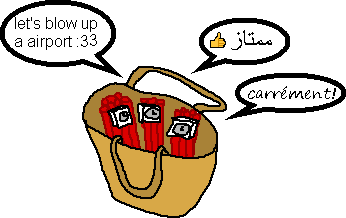
From me, still a youth, and at that time constituting the nature of body, with Democritus and his adherents in this matter, Gassendi and Descartes, in inert mass alone, there escaped a little book " Hypothesis Physica " ^ by title, in which I set forth a theory of motion, at the same time abstract (abstractam) from the system and concrete (concretavi) for the system,^ which beyond the merit of its
1 Sir Christopher Wren, 1631-1723, best known as the architect of St. Paul's, London, was distinguished at Oxford for his knowledge of geometry and applied mathematics. In 1660 he was elected Savilian Professor of Astronomy at Oxford. Newton, in his Principia, ed. 17i:(, p. 19, speaks highly of his work as a geometrician. Leibnitz refers to him in the Hypoth. phys., ef. Gerhardt, Leibniz, math. Schrift., II., 2 [Vol. 6], 26, 29, 30, 75 ; Philos. Schrift., 4,187,190, 191, 236. — Tk.
2 John "Wallis, 1616-1703, an eminent English mathematician, appointed Savilian Professor of Geometry, at Oxford, 1619, published his Mechaiiica, sive de Motu Tractatus Geometricnx, 3 parts, 1669-1671. His complete works were published, Oxford, 1693-1699, 3 vols., fol. The correspondence between Leibnitz and Wallis is found in Vol. 3 of this ed., and also in Gerhardt, Leibniz, math. Schrift., I., 4 [Vol. 4], 1-82. — Tr.
3 Of. ante, p. 121, note 4. An elaborate treatise on the percussion of bodies, De la percussion ou choc des corps, probably the one to which Leibnitz here refers, is found in first volume of his CEavres, Leyden, 1717. — Tk.
< Cf. Gerhardt, Leibniz, math. Schrift., II., 2 [Vol. 6], 17-80 ; Gerhardt, Leib- niz, philos . Schrift., 4, 177-240; Dutens, Leibnit. op. om., 2, Ft. IL, 1-4S. — Tr.
^ The compressed and somewhat obscure text is explained by the titles of two essays forming the Hypothesis Physica nova. The title of the first essay is : Theoria motus concreti sen Hypothesis de rationibus phsenomenorum nostri Orbis ; that of the second is : Theoria motus abstracti sen Rationes motuum universales a sensu et phxnomenis independentes. Cf. Gerhardt's Einleitung, Leibniz, philos. Schrift., 4, 9-12, and especially the portion, there quoted, of a letter to Foucher, found also in opi. cit., 1, 415 ; Erdmann, Leibnit. op. philos., 117; F. de Gareil, Lettres et Opuscules inidits de Leibniz, 7 aiis, 1854, 119-120; Dutens, Leibnit. op. om., 2, Pt. I., 242 ; transl. Duncan, Philos. Wks. of Leibnitz, e4-65.— Tk.
mediocrity I see has pleased many distinguished men. I there estab- lished, having assumed such a conception of body, the fact that every striking body gives its impulse (conatum) to the receiving or dkectly opposing body as such. For since, in the moment of attack, the receiving body undertakes to go forward and thus run away with itself, and that impulse (on account of the indifference then believed by me of the body to motion or rest) must have its effect wholly in the receiving body, unless hindered by a contrary impulse, nay, even if hindered by it, since it is so necessary that these different impulses should be adjusted among themselves ; it was manifest that no cause could be given why the striking body should not attain the eifeot towards which it tends, or why the receiving body should not receive the entire impulse of the striking body, and so the motion of the receiving body was composed of its own pristine impulse, and of the newly received or foreign impulse. From which then I was showing that if mathematical notions alone, — magnitude, figure, place, — and the change of these, or in the moment itself of impact (concursus) the iuipulses to change were perceived in the body, no theory of meta- physical notions being held, namely, of piower active (actricis) in form and of inactivity (^ignaoice), or of resistance to motion in matter, and so if it were necessary for the concourse of events to be determined by the geometrical composition of impulses alone, as we have ex- plained : then it must follow that the impulse of the striking body, even the least, is impressed upon the entire receiving body, although the greatest, and so the greatest body at rest is dragged away by the striking body, however small, without any retardation of this body, since indeed no repugnance, but rather indifference of it to motion, is contained in such a notion of matter. Whence it would not be any more difficult to impel a large quiescent body than a small one, and thus there would be action without reaction, and there could be no estimate of power, since anything whatever could be proved by any- thing whatever. And since these things, and many others of the same kind, are opposed to the order of things and conflict with the principles of a true metaphysic, I thought at that time thei'efore (and indeed truly) that the most wise Author of things in the construction of the system shunned those things which would foUow of themselves from the mere laws of motion derived from pure geometry.
But afterwards, having examined things more deeply, I saw in what the systematic explanation of things consisted, and regarded tliat former hypothesis of the notion of the body as' incomplete, and both by other arguments and also by this itself it was proved that in body there must be placed something besides magnitude and impene- trability, whence the consideration of forces arises, by adding the met- aphysical laws of which to the laws of extension those very rules of motion are produced which I called systematic; namely, that every
change takes place gradually, and every action is acoompauied with reaction, and new force is not produced without loss of the former, and so the one dragging always is retarded by the one dragged, and neither more nor less power is contained in the effect than in the cause. And since this law is not derived from the notion of mass, it must necessarily follow from another thing, which is in bodies, namely, from the force itself, which certainly always preserves its own quan- tity the same, although it is employed by differei>t bodies. Hence therefore, besides considerations purely mathematical, and subject to the imagination, I have concluded that certain considerations meta- physical, and xJeroeptible by the mind alone, must be admitted, and a certain principle superior to the material mass, and, so to speak, a formal addition, since indeed all the truths of corporeal things can- not be concluded from logical and geometrical axioms alone, namely, from great and small, whole and part, figure and position, but some others must be added from cause and effect, and action and passion, by which the reasons of the order of things are saved. Whether we call that principle form, or ci/reXtxtta, or force, does not matter, pro- vided we remember that it is intelligibly exhibited through the notion of forces alone.
But although to-day certain distinguished men, seeing this very thing, that the common notion indeed of matter is not sufficient, fetch in God a-n-6 ij.-qx'^^'i, and take away all force of acting from things, a kind of Mosaic philosophy as it were (as Fludd once called it), I cannot assent. For although I admit that it has been very clearly perceived by them that there is no proper influx of one cre- ated substance into another, if the thing is driven to metaphysical strictness, and I confess even freely that all things always proceed from a continuous creation by God ; yet I think there is no natural truth in things, the reason of which is to be sought immediately in the divine action or will, but that always in the things themselves something has been placed by God, whence aU their predicates are explained. It is certainly evident that God has created not only bodies, but also souls, to which correspond the primitive entelechies. But these things will be demonstrated elsewhere by their own proper reasons more profoundly drawn out.
-grombo
Meanwhile, although I admit an active principle superior to mate- rial notions and, so to speak, vital everywhere in bodies, yet I do not therefore here agree with Henry More and other men, distinguished for piety and genius, who so make use of a certain Archfeus i or hylar- chic principle even for the management of phenomena (ad phmnomena procuranda), as if forsooth all things cannot be explained mechani- cally in nature, and as if those who undertake this seem to make way
with incorporeal things, not without suspicion of impiety ; or as if with Aristotle it is necessary to imagine intelligences in the revolving orbs, or the elements must be said to be driven up or down by their own form, by a short (■compendiosa) but useless method of teaching : with these, I say, I do not agree, nor has that philosophy pleased me any more than that theology of certain ones, who so believed that Jupiter thundered or snowed that they even branded the searchers after proper causes with the crime of atheism. In my opinion the temperament is the best which satisfies both piety and science, so that we admit that all corporeal phenomena indeed can be sought from efficient mechanical causes, but we know that the mechanical laws in the universe are derived from higher reasons, and so we make use of a higher efficient cause only in establishing general and remote things. But these once established, as often as afterwards we treat of the near and special efficient causes of natural things, we give no place to souls or entelechies, no more than to the idle faculties or inexplicable sympathies, since the primal and most universal efficient cause itself, must not intervene unless as far as the ends are regarded, which the divine wisdom had in so ordering things, that we neglect no occasion of singing his praise and the most beau- tiful hymns.
And in truth final causes (as I have shown by a wholly remarkable example of an optical principle, with the strong approval of the very celebrated Molyneux in his " Dioptrics ") are repeatedly employed with large result even in special physics, not only that we may admire the more the most beautiful works of the supreme Author, but also that we may sometimes in this way divine what through the way of efficient causes not equally or only hypothetioally are manifest. Thus far perhaps philosophers have not yet sufficiently observed this use. And it must be maintained in general, that everything in things can be explained in two ways : through the kingdom of power or efficient causes, and through the kingdom of xoisdom or through final causes ; God regulating bodies as machines after the manner of an architect according to the laws of magnitude or mathematical latos, and indeed for the use of souls ; but souls, capable of wisdom, as his own fellow- citizens and sharers of a certain society with himself, after the manner of a leader, nay of a father rather according to the laws of goodness or moral laws for his own glory, both kingdoms everywhere inter- penetrating, yet unconfused and undisturbed the laws of each, so that at the same time both in the kingdom of power the grea(> est and in the kingdom of wisdom the best is obtained. But we propose in this place to establish the general rules of productive forces, which we can then use in the explanation of special efficient causes.
Next I came to the true, and indeed precisely the same, estimate
of forces, by the most different ways : one indeed a priori, from the simplest consideration of space, time, and action (which I elsewhere will explain), the other a posteriori, namely, by estimating the force by the effect which it produces in consuming itself. For 1 under- stand here not any effect, but that for which force must be expended or in which it must be consumed, which you can call, for that reason, violent, such as that effect is not, which a heavy body employs in run- ning through a perfectly horizontal plane, because in such an effect however produced it always retains the same force, although also in tliis very effect rightly treated, so to speak, as harmless, we have followed this our method of estimating, but now it is laid aside by us. Further I chose that effect of the violent effects whicli is especially capable of homogeneity or division into similar and equal parts, such as exists in the ascent of a body possessed of weight : for the elevation of a, heavy body two or three feet is precisely double or triple the eleva- tion of the same heavy body one foot ; and the elevation of a doubly heavy body one foot is precisely double the elevation of a single heavy body to the height of one foot ; whence the elevation of a doubly heavy body three feet is precisely six times the elevation of a simple heavy body one foot, supposing namely (at least for the sake of teaching, although perhaps in truth the matter is otherwise constituted, but the error here nevertheless is imperceptible), that the heavy bodies gravitate equally in the greater or less distance from the horizon. For in an elastic body homogeneity has not with equal ease a place. "When therefore I wished to compare bodies different or endowed with different velocities, I easily saw that, if the body A is single and the body B is double, but the velocity of each equal, the force of that one is simple, of this double, since, in short, whatever is placed in that once is placed in this twice. For in B there is a body twice the equal and equivalent of A itself, and nothing besides. But if the bodies A and C are equal, but the velocity in A is simple and in C double, I saw that, not in short what is in A, is doubled in C, since the velocity indeed is doubled, yet not also the body. And I saw that here an error has been made by those who believed that the force itself is doubled by that reduplication of modality (modalitatis) alone; as already I once observed and sug- gested, and that the true and not hitherto (although after so many Elements of universal Mathematics have been written) handed-down art of estimating consists in this, that finally it attains to something homogeneous; that is, a reduplication accurate and of all kinds, not only of modes, but also of things. Of which method no other better or more remarkable specimen could be given than that which is exhibited in this argument itself.
In order, therefore, to obtain these results, I considered whether these very two bodies A and C, equal in magnitude but different in
velocity, could produce some eifects equal to their causes and homo- geneous among themselves. For thus those things which by them- selves could not easily be compared, by their effects at least might be
X^.A I y' \ is produced. Let us suppose, there-
^~x.^::-^—Cy-'----- -i ^°^'®' *^® bodies A and C (Fig. .5)
pen, if at the moment in which they have their said velocities, A simple, B double, are known to exist at the extremities of the vertical pendulums PA, EC. But it is evident from the demonstrations of Galileo and others that, the body A with a velocity as 1 at the highest ascending above the horizon HR to the height of one foot ^A H, the body C with a velocity as 2 can surely ascend (at the highest) to the height fiR of four feet. AVhence it already follows that a heavy body having a velocity as 2 is in power four times as much as the one having a degree of velocity as 1, since by the expenditure of all its force it can accomplish, in short, four times as much. For raising a pound (that is, itself — id est se ip.ium) four feet, in short raises four times one pound one foot. And in the same manner it is inferred generally that the forces of equal bodies are as the sqviares of the velocities, and thence the forces of bodies in general are in reason composed of the simple of the bodies and the doubles of the velocities.
the classic blunders:
I have confirmed the same things to absurdity (namely, to per- petual motion) by bringing back the contrary opinion, generally received, especially among the Cartesians, according to which forces are believed to be in reason composed of bodies and velocities : which method, indeed, I used repeatedly to define a posteriori two states unequal in force, and to distinguish the greater at the same time from the less by a certain mark. And since in substituting the one for the other, perpetual mechanical motion or an effect more powerful than the cause does not arise, those states are not in the least equivalent to themselves, but that which was substituted for the other was more powerful because it has caused something greater to be performed. But I assume as certain that nature never substitutes things unequal to the forces themselves, but the complete effect is always equal to the full cause ; and, in turn, those things which are equal to the forces, with safe reckoning can be substituted by us for them with the freest supposition, as if we made that substitution in act, and thus
with no fear^ of perpetual mechanical motion. But if, therefore, it were true, as men generally persuade themselves, that a heavy body 4 as 2 (for so now we assume it) endowed with a velocity as 1, and a heavy body C as 1 endowed with a velocity as 2, are equivalent to each other, we ought to be able to substitute with impunity the one for the other. But this is not true. For let us assume that .4 as 2 has acquired a velocity as 1 in the descent j^A^A from the height ^AII less than a foot; and now in ^A itself or in the existing horizon, let us substitute instead of it the equivalent (as they wish) weight (pondus) C as 1 with a velocity as 2, which ascends as far as to C, or to the height of four feet. And so by the descent alone of the weight A of two pounds from the height of one foot ^^H, and having sub- stituted its equivalent, we have accomplished the ascent of one pound four feet, which is double the former. Therefore we have gained just as much force, or we have produced perpetual mechanical mo- tion, which is cei-tainly absurd. And it does not matter whether by the laws of motions we can actually accomplish this substitution; for between equivalents indeed substitution can safely be made. Although, indeed, we have thought out various plans by which it will be accomplished actually so nearly as we wish, that the entire force of the body A will be transferred to the body C, before at rest, but which now (A itself being brought to rest) is alone put in motion. Whence it will happen, that, instead of a weight of two pounds of a velocity as 1, would succeed one pound of a velocity as 2, if these were equivalent ; whence we have shown that an absurdity arises. For these things are not indeed worthless, nor do they consist in logomachies, but are of the greatest use in comparing machines and motions. For if any one has force from water or animals or from other cause, by which a heavy body of a hundred pounds is kept in constant motion, so that within a fourth part of a minute of time it can complete a horizontal circle of a diameter of thirty feet ; but another maintains that a double weight in its place, in the same time, uniformly accomplishes only half the circle with less expendi- ture, and reckons that to you as if it were a gain ; be it known that you are deceived and caught by half of the forces. But now having put to flight errors, let us set forth a little more distinctly in the second part of this hastily thrown-oS production (Schediasmatis) the true and truly to be admired laws of nature. ^
1 Gerhardt reads, " motu,' ' evidently a typographical error. Dutens, Leibnit. op. om., 3, 324, reads, " metu," which the translation follows. —Tr.
2 Dutens (Leibnit. op. om., 3, 324) adds: " proponemus, mense Maio exhi- benda," i.e. to he presented in the month of May. The article, however, never appeared in print, hut remained in Ms. among Leibnitz's papers, and was first printed by Gerhardt, in his edition of Leibnitz's mathematical writings. A translation of the article is herewith given. — Tn.
ESSAY ON DYNAMICS IN DEFENCE OF THE WONDER- FUL LAWS OF NATURE IN RESPECT TO THE FORCES OF BODIES, DISCLOSING THEIR MUTUAL ACTIONS AND REFERRING THEM TO THEIR CAUSES i
The natvire of body, nay, of substance in general, not being suffi- ciently known, had brought it about (a fact we have already touched upon) that certain distinguished philosophers of our time, since they placed the notion of body in extension alone, were compelled to have recourse to God in order to explain the union between the soul and the body, nay, also, the communication of bodies with each other. For it must be confessed that it is impossible for a mere extension, involving only geometrical notions, to be capable of action and passion: and so this alone seemed to be left to them, tliat, when man thinks and undertakes to move his ann, God, as it were, by a primeval compact, moves his arm instead of he himself ; and on the other hand, when the motion exists in the blood and spirits,^ God excites i:iercep- tion in the mind. But these very things, since they are foreign to a correct method of philosophizing, ought to admonish the authors that they are resting upon a false principle, and that they have not assigned rightly the notion of body, from which such things followed. We have shown, therefore, that there is in every substance a force of action and, if it is created, of passion also, that the notion of extension is in itself not complete, but that a relation to something which is extended, whose diffusion or continued replication it makes known, and so the substance of a body is presupposed, which involves a power of acting and resisting, and everywhere exists as a corporeal mass, and the diffusion of this is involved in extension. Whence one day we shall kindle a new light, also, for the explanation of the union of the soul and the body. But now we must show how from thence follow wonderful and extremely useful practical theorems, pertaining to Dynamics, that is, the science which teaches the rules especially of corporeal forces.
It must be known before all things that force, indeed, is some- thing truly real, even in created substances; but space, time, and motion have something of a rational entity, and are true and real,
iGorhardt, Leibniz, math. Schrift., II., 2 [Vol. C], pp. 246-254; aus d. Marmscript. der Kcinigl. Biblioth. zu Hannover.
2 Cf. Bacon's theory of the Spiritvs, a hrief account of which is given by Lasswitz, Gesch. d. Atomistik, 1, 431-432. — Tb.
not of themselves, but since they involve divine attributes, — im- mensity, eternity, operation, or the force of created substances. lience it already follows that there is no vacuum in space or time; that motion, moreover, separated from force, or where in it only the geo- metrical notions, — magnitude, figure, — and the variation of these are considered, is in truth nothing else than a change of position, and so motion, as far as (quoad) phenomena are concerned, consists in a mere relation, which also Descartes aclniowledged, when he defined transla- tion from the neighborhood of one body into the neighborhood of another. But in deducing his consequences lie forgot his definition, and determined the rules of motions as if motion was something real and absolute. So, therefore, we must consider, if an indefinite num- ber of bodies are in motion, that from the phenomena it cannot be deduced in which of them absolute determinate motion or rest exists, but to any one you please taken from these can be attributed rest, provided that the same phenomena come forth. Hence it follows (a result which Descartes did not notice) that the uniformity of the hypotheses is changed neither hy the encounters (concursus) of bodies tvith each other; and besides, that such rules of motions must be assigned that the respective nature of motion may remain intact, nor from the event after the encounter can it be divined through the phenomena where before the encounter there had been rest or determinate abso- lute motion. Whence the rule of Descartes does not at all accord with the facts, by which he asserts that a body at rest can in no way be driven from its place by another smaller body, and other things of this sort. Than which nothing is more remote from the truth. It follows, also, from the relative nature of motion, that the action of bodies against each other by turns or percussion is the same, provided they approach each other with the same velocity ; that is, the same appearance remaining in the given phenomena, whatever at length be the true hypothesis, or to whichever at length we rightly ascribe motion or rest, the same event appears in the phenomena sought or resulting, even in respect to the action of bodies among themselves. And this also is what we find by experience {experimur), that we shall feel the same pain, whether our hand runs against a stone at rest, suspended, if you please, from a thread, or the stone with tlie same velocity runs against our hand at rest. Meanwhile, we speak thus, according as the thing demands, for a more suitable and simpler explanation of the phenomena, precisely as in spherics we employ the motion of the primum mobile, and in the theory of the planets we must use the Copernican hypothesis, so that already these disputes, urged on with so much effort (in which even theologians were implicated), straight- way disappear. For although force is something real and absolute, nevertheless motion pertains to the class of relative phenomena, and truth is looked for not so much in phenomena as in causes.
getting involved in a land war in asia;
From our notions also of body and forces this principle arises, t?iat
what happens in svhsiance can he known to happen spontaneously and in
an orderhj manner. With this is connected the principle that no
change takes place by a leap. This posited, it follows also that atoms
' ^ ■ — ^^■' ^- — -^^ again jL' to 2-6, and thus meeting in 2^2-^
giJ to .^B. But supposing that atoms exist, that is, bodies extremely hard and thus inflexible, it is evi- dent that the change takes place by a leap or momentary incre- ment (momentaneam), for direct motion in the moment (momenta) itself of the encounter becomes retrograde unless we can assume that immediately after the encounter the bodies rest, that is, lose their force, which thing, besides the fact that it would otherwise be absurd, would continue again the change by a leap, a momentary increment (momentaneam), namely, from motion to
iB rest, and not however a transition by (~) intermediate steps. And so we must know, if the bodies A and B (Fig. 7) meet and come from ^A^B into the place Pjq^ 7^ of concourse ,4.,iJ, that there they are
gradually compressed like two inflated' balls, and more and more approach each other in turn by the con- tinually increased pressure ; that, moreover, by this thing the motion itself is weakened, the force itself of the effort being carried over into the elasticities (elastra) of the bodies, until at length they are reduced to rest ; but then at length the elasticity of the bodies restoring them, they themselves rebound from each other in turn with a retrograde motion begun again from rest and continually increasing ; at length with the same velocity with which they ap- proached each other, regained but turned in the opposite direction, they recede in turn from each other and return into the positions ^AJi which coincide with the positions ■^A■J3, if the bodies are supposed equal and of equal velocity. Thence it is already evident how no change takes place by a leap, but the progress being gradually dimin- ished and at length reduced to rest, then at length a regress arises. So that as from one figure another is not made (as from a circle an oval) unless through innumerable intermediate figures, nor is there any passing over from a place to a place or from a time to a time unless through all intermediate places and times, so not from motion is rest produced, and nmch less an opposite motion, unless through all the intermediate degrees of motions. And since this principle
is of so great consequence in nature, I wonder it is so little thought of. From these considerations follows what Descartes had attacked in his letters, and now also certain great men are unwilling to admit, that all reflection arises from elasticity, and a reason is given of many remarkable experiments which indicate that a body bends before it is propelled, as Mariotte has very beautifully illustrated. Finally, that especially wondei'ful principle follows from these considerations, that no body is so poor but that it has elasticity, and so is pervaded by a fluid still more subtile ; and then that there are no elements of bodies, and that neither the most fluid matter nor certain solid globules of the second element, exact and durable, are to be granted, but that analysis proceeds to infinity.
It is consistent with this law of continuity, excluding leap from change, that a case of rest can be considered as a special case of motion, namely, as an evanescent or very small motion, and a case of equality can be considered as a case of evanescent inequality. Whence the consequence is, that such laws of motions must be assigned that there be no need for peculiar rules for bodies equal and at rest, but these rules spring from the rules of bodies unequal and moving of themselves, or, if we wish to enounce peculiar rules for rest and equality, we must be careful lest we assign such as do not agree with the hypothesis which considers rest as the last motion or equality as the last inequality, otherwise we shall violate the harmony of things and our rules will not agree among themselves. This new system of testing our own or others' rules, I published first in the "Nouvelles de la Eepublique des Lettres," July, 1087, article 8,1 and called it a general principle of order (principium ordinis gen- erate), springing from the notion of the infinite and the continuum, adding to it the axiom, that from orderly data the results also are orderly (dalis ordinatis etiam qumsita sunt ordinata). I expressed the principle universally thus : If a case approaches a case continually in the data and at length disappears in itself, the results of the cases nmsl also approach each other continually in the things sought for, and at length cease in turn in themselves. {Si casus ad casum continue accedat in datis tandemque in ipsum evanescat, necesse est ut etiam eventus casuum sibi con- tinue accedant in quwsitis tandemque in se invicem desinant.) Precisely as in geometry the case of the ellipse approaches continually the case of the parabola, in proportion as one focus remaining another more and more remote is regarded as assumed, until in the case of another focus infinitely removed the ellipse passes into the parabola. AVli<?nce all the rules of the ellipse must be verified in the parabola (taken as an ellipse whose other focus is infinitely distant). Whence the radii falling parallel into a parabola can be conceived as coming from
going against a sicilian when death is on the line;
1 Of. Gerhardt, Leibniz, philos. Schrift., 3, 51-55; Erdmann, 104-106. — Tb.
another focus or tending towards it. Since, therefore, in the same way a case in which the body A runs against B in motion can be varied continually, so that the motion of A itself remaining, the motion of B itself is regarded as less and less, until at length it is regarded as disappearing in rest and thence again grows in the con- trary direction ; I say the result of the attack, but rebounding into what whether in A itself or in B itself, continually approaches by both motions the result of the attack which exists in the case of B at rest, and in it finally ceases ; and thus the case of rest both in the data (in datis) and in the result or that which is sought (qucesitis) is the limit of the cases of motion in a straight line, or the common limit of direct and continuous motion, and thus as it were a special example of either. With regard to this touchstone (Jydium lapidem), brought over by me from geometry to physics, when I examined the Cartesian rules of motions, it happened, wonderful to say, that a cer- tain hiatus or leap showed itself utterly abhorrent to the nature of things, for in expressing quantities by lines, and taking for abscissas {pro ahscissis) the motions of B itself before the encounter, the data, and for ordinates {pro ordinatim applicatix) the motion of the same after the encounter, the results sought for, and by drawing the line through the extremities of the ordinates {ordiriatarum), according to the precept of the rules of Descartes, this line was not a continuum, but something wonderfully gaping and leaping in a certain absurd and unthinkable manner. And when on that occasion I observed also that the rules of Rev. Father Malebranche did not bear this examina- tion in all things, the distinguished man having considered the matter again according to his candor, declared publicly that from this an occasion had arisen for him to change his rules, for which reason, also, he published a brief pamphlet. Although it must be confessed, that because he had not yet directed his attention sufficiently to the use of this new system, he has left something now also not yet suffi- ciently in all things complete {quadrant).
From what has been said, this wonderful principle also follows, thai the passion of every body is spontaneous, or arises from internal force, although upon external occasion. I understand here, however, passion proper, which arises from percussion, or which remains the same, whatever hypothesis at length is assigned, or to whatever at length we ascribe absolute rest or motion. For since the percussion is the same, to whatever at length true motion corresponds, it follows that the result of the percussion is distributed equally between both, and thus both act equally in the encounter, and thus half the result arises from the action of the one, the other half from the action of the other ; and since half, also, of the result or passion is in one, half in the other, it is sufficient that we derive the passion which is in one from the action also which is in itself, and we need no influence of the one upon
the other, although by the action of one an occasion is furnished the other for producing a change in itself. Certainly, while A and B meet, the resistance of the bodies, united with their elasticity, causes them to be compressed because of the percussion, and the compression is equal in each and according to whatever hypothesis, as the experi- ments show also, if any one conceives two inflated balls to meet, whether both are in motion, or each is at rest, even if the one at rest be sus- pended from some thread, in order that it may most easily recede ; for, always provided the velocity of approach or the respective velocity be the same, the compression, or the intensity of the elasticity, will be the same and equal in both. Then the balls A and B, restoring them- selves by the force of their own violent, namely, compressed and con- fined, elasticity, mutually repel each other by turns, and spread out, as it were, in an arc, and, with a force equal on both sides, each is driven back by the other, and so, not by the force of the other, but by its own force, it recedes from that one. But what is to be understood in the case of inflated balls is to be understood in the case of every body so far as it is passive in percussion, namely, that the rebounding and leaping apart arises from the elasticity in itself, that is, from the motion of the permeating etherial fluid matter, and thus from force internal, or proceeding from within. I understand, however, as I have said, that the proper motion of bodies is separated from the common, which can be ascribed to the centre of gravity ; whence their proper motion is so to be conceived (to be conceived, I say, by the way of hypothesis) as if they were produced on board a ship, which would have the motion of their common centre of gravity, but they them- selves on board ship were so moved that from the composite common motion of the ship or centre, and their own proper motion, the phenomena are preserved. From what has been said, also, it is undei'- stood that the action of bodies is never without reaction, and both are equal to each other, and directly contrary.
Since, then, only force, and thence nascent effort exists in any mo- ment (for motion never truly exists, as we have explained above), and every effort tends in a straight line, it follows that all motion is rectilinear, or composed of rectilinears. Hence, already it not only fol- lows that those bodies which move in a curved line, try always to proceed in the straight line tangent to it, but also, what any one least expects, hence arises the true notion of stability (frmitatis). For, if we suppose that some one of those bodies which we call stable (although in truth nothing is absolutely stable or fluid, but everything has a certain degree of stability or fluidity, by us, however, it is named from a predominant regard for our senses) circulates about its own centre, the parts will attempt to fly away by the tangent, nay, they will really begin to fly away ; but since this separation of themselves from each other in turn disturbs the motion of the encircling body, hence they are repelled^ or 2y
again crowded together towards themselves in turn, as if there were in the centre, a magnetic force of attraction, or as if there were in the parts themselves a centripetal force, and therefore the revolution will arise from the composition of the effort (nisu) to recede from the rectilinear by the tangent and the centripetal effoi't (conatu). And thus it remains that all curvilinear motion arises from the composition among themselves of rectilinear efforts, and at the same time it is understood that this crowding together by the encircling body is the cause of all stability. Otherwise it could not be that all curvilinear motion was composed of nothing but rectilinear motions. "Wlence, also, again, we have a new and not less than before unexpected argu- ment against atoms. Moreover, nothing could be devised more incon- sistent with things than that stability be sought from rest, for true rest never exists in bodies, nor from rest can anything arise but rest; but although A and B are mutually at rest with themselves, if not in fact, at least relatively (although this never occurs exactly, for no body jji'eserves exactly the same distance from another, however small the time), and although whatever is once at rest will alwaj'S be at rest unless a new cause is added, nevertheless it does not follow, for this reason, that because B resists the impelling body, it resists, also, the one separating it from another, so that certainly, as the resistance of B itself is overcome, or B itself driven forward, at the same time A follows. But were the attraction, which is not given in nature, but from the primitive stability (Jirmitate), explained through rest or something similar, it would assuredly follow. And so stability, also, should not be explained unless by the crowding together produced by the encircling body. For pressure alone does not sufficiently explain the matter, as if the separation of B itself from A itself only is im- peded, but it is to be understood that in fact they separate from each other in turn, that moreover one is again impelled to the other by the encircling body, and thus, from the composition of the two motions, this conservation of the conjunction is produced. And so those who conceive in bodies certain tablets or insensible layers (for example, of two polished marbles, which are exactly applied to each other), whose separation is made difficult on account of the resistance of the ambient body, and hence explain the stability of two sensible bodies, although very often they speak truly, yet when they suppose some stability in the layers again, they do not give the last reason for stability. From these considerations, also, it can be understood why I cannot in this thing continue (stare) in certain philosophic opinions of certain great mathematicians, who, besides the fact that they admit vacant space, and seem not to shrink back from attraction, consider motion, also, as an absolute thing, and hasten to prove it from the revolution and the centrifugal force which has thence arisen. But since the revolu- tion also arises only from the composition of rectilinear motions, it
follows, if the equivalent of the hypotheses is sound in rectilineal- motions, however assumed, that it will be sound in the curvilinears.
From what has been said it can also be imderstood that the common motion in many bodies does not change their actions among themselves, since the velocity with which they approach each other in turn, and thus the force of the encounter by which they act on each other in turn, is not changed. Whence the remarkable experiments follow which Gassendi mentions in his letters on motion impressed by a trans- ferred motor, that he might satisfy those who seemed to themselves to be able to infer the rest of the earth's sphere from the motion of projectiles. Nevertheless, it is certain that, if any [persons] are borne in a large ship (closed, if agreeable, or certainly so constituted that the external phenomena cannot be observed by the travellers), and if the ship is moved, although with great velocity, yet quietly or uniformly, they themselves will have no principle by which to dis- tinguish (from those things, namely, which take place on shipboard) whether the ship is at rest or moves, even if by chance they play ball on the ship, or practice other movements. And this fact must be noted in favor of those whose belief accords with the not rightly understood notion of the Copernicans, that according to these, things projected from the earth into the air are carried off (abripi) by the air with the gyrating earth, and thus the motion of the bottom fol- lows, and fall back upon the earth just as if this were at rest ; a view which is properly judged insufficient, since the very learned men who make use of the Copernican hypothesis conceive, rather, that some- thing on the surface of the earth is moved with the earth, and, just as if discharged from a bow or hurling machine (tormento), carries with itself the impetus made by the gyration of the earth, together with the impetus made by the projection. Thence, when their double motion is the one common with the earth, the other peculiar to the projection, it is no wonder that the common motion changes nothing. Meanwhile, it is not to be disguised that, if the projectiles could be driven so far, or if the ship were conceived so large, and borne with such velocity, that before the descent the heavy earth or ship described an arc perceptibly different from a straight line ; a distinction would be discovered, because then, indeed, the motion of the earth or ship (because circular) does not remain common to the motion which was impressed upon the missile by the gyration of the ship or earth (because rectilinear). And in the eifort of heavy bodies towards the centre, external action is added, which can no less produce a diversity of phenomena, than if the compass were kept closed on the ship, which would certainly indicate a variation of the ship. As often, however, as the question concerns the equivalence of hypotheses, all things must be united which concur in the phenomena. From these considera- tions, also, it is understood that any composition of motions or rcso-
lution, whatever, of one motion into two or moi-e can safely be employed, concerning which, nevertheless, a certain very clever man in the works of Wallis had hesitated, not without reason. For the matter certainly deserves proof, and cannot (as is done by many) be assumed as in itself known.
Besides the world or the aggregate of finite things, there is a Unique Being who rules, not onl}^ as the mind in me, or rather as I in niy body rule myself, but also in a much higher manner. For this unique sovereign of the imiverse not only rules the world, but also frames or fashions it, and is superior to the world and, so to speak, outside the world (extramundanuni) , and thus is the ultiu}ate reason of things. For the sufficient reason of existence can be found neither in any single thing, nor in the entire aggregate and series of things. Let us suppose that there was an eternal book of the Elements of Geometry, one copy alwaj'S made from another, it is evident that, although we can account for the present book by the past, whence it has been copied, nevertheless we never, by assuming in the past as many books as we please, come to the complete reason, for we may always wonder why, from all time, such books have existed ; that is to say, why these books were written, and why so written. What is true of books is likewise true of the different states of the world, for the following state has in a measure been copied from the preceding (although according to cei'tain laws of change), and so to whatever extent you go back into anterior states, you will never find in these states the full reason; that is to say, why any world exists rather than none, and why such an one.
believing things will be much easier in the mountains
Therefore, although you imagine the world to be eternal, since, nevertheless, you assume only a succession of states, and do not find in any one of these whatever the sufficient reason, nay more, since by assuming anj' number you please you do not advance even the least towards accounting for them, it is evident that the reason must be sought elsewhere. For in eternal things we must understand that,
1 Gerhardt, Leibniz, philos. Scluift., 7, 302-308; Erdmann, 147-150; Janet, 2, 54(;-553 (in French) . — Te.
even if there were no cause, yet there is a reason, which in persisting things is the necessity itsell or the essence ; but in a series of chang- ing things, if we suppose that this series proceeds from a prior series eternally, the reason would be the prevalence of inclinations, as we shall soon see, in which, that is to say, the reasons do not necessitate (with an absolute or metaphysical necessity so as to imply the con- trary), but incline. From these considerations it is evident that we cannot escape the ultimate extramundane reason of things or God by assvmning the eternity of the world.
The reasons therefore of the world lie concealed in something outside the world, different from the chain of circumstances or series of things, whose aggregate constitutes the world. We must then come from physical or hypothetical necessity, which determines the posterior states of the world from the prior states, to something which is of absolute or metaphysical necessity, the reason for which cannot be given. For the present world is physically or hypothetically but not absolutely or metaphysically necessary. In fact, having assumed that it is what it is, it follows that henceforth things must be what they are. Since, therefore, the ultimate root must be in something which is metaphysically necessary, and since there is no reason of the existing unless from the existing, it is therefore necessary that a unique being exist of metaphysical necessity, or whose essence is existence, and that thus something exists fliifei-ent from the plurality of beings or the world, which we have admitted and shown not to be of metaphysical necessity.
But that we may explain a little more distinctly how temporal, contingent or physical truths originate in eternal, or essential or metaphysical truths, we must first know, that, by the very fact itself that something rather than nothing exists, there is some demand for existence in possible things or in possibility itself or essence, or (so to speak) a stretching forth to existence, and, to sum it up in a word, that essence per se tends to existence. Whence it hereafter follows, that all possible things, or those expressing essence or pos- sible reality, with equal right tend to essence (essentiam^) in pro- portion to the quantity of essence or reality, or in proportion to tlie degTee of perfection which they involve ; for perfection is nothing else than quantity of essence.
But from this we see most clearly that from the infinite combina- tions of possible things and possible series there stands forth one through which the greatest quantity of essence or possibility is brought through to existence. There is always, in fact, in things a
1 The reading according to both Gerhardt and Erdraann. Janet's French version reads : " 1' existence." Tlie argument would seem to require the read- ing '* existentiam." — Tr.
principle of determination which is to be sought from the maximum or minimum, so that beyond question the greatest effect is manifested with, so to speak, the least expense. And here time, place, or, in a word, the receptivity or capacity of the world can be considered as the expense or ground upon which, as conveniently as possible, it must be built, while the varieties of the forms correspond to the proportion of the building and the number and elegance of the rooms. And it is as in certain games when all the places at a table must be filled according to certain laws, where, unless you employ a certain skill, hindered finally by the unfavorable places, you will be compelled to leave vacant more places than you were able or desired to do. There is, however, a certain method by which the greatest possible space is most easily filled. If therefore, for instance, we assume that it has been decreed that there be a triangle, though with no other accidentally determining condition, the result is an equilateral triangle ; and if it is assumed that we must proceed from point to point, though nothing determines the road beyond, the easiest and the shortest way will be chosen ; thus having once assumed that being prevails over non-being, or that there is a reason why something rather than nothing existed, or that from possibility a transition must be made to act, it follows hence, in the absence of any further determination, that the quantity of existence is as great as possible in proportion to the capacity of the time and place (or the order of possible existence), just as tiles are so laid that in the proposed area as many as possible may be contained.
Erom these considerations we understand already in a wonderful way how, in the very original formation of things, a certain Divine Mathematics or Metaphysical Mechanics is employed, and the deter- mination of the greatest amount of existence has place. Thus the right angle is the determinate of all the angles in Geometry, and liquids placed in different media arrange themselves in the most capacious form, namely, the spherical; but especially in general Mechanics itself, when many heavy bodies struggle with each other, such a motion at length arises, through which the greatest descent on the whole is accomplished. For if all possibilities with equal right tend to existence according to the measure of reality, so all weights by equal right tend to descend in proportion to the measure of gravity, and as here the motion appears, in which is contained the greatest possible descent of the heavy bodies, so there the world appears, through which is realized the greatest possible production of possibilities.
And so also we already have physical necessity from metaphysical : for although the world is not metaphysically necessary, so that the contrary implies contradiction or logical absurdity, it is nevertheless physically necessary or determined so that the contrary implies
i loved the scene with the women dolling up to war drums, its very symbolic of how “western values” or whatever are weaponized against the colonial powers
imperfection or moral absurdity. And as possibility is the source of essence, so perfection or the degree of essence (through which the greatest number of things are compossible) is the source of exist- ence. Whence it is at the same time evident how freedom exists in the Author of the world, although he does all things determinately because he acts from the principle of wisdom or perfection. Indif- ference certainly arises from ignorance, and the greater one's wisdom the more he is determined to the most perfect.
But (you will say) this comparison of a certain determining meta- physical mechanism with the physical one of heavy bodies, although it seems elegant, nevertheless is wanting in this because the struggling heavy bodies truly exist, but the possibilities or essences before or besides existence are imaginary or fictitious, therefore no reason of existence can be sought in them. I reply that neither these essences nor the eternal truths which they call from them are fictitious, but exist in a certain so to speak region of ideas, namely in God himself, the source of every essence and of the existence of the rest. That we do not seem to have spoken gratuitously, the existence itself of an actual series of things indicates. For since reason is not found in this series, as we showed above, but must be sought in meta- physical necessities or eternal truths ; moreover, since existences cannot exist unless from existences, as already we maintained above, eternal truths must have existence in a certain absolute or meta- physically necessary subject, that is in God, through whom these things, which otherwise would be imaginary, are (to speak barbar- ously but significantly) realized.
And in truth actually in the world we observe that all things take place according to the laws of the eternal verities not only geomet- rical but also metaphysical, that is, not only according to material necessities, but also according to formal reasons ; and that is true not only generally in that reason of the existing rather than non- existing, and the so rather than otherwise existing world which we have now explained (which certainly is to be sought from the tend- ency of possibilities to existence), but also by descending to specials we see, by a wonderful plan in all nature, the metaphysical laws of cause, power, action, have place, and these prevail over the purely geometrical laws themselves of matter, as in giving the reasons of the laws of motion I have observed to such an extent that I was finally compelled to abandon, as elsewhere I have more at length ex- plained, the law of the geometrical composition of impulses (cotialuum), defended formerly by me, a youth, when I was more materialistic.
Thus, therefore, we have the ultimate reason of reality both of essences and of existences in one, which assuredly greater, above and before the world itself is necessarily existent, since through itself not only existences, which the world embraces, but also possibilities,
have reality. But this can be sought only in one source on account of the connection of all things with each other. It is evident, more- over, that from this source existing things continually spring forth (promanare) and are produced and the products exist, since it is not apparent why one state of the world rather than another, yesterday rather than to-day, flows from itself. It is also evident how God acts not only physically but also freely, and is in himself not only the efficient but also the final cause of things, and how an account is taten by him, not only of grandeur and power in the mechanism of the universe already constituted, but also of goodness and wisdom in that to be constituted.
And lest any one may think that moral perfection or goodness is here confounded with metaphysical perfection or magnitude, and the latter being granted may deny the former, it is to be understood that it follows from what has been said, not only that the world is the most perfect physically, or, if you prefer, metaphysically, or that that series of things has been produced in which the greatest pos- sible reality is actually manifest, but also that it is the most perfect morally, because in reality moral perfection in souls themselves is physical. Whence the world is not only an especially admirable mechanism, but also, as far as it is composed of souls, is the best Republic, through which there is brought to souls the greatest pos- sible felicity or joy in which their physical perfection consists.
But, you will say, we experience the contrary in the world, for the best very often fare the worst, the innocent, not only beasts, but also men, are struck down, and even killed with torture ; finally, the world, especially if the government of the human race be regarded, seems rather a certain confused chaos than a thing arranged by a certain supreme wisdom. So at first view I confess it seems, but the contrary must be established by a more thorough inspection ; a priori, it is evident from these very considerations which have been brought for- ward, that the highest possible perfection, namely, of aU things, and so also of mind, is obtained.
And in truth it is unjust to judge, unless after an investigation of the whole law, as the jurisconsults say. We know a small part of the eternity extending into immensity ; for how little is the memory of a few thousands of years which history recounts for us. And yet, from so small experience we judge rashly concerning the immense and the eternal, as men in a prison, or, if you prefer, born and educated in the subterranean salt-pits of the Sarmatians, thought that there is no other light in the world but that dim lamp light scarcely sufficient to direct their steps. We look at a very beautiful picture, we cover this entirely, reserving a small portion ; what else in this will appear, even if you look very attentively, nay, how much more will you observe from near by than a certain confused congeries of colors without
choice, without art; and nevertheless, when the whole covering is removed, and you shall see the whole picture in the proper position, you will know that that which seemed thoughtlessly spread upon the canvas has been done with the highest art by the author of the work. What the eyes observe in pictures, the ears perceive in music. Eminent composers very often mix discords with concords in order to arouse, and, as it were, sting the hearer, and as more solicitous concei-uing the outcome, all having soon been restored to order, that he may rejoice so much the more, in short, that we may take pleasure in petty dangers or experiences of evils by the sense itself, or by the display of either our power or happiness ; or, as we delight in the spectacle of the rope-dancers, or in the sword-dance (saltatione inter gladios — sauts perilleux, Leibnitz), things that themselves excite terror, and we, our very selves, half let down the children in sport, as it were, now almost about to throw them before us, just as the ape bore Christian, king of Denmark, when an infant, and wrapped in swaddling clothes, to the roof of the house, and while all were anxious, like one in sport bore him safe back again into his cradle. In accord with the same principle, it is insipid always to eat sweet things ; sharp, sour, nay more, bitter things which excite the taste, are to be mixed with them. He who has not tasted the bitter, has not deserved, nay more, will not appreciate the sweet. This itself is the law of joy, that pleasure does not proceed uninterruptedly ; for this produces disgust, and makes us inert, not joyful.
But what we have said of this part which can be disturbed while the harmony on the whole is preserved is not so to be interpreted as if no account is taken of the parts, or as if it would suflBce that the whole world be complete in its own parts, although it can happen that the human race is wretched, and that there is no care for justice in the universe, or account taken of us, as some think, who judge not rightly enough concerning the totality of things. For we must know that, as in the best constituted republic, care is taken that it be as well as possible with individuals, so the universe would not be suffi- ciently perfect unless, while the harmony of the universe is preserved, as much regard is had for particular interests. Of which thing no better measure could be constituted than the law itself of justice, saying that each should take part in the perfection of the universe, and in happiness proper in proportion to the measure of his own virtue and of that will which is a disposition of mind (riffectus) toward i the common good, by which that itself is completed which we call the affection and love of God, in which alone the force and also the power of the Christian religion consists, in the judgment even of the wise theologians. Nor should it seem wonderful that so much is conferred
it’s so funny that the Pentagon screened this in 2003 to try and get the American military to not make the same mistakes
1 Gerhardt reads, incorrectly, " ergo " ; Erdmann, correctly, " erga " — Tb..
upon souls in the universe, since they very closely reproduce the image ' of the supreme author, and are related to him not only as machines to the maker (like the rest), but also as citizens to the prince, and will continue in existence equally with the universe itself, and express and concentrate in a measure the whole in themselves, so that it can be said that souls are the entire parts.
But as regards the sufferings especially of good men, it must cer- tainly be maintained that they result in their greater good, and that is true not only theologically, but also physically, as the grain cast into the earth suffers before it bears fruit. And on the whole, it can be said that sufferings, temporarily evil, are in effect good, since they are the short roads to greater perfection. So, in physios, those liquors which ferment slowly are improved more slowly, but those in which the fermentation is stronger are improved more readily, the parts being thrown off with greater force. And this is, as you would say, to go back, in order, by a greater effort, to leap forwards {qu'on recule pour mieux sauter, — you go back to take a better leap) . These views, therefore, must be maintained to be not only pleasing and comforting, but also most true. And in general, I think there is nothing, both truer than happiness, and more propitious and more delightful than truth.
Respecting the increase also of the beauty and general perfection of the divine works, a certain perpetual and very free progress of the whole universe is to be recognized, so that it proceeds to ever greater culture. As for instance, a great part of our earth receives culture and will receive more and more. And although it is true that some- times some parts grow wild again or are destroyed and depreciated, yet this must so be understood, as a little before we interpreted suf- fering, namely, that this destruction and depreciation itself is useful in the attainment of something greater, so that iu some measure we gain by the very loss.
And as to the objection which might be made that thus the world should long ago have been made a paradise, the reply is at hand : although already many substances have attained great perfection, nevertheless, on account of the divisibility of the continuum to infinity, there always remain in the abyss of things parts hitherto asleep, to be aroused and carried forwards to something greater and better, and, in >■ word, to a better culture. And accordingly, progress never comes to an end.
1 Both Gerhardt and Erdmann read, " imagine " ; manifestly a typographi- cal error for " imagiuem." — Tb.
Up to the present time, I have published no book, indeed, against the Cartesian philosophy, but often in the " Acta Eruditorum Lipsien- sium " and the " Journaux " of France and Holland hastily-thrown-off productions {Schediasmata) will be found inserted by me, in which I haye borne witness to my dissent from it. But first (not to speak now of the others), about the nature of the body and what motive forces are in the body ; in all others my opinion was the same. The Cartesians, it is true, place the essence of body in extension alone, but I, although with Aristotle and Descartes against Democritus and Gas- sendi I admit no vacuum, and against Aristotle with Democritus and Descartes think there is nothing but an apparent rarefaction and con- densation, yet I think with Democritus and Aristotle against Des- cartes, that there is something passive in body besides extension, that, namely, by which body resists penetration ; but besides this, I also recognize with Plato and Aristotle against Democritus and Descartes an active force or Irnkix^ia, so that I think Aristotle so far rightly defined nature as the source (principium) of motion and rest, not because I think any body, unless already in motion, can be moved by itself or be put in motion by any quality such as gi-avity, but because I think every body always has implanted in it motive force (motricem), nay, rather motion actually intrinsic (motum intrinscum actualem) , from the very beginning of things. JMoreover, I agree with Democritus and Descartes against the multitude of the Scholastics, that the exercise of the motive (motricis) power and the phenomena of bodies can always be explained mechanically, the causes themselves of the laws of motion being withdrawn which spring from a higher source, namely, from the entelechy, which cannot be derived from the passive mass alone and its modifications.
But in order that my opinion may be better understood and its reasons also may be somewhat apparent, I think, in the first place, that the nature of body does not consist in extension alone, because in evolving the notion of extension we must notice that it is relative to something that is extended and signifies a diffusion or repetition
1 Gerhardt, Leibniz, math. Schrift., II, 2 [Vol. C], 98-106 ; Gerhardt, Leibniz, philos. Schrift., i, 393-400; cf. G.'s Einleitunrj, ibid., 271-272. The letter to Honoratus Fabri, and this Appendix, were printed by Gerhardt Irom the Ms. in the Eoyal Library at Hanover.
of a certain nature. For every repetition (or nmltitude of the same things) is either discrete, as in numbers where aggregate parts are discerned; or is continuous, where the parts are indeterminate and can be assumed in infinite ways. Continua, however, are of two kinds ; the one successive, as time and motion, the other simultaneous or consisting of coexisting parts, as space and body. And as in time we conceive nothing else than the disposition or series itself of varia- tions, which can occur in itself, so in space we perceive nothing else than the possible disposition of bodies. And so when space is said to be extended, we accept the statement in the same sense as when time is said to endure or number to be numbered; for, in truth, time adds nothing to duration nor space to extension, but as I successive variations are in time, in body those things are diverse which can be diffused. For, because extension is a simultaneous continuous repetition as duration is a successive one, as often as the same nature is diffused at the same time through many things, as ductility or specific gravity or the yellow-color in gold or the white- color in milk, extension is said to have place generally in body as resistance or impenetrability, although it must be confessed that that diffusion continuous in color, weight, ductility, and things similar in kind but homogeneous, is only apparent and has no place in parts however small, and so the extension of resistance alone which is diffused through matter preserves this name with the strict mvesti- /^gator. But it is evident from these considerations, that extension is L not an absolute predicate, but relative to that which is extended or /diffused, and from the nature of which, diffusion can just as little be separated as number from the thing numbered. And hence those *- who assumed extension as an absolute primitive attribute, indefinable and apprjTov, ei'ied by defect of analysis and took refuge in the occult qualities which for the rest they so despised, as if extension were something that cannot be explained.
i liked the shot at the very end of the French calling out into a cloud of smoke and it dissipates leaving a mass of people
The question now is asked, What is that nature whose diffusion constitutes body? We have already said that matter is constituted by the diffusion of resistance ; but since in our opinion there is some- thing else in body besides matter, the question is asked in what its nature consists. We say, therefore, it can consist in nothing else than ev rS hvva/xiKm or the indwelling principle of change and per- sistence. Whence also it uses the physical doctrine of the two mathe- matical sciences to whose principles it was subordinated, geometry and dynamics, the elements of which latter science not yet sufficiently propounded, I have elsewhere promised. Moreover, geometry itself, or the science of extension, again is subordinated to arithmetic, be- cause in extension, as I said above, there is repetition or multitude, and dynamics is subordinated to metaphysic which treats of cause and effect.
Again, to Svva/j,iK6v ov power in body is twofold, — passive and active. Passive power properly constitutes matter or mass, active ivrtXix^ia or form. Passive power is the resistance itself by which body resists not only penetration but also motion, and by which it happens that another body cannot enter into its place unless itself yields, but itself does not yield unless by retarding somewhat the motion of the impelling body, and so it attempts to continue steadfastly in its former state, not merely that it may not depart thence voluntarily, but also that it may resist change. And so there are therein two resistances or masses : the first antitypy, as they call it, or impenetra- bility ; the second resistance, or what Kepler calls the natural inertia of bodies, which Descartes also somewhere in his letters acknowledged, from the fact that bodies certaiuly receive no new motion unless by force, and so resist the impression and break its force. This would not happen if there were not in the body, besides extension, to Swa- IMKov or the principle of the laws of motion, by which it happens that the quantity of forces cannot be increased, nor can a body even be impelled by another unless its own force is broken. This passive force in the body, moreover, is everjrwhere the same and proportional to its magnitude. For although some bodies appear more dense than others, this nevertheless happens because their pores are more filled with matter pertaining to the body, while, on the contrary, the rarer bodies have the nature of a sponge, so that another more subtile matter glides through their pores which is not reckoned with the body nor its motion followed or looked for.
Active force, which also absolutely is customarily called force, is not to be conceived as a simple common power of the schools, or as a receptivity of action, but involves a conatus or tendency to action, so that, unless something else hinders, action follows. And in this properly consists ivTeXi)(e.ia, too little understood by the schools ; for such a power involves act (pactum), and does not persist in a naked faculty, although it does not always proceed wholly to the action (actionem) to which it tends, as often, namely, as an impediment is thrown in its way. Again active force is twofold, — primitive and deri- vative; that is, either substantial or accidental. Primitive active force, which is called by Aristotle ivreXix^uj. rj tt/outt;, generally the form of substance (forma suhstantice), is another natural principle which with material or passive power completes the corporeal substance, which is, forsooth, a unum per se, not a mere aggregate of many substances; for there is much difference, for example, between an animal and a flock. And so this enteleohy or soul, or something analogous to the soul, exists, and always naturally actuates some organic body, which itself separately assumed (quod ipsum separaiim swntum), when the soul is separated forsooth or removed, is not one substance, but an aggregate of many ; in a word, a natural machine.
This natural machine, moreover, lias this highest prerogative as compared with an artificial, that exhibiting a proof of a divine author, it consists of infinite organs wrapped up in itself, and so can never be utterly destroyed, just as it cannot be absolutely produced, but can be diminished only and increased, and be involved and evolved, this being to a certain extent itself a substance, and in it (however trans- formed) a certain degree of vitality, or, if you prefer, of primitive activity being always preserved. For what is said of animate things must also be said proportionally of those which are not properly ani- mals. Meanwhile, it must be maintained that intelligences, or the more noble souls which are also called spirits, are ruled by God not only as machines, but also as subjects, and are not liable to those changes to which other living beings are exposed.
Derivative force is that which some call impetus, a conatus evidently or tendency, so to speak, to a certain determinate miotion, by which accordingly primitive force or the principle of action is modified. I have shown that this is not pi-eserved the same in the same body, but yet, however distributed in many, it remains the same in the amount and differs from motion itself, whose quantity is not preserved. And this itself also is the impression which a body receives by impulse, by whose aid projectiles continue their motion and do not need any new impulse, which Gassendi also has illustrated by elegant experiments made on shipboard. Thus also some incorrectly think that projectiles have their motion continued by the air. Further, derivative force differs from action only as the instantaneous from the successive ; for there is already force in the first instant, but action requires a period of time, and so is brought to pass by the prolongation of forces in time, which is perceived in any part of the body whatever. And so action is in reason composed of body, time, and force (vis) or energy (virtuds), since by the Cartesians the quantity of motion is estimated by the calculation of velocity in the body, and forces are considered far otherwise than as velocities, as will soon be stated.
To place active force in bodies moreover, many things compel us, and especially the experience itself, which shows that motions are in matter, although these motions must be attributed originally to the general cause of things, — God; immediately, however, and specifically, they must be attributed to the force placed in things by God. For to say that God in creation has given to bodies a law of action, is nothing unless he has given at the same time something by which the law is observed ; otherwise he himself will be obliged always to procure in an extraordinary manner the observance of the law. Yea, rather his law is efficacious, and makes bodies efficient ; i.e. he gave to them natural (insitam) force. Further, we must consider that derived force and action is a certain mode (modale), since it admits change. Eut every mode is constituted by some modification of something persist-
ing or more absolute. And just as figure is a certain limitation or modification of passive force or extended mass, so derivative force and moving action (actio motrix) is a certain modification not certainly of a thing merely passive (otherwise a modification or limit would involve more reality than the thing itself which is limited), but of something active, that is, of the primitive entelecliy. Therefore, derivative and accidental or changeable force will be a certain modification of the primitive energy (virtutis) essential to and abiding in every corporeal substance. Whence the Cartesians, since they acknowledge no active principle substantial and capable of modification in the body, are compelled themselves to reject (abjudicare) all action, and to trans- fer it to God alone, a far-fetched mechanical view (accersitum ex Machina), which is not philosophical.
But primitive force is changed by derivative in the impacts of bodies, according as the exercise of primitive force is turned within or without. For in truth, every body has an internal motion, nor can it ever be brought to rest. This internal force, again, turns itself with- out, when it performs the duty of elastic force, when, namely, internal motion is impeded in its accustomed oom-se, whence every body is essentially elastic, water not even excepted, and how violently this rebounds, even the cannon baUs {pilce iormentarice) show. And unless every body were elastic, the laws of motions could not be proved true and binding. Meanwhile this force does not always render itself conspicuous in the sensible parts themselves of bodies, since these manifestly do not sufficiently cohere. But the harder a body is, the more elastic it is and the more strongly it rebounds. Indeed in impact, when bodies mutually rebound from each other, this occurs through elastic force, whence indeed bodies always have their own special motion from impact by their own special force, to which a foreign impulse furnishes only an occasion of acting, and, so to speak, a determination.
Hence, moreover, we understand that, although that primitive force or form of substance (which, it is true, determines even the forms in matter, while it produces motion) is admitted, yet in ex- plaining elastic force and other phenomena we must always proceed mechanically, certainly by the forms which are modifications of matter and by impulses which are modifications of form. And it is useless, when distinct and specific reasons should be given, to have recourse immediately and in general (generice) to form or primitive force in a thing, as it is useless in explaining the phenomena of created things to recur to the first substance or God, unless his means or ends are at the same time specifically explained, and the proximate efficient or even the special final causes are rightly assigned, so that his power and wisdom appear. For in general (whatever Descartes may have said), not only efficient, but also final causes, belong to physical dis-
cussion (tractationis) ; precisely as a house is badly exhibited, if any of its parts betrays its structure only, not its use. I have further already pointed out above that, since we affirm that all things in nature are explained mechanically, the reasons themselves of the laws of motion or the principles of mechanics must be excepted, which should be deduced not from mathematics alone and the imagination of the sub- ject, but from a metaphysical source, namely, from the equality of cause and effect, and from other laws of this kind which are essential to entelecliies. Certainly, as has already been said, physics is subor- dinate through geometry to arithmetic, through dynamics to meta- physics.
the camerawork, lighting, all the technical aspects (except maybe the audio) were really excellent. so many cramped spaces, dark shadows, white roofs and skies
15ut the Cartesians, not sufficiently understanding the nature of forces, confounding motive force with anotion, have seriously erred in determining the laws of motions. For although Descartes knew that the same force must be preserved in nature, and that a body, although he attributed a part of its force (namely, the derivative) to another, so retains a part that the sum of the forces remains the same, (yet), deceived by the example of equilibiium or dead force as I call it (which here does not enter into the reckoning, and of living force or of that which is now in question, it is only an infini- tesimal part), (he) believed that force exists in a composite system (i-allone compusita) of masses and velocities, or that it is the same as that which he calls quantity of motion, by which term he under- stands the product of the mass into the velocity {ex ductu massce in celeritalein'),Yi\iQQ, nevertheless, it has elsewhere been demonstrated by me u priori that forces exist in a composite system of simple masses and double velocities. I know that lately certain learned men, when at length they were compelled to admit against the Cartesians that the same quantity of motion is not preserved in nature, and considered this too alone as absolute force, concluded that this force also does not abide, and took refuge in the conserva- tion alone of relative {respectiva:) force, but we have discovered that not in the conservation of absolute force even has nature been mindful of her own constancy and perfection. Aiid the opinion of the Cartesians indeed, in which the quantity of motion is pre- served, contradicts all the phenomena, (while) ours is wonderfully confirmed by experiments.
The Cartesians err, also, in this, because they think that changes occur by a leap {per saltum) ; as if, for example, a body at rest can in a moment pass over into a state of determined motion, or as if a body placed in motion can suddenly be brought back to rest, not by passing through the intermediate grades of velocity, because they have plainly not understood the use of elastic force in the concourse of bodies. Which, if it were absent, 1 confess that neither the law which I call the law of continuity would be observed in things, through which
leaps are avoided, nor the law of equivalence by which absolute forces are conserved, nor other excellent inventions of nature's architect have place, by which the necessity of matter and the beauty of form are united. Moreover, the elastic force itself implanted in every body shows that there is in every body, also, internal motion and infinite (so to speak) primitive force, although in the impact itself, when circumstances demand, it is determined by derivative force. [For, as in an arch, any part whatever sustains the entire weight, or in a tense cord the traction, and any portion whatever of compressed air, has as much force as the weight of the air pressing upon it, so any corpuscle whatever, of the entii-e ambient (amhientis) mass is solicited to action by the conspiring force, and awaits nothing but an occasion for exer- cising its power, as is shown by the example of gunpowder (pulveris pyHi)-].
There are many other things in which I have been obliged to de- part from Descartes, but those which I have now brought forth relate chiefly to the principles themselves of corporeal substances, and, if you interpret them rightly, are capable of vindicating the ancient philos- ophy of a healthier school, which I see deserted by many of the more recent scholars, even those well disposed towards it, where there was no need. The philosophy of Rev. Father Ptolemaaus,! a man very versed in the principles of the ancients and the moderns, whose remarkable teaching I examined myself, at Rome (from which philos- ophy I promise myself very much), has not yet reached us.
In a note, Leibnitz has added : In addition, I am pleased to state, that although very many Cartesians boldly reject forms and forces in bodies, Descartes nevertheless spoke more moderately, and professed this only, that he found no reason for using them. I indeed admit that they should be rejected if of no use ; but in this very thing I have shown that Descartes has erred. For not only in entelechies, or T(S SvvafjLLK<5, are placed the principles of mechanism, by which all things are regulated in bodies, but I have also shown in the "Acta Eruditorum," ^ when I was replying to the very celebrated man, John Christopher Sturm,^ who attacked, in his "Physica Eclectica," my in-
1 Giovanni Battista Tolomei, 10."i:V1726, was acquainted with all the Euro- pean languages and had a very extensive knowledge of all the sciences of his time, and was reputed a, profound theologian and skilful critic. Among his works was Philosophia mentis et sensuum, Komfe, 1696, fol., Augusts Vin- delicorum, 1698, fol. — Tr.
2 Sept. 1698. The piece is the De ipsa natura, af. Gerhardt, Lelhwx. philos. Schrift., 4,504-516; Erdmann, l."i4-160; Jacques (in French), 1,4.15^68; Janet (in French), 2, 553-567; transl., Duncan, 112-126. Of. also Gerhardt's Einlei- tung, op. cit., 4, 417. — Tr.
8 .Johann Christoph Sturm, 1635-1703, was, from 1069, Professor of Mathe- matics and Physics at the University of Altdorf. His Physica Eclectica appeared at Nuremburg, 1697, 4to. While not celebrated for physical dis- 2z
sufficiently understood doctrine, with irrefragable demonstration that, completeness being assumed, if there were nothing in matter but mass itself and arrangement of its parts, it would be impossible for any perceptible variation whatever to occur, since equivalences are substi- tuted for limits, and by banishing conatus, or the force of tendency, to the future (the entelechies, that is, being removed), the state of things present at one moment cannot be distinguished from the state at any other moment. And I think Aristotle perceived this when he saw that, besides local motion, change is necessary in order to satisfy the phenomena. But changes, although in appearance manifold, just as qualities, are reduced in the last analysis to vaiiation alone of forces. For all the qualities of bodies, that is, all their real stable accidents, except forms (that is, those which do not exist in transition, as motion, but are known as present, although referred to the future), are at length, when analysis is set up, reduced to forces. Further, when forces are removed, nothing real remains in motion itself, for from variation alone of arrangement it cannot be determined where the true motion or the cause of variation is.
LETTER OF LEIBNITZ TO BASNAGE DE BEAUVAL, EDITOR OF THE "HISTOIRE DES OUTRAGES DES SAVANTS," PRINTED IN THAT JOURNAL, JULY, 1698, pp. 329 sqA
i knew very little about the film going into it, honestly i had kind of assumed that it would paint a much rosier picture of the Algerian resistance, since i did know that it was banned in France initially. i liked this detail from the wikipedia page
E.cj>lcmation of the difficulties which M. Baijle has found in the Xew System of the Union of the Soul and the Body
I take the liberty, Sir, to send you this explanation of the diffi- culties which ai. Bayle has found in the hypothesis which I have proposed in order to explain the union of the soul and the body. Nothing is kinder than the manner which he has used towards me, and I consider myself honored by the objections he has placed in his excellent Dictionary, in the article Eoravius. Moreover, a mind as great and as profound as his cannot make them without instruct- ing, and I shall try to profit by the light which he has shed upon
coveries, he emphasized the method ol experiment, and spread abroad a taste for experimenting. Germany is said to owe to him the introduction of the teaching of mathematics into the gymnasia and the common schools. — Tr.
1 Qf. Gerhardt, Leibniz. philos. Schrlfl., 4, 517-524, c/. G.'sFinleituitg, ibid., 419; Erdmann, Leibnit. op. philos., 150-1.54; Jacques, (Euvres de Leibniz \ 481-487; Dutens, iei&reii. op. om., 2, Pt. I., 74-79. ' '
these matters in this part as well as in many other parts of his work. He does not reject what I had said of the conservation of the soul and also of the animal, but he does not yet appear satisfied with the manner in which I have claimed to explain the union and the inter- course of the soul and the body in the " Journal des Savants " of June 27 and of July 4, 1695, and m the " Histoire des ouvrages des savants," February, 1696, pp. 274, 275.
Here are his words, which seem to indicate wherein he has found difficulty: "I cannot undei'stand," he says, "the series of actions, internal and spontaneous, which would cause the soul of a dog to feel pain immediately after having felt joy, although it were alone in the miiverse." I reply that when I said that the soul, although only God and it should exist in the world, would feel all that it now feels, I only employed a fiction in supposing that which cannot happen naturally, in order to show that the feelings of the soul are only a consequence of that which is already in it. I know not whether the proof of incomprehensibility which M. Bayle finds in this series mrist be sought alone in that which he calls lower, or whether he wished to introduce it from this time by the example of the spontaneous pas- sage from joy to pain ; perhaps, by wishing to throw out a hint that this passage is contrary to the axiom which teaches us that a thing always continues in the state in which it is once if nothing occurs which obliges it to change, and that thus the animal having once joy will always have it if it is alone or if nothing external makes it pass to pain; in every case I agree with the axiom, and, further, I main- tain that it is in my favor, as in fact it is one of my grounds. Is it not true that from this axiom we conclude, not only that a body at rest will always be at rest, but also that a body which is in motion will always preserve this motion or change, that is to say, the same volocity and the same direction, if nothing occurs to hinder it ? Thus a thing does not remain only so long as it depends upon itself {(Telle) in the state in which it is ; but also when this is a state of change, it continues to change, following always one and the same law. Now it is, according to my view, the nature of created substance to change continually according to a, certain order which conducts it spontane- ously (if I may avail myself of this word) through all the states which will happen to it, so that he who sees all, sees in its present state all its past and future states. And this law of order, which con- stitutes the individuality of each particular substance, has an exact relation to that which happens in every substance and in the entire universe. Perhaps I do not make too bold a statement if I say that I can demonstrate all this, but at present the question is only of maintaining it as a possible hypothesis suitable for explaining the phenomena. Now in this way the law of the change of the substance of the animal bears it from joy to pain at the moment that a continu-
ous solution is made in its bodj', because the law of the indivisible substance of this animal is to represent what is done in its body in the way that we experience it, and also to represent in some fashion and in relation to this body all that is done in the world ; the unities of substance being nothing else than different concentrations of the universe represented according to the different points of view which distinguish them.
M. Bayle continues : " I understand why a dog passes immediately from pleasure to pain when, being very hungry, and eating bread, we give him a blow with a stick." I do not know whether we understand it sufficiently. No one knows better than M. Bayle him- self, that it is in this that the great difficulty consists of explaining why that which passes in the body produces a change in the soul, and that it is this which has forced the defenders of occasional causes to recur to the care which God must take to represent continually to the soul the changes which take place in the body ; whilst I believe that it is the nature itself which God has given it to represent in virtue of its own laws what passes in the organs. He continues :
" But that his soul is constructed in such a way that at the nroment he is struck he would feel the pain, although we should not strike him, although he should continue to eat the bread undisturbed and unhindered, this is what I cannot understand." I do not remember, also, to have said it, and we could say it only by a metaphysical fiction, as when we suppose that God annihilates a body in order to produce it vacuum, both being equally contrary to the order of things. For since the nature of the soul was made at first in a manner suited to represent successively the changes of matter, the case we suppose cannot happen in the natural order. God could give to each substance its phenomena independent of those of others ; but in this way he would have made, so to speak, as many worlds without connection as there are substances ; almost, as we say, that when we dream we are in a, world apart, and that we enter into the common world when we awake. It is not that the dreams are irnrelated to the organs and the rest of the body, but that they are related in a manner less distinct. Let us continue with 51. Bayle :
"I find, also," says he, "the spontaneity of this soul very incompati- ble with the feelings of paiu, and, in general, with all the perceptions which are displeasing to it." This incomprehensibility would be cer- tain, if spontaneous and vohurtary were the same thing. Everything voluntary is spontaneous ; but there are spontaneous actions which are without choice, and consequently are not voluntary. It does not depend upon the soul, always, to procure feelings which please it, since the feelings it will have depend upon those which it has had. M. Bayle proceeds :
Pontecorvo maintained that he had made a politically neutral film, contrary to the reaction of a French government that he described as “very sensitive on the Algerian issue,” and he said “The Algerians put no obstacles in our way because they knew that I’d be making a more or less objective film about the subject.
"Moreover, the reason why this clever man does not approve the
Cartesian system appears to me to be a false supposition : for it cannot be said that tlie system of occasional causes makes the action of God intervene by a miracle {Deum ex machina) in the reciprocal dependence of the body and soul ; for, as God intervenes only according to general laws, he does not act there in an extraordinary way." It is not for this reason alone that I do not approve of the Cartesian system ; and if you consider mine a little, you see clearly that I find in itself that which leads me to embrace it. Moreover, if the hypothesis of occa- sional causes should not need miracle, it seems that mine would not cease to have other advantages. I have said that we may imagine three systems to explain the intercourse we find between the soul and the body ; namely, first, the system of the influence of the one upon the other, which is that of the schools taken in the common sense, which I believe impossible, after the Cartesians ; second, that of a perpetual overseer, who represents in the one that which takes place in the other, very much as if a man were charged with making two bad clocks always to agree, which of themselves would not be capable of agreeing, and this is the system of occasional causes ; and third, that of the natural agreement of two substances such as would exist between two very accurate clocks: and*I find this as possible as the system of the overseer, and more worthy of the author of these sub- stances, clocks or automata. But let us see whether the system of occasional causes does not in reality suppose a perpetual miracle. They say here, no, because God would act according to this system only through general laws. I agree, but, in my opinion, that is not sufficient in order to remove the miracles : if God did it continually, they would not cease to be miracles, taking this word not popularly, as a thing rare and wonderful, but philosophically, as that which exceeds the forces of created beings. It is not sufficient to say that God has made a general law; for, besides the decree, there must also be a natural means of executing it ; that is to say, what takes place must be capable of being explained by the nature which God gives to things. The laws of nature are not so arbitrary or so indifferent as many think. If God decreed, for example, that all bodies should have a tendency toward a circular line, and that the radii of the circles should be proportional to the &\2e of the bodies, it would be necessary to say that there is a means of executing this decree by more simple laws, or rather, it would be necessary to admit that God will execute it miraculously, or at least by angels expressly charged with this care, very nearly like those who were sometimes given to the celestial spheres. It would be the same if some one said that God has given to the bodies natural and primitive gravities by which each should tend to the centre of its globe, without being pushed by other bodies ; for in my opinion this system would need a perpetual miracle, or at least the assistance of the angels.
" Does the internal and active property communicated to the forms of bodies know the series of actions it is to produce ? Not at all ; for we know by experience that we are ignorant that we have in an hour such or such perceptions." I reply that this property, or rather this soul or form, does not know them distinctly, but that it feels them confusedly. There is in each substance traces of all which has hap- pened to it and of all which will happen to it. But this infinite mul- titude of perceptions hinders us in distinguishing them ; as when I hear a great confused noise of a whole people, I do not distinguish one voice from another.
"It would be necessary, then, that the forms be directed by some external principle in the production of their acts ; would not this be the Deus ex machina, just the same as in the system of occasional causes ? " The preceding reply puts a stop to this inference. On the contrary, the present state of each substance is a natural result of its preceding state ; but there is only one infinite intelligence therein which can see this result, for it envelops the universe in souls as well as in each portion of matter.
M. Bayle concludes with these words: "Finally, as he supposes with much reason that all solSls are simple and indivisible, we cannot understand how they can be compared to a pendulum, that is to say, that by their original constitution they can diversify their operations, by availing themselves of the spontaneous activity which they would receive fi-om their Creator. We conceive clearly that a simple being will always act uniformly, if no foreign cause turns it aside. If it were composed of many pieces, as a machine, it would act diversely, because the particular activity of each piece might change at every moment the course of that of the others ; but in a single substance, where will you find the cause of the change of operation ? " I find that this objection is worthy of M. Bayle, and that it belongs to those which most deserve to be cleared up. But I also think that if I had not provided for it at first, my system would not deserve to be ex- amined. I have compared the soul to a pendulum only in regard to the regulated precision of its changes, which is indeed but imperfect in the best clocks, but which is perfect in the woi'ks of God ; and we may say that the sold is an immaterial automaton of the most accurate kind. AVhen it is said that a simple being will always act uniformly, there is a distinction to be made, if to act uniformly is to follow per- petually one and the same law of order or of continuity, as in a cer- tain rank or series of numbers, I admit that every simple beincf itself, and indeed every complex being acts uniformly ; but if uniformly means likewise, I do not agree. To explain the difference of this sense by an example, a movement in a parabolic line is uniform in the first sense ; but it is not so in the second, the portions of the para- bolic line not being similar among themselves like those of the straight
lines. It is true, to mention it in passing, that a simple body left to itself describes only straight lines, if we speak only of the centre which represents the motion of this entire body ; but when a simple and rigid body, having once received a turbination or circulation around its centre, retains it in the same sense and with the same velo- city, it follows that a body left to itself may describe circular lines by its points distant from the centre, when the centre is at rest', and even certain quadratrices, when this centre is in motion, which have the ordinate composed of the straight line running through the centre, and of the right sine whose versed sine is the abscissa, the ai-ea being to the circumference as this straight line is to a, given sti'aight line. We must consider also that the soul/wholly simple as it is,)has always a feeling composed of many percepWns at once, which lact eifects as much for our pm-pose as if it were composed of pieces like a machine. For each preceding perception influences the following, conformably to a law of order which exists in perceptions as in move- ments. Thus the majority .of phDosophers, for many centuries, who allow thoughts to souls and to angels, which they believe destitute of <all body, to say nothing of the intelligences of Aristotle, admit a (spontaneous change in a simple being.) I add that since the percep- tions which are found together in one and the same soul, at the same time, involve a multitude veritably infinite of minute indistinguishable feelings as the sequel must develop, we must not be astonished at the infinite variety of that which must result therefrom in time. All this is only a consequence of the representative nature of the soul, which must express what passes and indeed what will pass in its body, and in some fashion in all others, through the connection or correspon- dence of all parts of the world. It would perhaps suffice to say that God, having made atoms corporeal, might also well have made them immaterial to represent the first ; but we have thought it would be well to dwell upon it a little more.
For the rest, I have read with pleasure what IM. Bayle says in the article Zeno. It might, perhaps, be perceived that what can be drawn therefrom agrees better with my system than with every other, for what there is of reality in extension and motion consists only in the ground of the order and the regulated series of phenomena and per- ceptions. In like manner, as many academicians and sceptics as those who wish to reply to them, seem to be embarrassed principally only because they sought a greater reality in sensible things outside of us than that of the regulated phenomena. AVe conceive extension in conceiving an order in coexistences, but we must not conceive it any more than space, after the fashion of a substance. It is like time, which presents to the mind only an order in changes. And as for motion, what is real therein is the force or the power ; that is to say, what there is in the present state which carries with itself a
clian_ge for the future. The rest is only phenomena and relations. The consideration of this system shows also that, when we enter into the heart of things, we tind more reason than we thought in the majority of the philosophic sects. The little substantial reality of the sensible things of the Sceptics; the reduction of all to harmonies or numbers, ideas, and perceptions of the Pythagoreans and Platon- ists ; the one and also the all of Parmenides and of Plotinus without any Spinozism; the Stoic connection, compatible with the spontaneity of the others ; the vital philosophy of the Kabbalists and Hermetics who put feeling above everything ; the forms and eirtelechies of Aristotle and the Scholastics, and even the mechanical explanation of all particular phenomena, according to Democritus and the moderns, and so forth, find themselves reunited as in a centre of perspective, whence the object, obscured in regarding it from an entirely different point, shows its regularity and the agreement of its parts ; we have failed through a sectarian spirit in limiting ourselves by the rejection of others. The formalist philosophers blame the material or cor- pusculary ones, and vice versa. We wi'ongly give limits to the division and subtilty as well as to the richness and beauty of nature when we posit atoms and the vacuum, when we imagine certain primary ele- ments, such as the Cartesians, instead of veritable unities, and when we do not recognize the infinite in everything, and the exact expres- sion of the greatest in the smallest, united to the tendency of each to develop itself in a perfect order, which is the most admirable and the most beautiful result of the sovereign principle, whose wisdom would leave nothing better to be desired by those who could under- stand its economy.
I think, then, I have good reasons for believing that all the differ- ent classes of beings whose miion forms the universe, exist in the ideas of God only as so many ordinates of the same curve, the union of which does not allow the placing of others between them, because that would indicate disorder and imperfection. Men are connected
1 Guhrauer, Leibnitz, Fine Biographle, Anmerkungen z. zw. Buche, pp. .31-33. Guhrauer says in the note which contains the Fragment here translated : "The Principle of Continuity, with which Leibnitz accomplishes so much in
gayatri spivak affirmed, the subaltern just wanna speak bro…
with the animals, these with the plants, and these again with the fossils, which will be united in their turn with bodies which the senses and the imagination represent to us as perfectly dead and shapeless. Now since the law of continuity demands that when the essential determinations of a being approach those of another so that like- wise accordingly all the properties of the first must gradually approach those of the last, it is necessary that all the orders of natural beings form only one chain, in which the different classes, like so many links, connect so closely the one to the other, that it is impossible for the senses and the imagination to fix the precise point where any one begins or ends : all the species which border on or which occupy, so to speak, the regions of inflection and retrogression being obliged to be equivocal and endowed with characters which can refer to the neighboring species equally. Thus the existence of Zoophytes for example, or, as Buddeus' calls them, Plant-A nimals,' is nowise mon- strous, but it is indeed agreeable to the order of iS'ature that there are some. And such is the force of the principle of continuity with me that, not only should I not be astonished to learn that beings had been found which as regards many properties, for example, those of maintaining and multiplying themselves, might pass for vegetables with as good right as for animals, and which would reverse the ordi- nary rules, based upon the supposition of a perfect and absolute sepa- ration of the diiferent- orders of simultaneous beings which fill the universe ; I should be so little astonished, I say, that I am indeed convinced that there must be such, that Natural History will perhaps some day succeed in knowing them, when it shall have studied more this infinite number of living beings, whose minuteness hides them from ordinary observation and which are found concealed in the
Psychology, led him to surprising glimpses in his views oi animate nature. Nowhere has Leibnitz expressed himself so clearly upon this subject, as in the letter to an unknown person, of Oct. 16, 1707, of which a fragment occasioned the notorious controversy between Maupertuis and Ki'mig, 1752. It stands ■with many others in Konig's Appel au Public du jugement de I'academie rotjale de Berlin, etc. See p. 45. [Then follows the letter] . .. This is the same letter which the Berlin Academy, under the inspiration of Maupertuis, declared a forgery, and struck off the list of the Academicians Professor Konig as an impostor. — There are perhaps few pieces of Leibnitz, whose genuineness are so certified to the connoisseur, as this letter (which Dutens and Erdmann have overlooked). Voltaire also (in his letter to Konig) reot;- nized its genuineness at once, although only from motives which he drew from the style. The Academy was right only in the fact that the letter could not have been addressed to Hermann. Cf. Lr-ibn. opp. [ed. Dutens], .3, 531." — Tr. 1 Leibnitz probably refers to Johann Franz Buddeus, 16(17-1729, assistant in the philosophical faculty at Wittenberg, Professor of Greek and Latin at Coburg Gymnasium, of Philosophy at Halle, and of Theology at Jena. He published Mementa pliilosophiie practicie instmmentalis et theoreticne, Halaj, 1703. — Tr.
bowels of the earth and the depths of the waters. We remarked only since yesterday what grounds have we for denying to reason what we have not yet had occasion to see? The principle of con- tinuity is then beyond doubt with me, and might aid in establishing many important truths in the true philosophy, which, raising itself above the senses and the imagination, seeks the origin of phenomena in the regions of the intellect. I flatter myself that I have some ideas concerning them, but this age is not qualified to receive them.
I call every simple quality which is positive and absolute, or expresses whatever it expresses without any limits, a perfection.
But a quality of this sort, because it is simple, is therefore irresolv- able or indefinable, for otherwise, either it will not be a simple quality but an aggregate of many, or, if it is one, it will be circum- scribed by limits and so be known through negations of further progress ^ contrary to the hypothesis, for a purely positive quality was assumed.
From these considerations it is not diflicult to show that all perfec- tions are compatible with each other or can exist in the same subject.
^4 and B are incompatible (for understanding by A and B two simple forms of this kind or perfections, and it is the same if more are assumed like them^), it is evident that it cannot be demonstrated without the resolution of the terms A and B, of each or both; for otherwise their nature would not enter into the ratiocination and the incompatibility could be demonstrated as well from any others as from themselves. But now (by hypothesis) they are irresolvable. Therefore this proposi- tion cannot be demonstrated from these forms.
But it might certainly be demonstrated by these if it were true, because * it is not true per se, for all propositions necessarily true are
1 Gerhardt, Leibniz, philos. Schrift., 7, 261-262. Of. Gerhardt's Binleitunn ibid., 251. — Tr.
2 Leibuitz bad first written : " atque ita ope negationum," i.e. and thus also- by means of negations. — Gerhardt. — Tk.
in the end, acts of violence don’t win wars
3 The words, "idemque est . . .," were added later. — Gerhardt — Tr
* For the following, up to the words : " aut per se notas," Leibnitz at 'first wrote: "(esset enim necessaria, neque tamen per se nota)" i.e. for it would be necessary, and yet not known per se.— Gerhardt. — Tr.
either demonstrable or known per se. Therefore, this proposition is not necessarily true. Or ^ if it is not necessary that A and B exist in the same subject, they cannot therefore exist iu the same subject, and since the reasoning is the same as regards any other assumed qualities of this kind, therefore all perfections are compatible.
It is granted, therefore, that either a subject of all perfections or the most perfect being can be known.
Whence it is evident that it also exists, since existence is contained in the number of the perfections.^
Gerhardt says : " In the foregoing is found what Leibnitz brought before Spinoza. The following he appears later to have added: "
[The same can be shown also as regards the forms composed from the absolute forms, provided they are granted.]
I showed this reasoning to D. Spinoza when I was in The Ilague,^ who thought it solid; for when at first he opposed it, I put it in writ- ing and read this paper before him.
The reasoning of Descartes concerning the existence of the most perfect being assumed that the most perfect beiiig can be known, or is possible. For this being assumed because a notion of this kind is granted, it immediately foUows that that being exists, since we framed the notion in such a way that it immediately contains existence. But the question is asked whether it is within our power to conceive such a being, or whether such a notion exists on the side of the thing, and can be clearly and distinctly known without contradiction. For the opponents will say that such a notion of the most perfect being or of a being existing through his essence is a, chimera. Nor is it sutfioient for Descartes to appeal to experience and to allege that he perceives the same in such a manner in himself clearly and distinctly, for this is to break off, not to complete the demonstration, unless he shows the method through which others also can attain the same experience ; for as often as we bring experiences into the midst of the demonstra^ tion, we ought to show others also the method of producing the same experience, unless we wish to convince them by our authority alone.
1 This sentence up to "omnes perfectiones," was added later. — Gerhardt. — Te.
-rachel
3 November, 1676 ; cf. Gulirauer, Leibnitz, JEiue Biographie, Pt. I. , 184.— Tr,
First of all (however), by the term Idea we mean someiliing which is in our mind ; marks (vestigia) therefore impressed upon the brain are not ideas, for I assume as certain that the mind is something else than the brain, or a more subtile part of the brain substance.
But there are many things in our mind — for example, thoughts, perceptions, affections — which we know well are not ideas, although without ideas they would not be produced. For idea for us consists' not in a certain act of thought, but in a poiver (facultate), and we say we have an idea of a thing, although we do not think of it, provided we can on a given occasion think of it.
There is nevertheless also in this a certain difficulty, for we have a remote power of thinking about all things, even of those of which we have not perchance ideas, because we have the power of recovering them ; idea, therefore, demands a certain power near at hand of thinking about a thing or facility.
But not even this suffices, for he who has a method which if he follows he can attain the thing, does not, therefore, have an idea of it. As, if I should enumerate in order the sections of a cone, it is certain that I would come into the kiiowledge of opposite hyperbolas, although I have not yet an idea of them. There must necessarily, therefore, be something in me, which not only leads to the thing, but also expresses it.
That is said to express anything in which are contained conditions corresponding to the conditions of the thing to be expressed. But these expressions are varied ; for example, the model of the machine expresses the machine itself, a perspective drawing of a thing in a plane expresses a solid, an oration expresses thoughts and truths, letters express numbers, an algebraic equation expresses a circle or other figure ; and because these expressions have something common, from the contemplation of the conditions of the expressing thing, we can come into the knowledge of the corresponding properties of the thing to be expressed. Whence it is evident that it is not necessary that that which expresses be similar to the thing expressed, pirovided a certain analogy of conditions is preserved.
It is also evident that some expressions have a basis in nature, but others at least are partly based in will (arbitrio), as are the expiressious whicli are produced by sounds or characters. Those things which
1 GerharcU, Leibniz, philos. Schrift., 7, 2(i3-2G4. Of. Gerhardt's Einleitung, ibid., 251-252. — Tk.
are based upon nature demand either some similitude, such as exists between a great circle and a little one, or between a region and a map of the region ; or at least a connection such as exists between a circle and an ellipse which represents it in perspective (optics), for any point whatever of an ellipse corresponds, according to a certain fixed law, to some point of a circle. Nay, rather, the circle, by any other similar figure in such a case, would be badly represented. In like manner, every complete efiect represents a complete cause ; for I can always, from the knowledge of such effect, come to the knowledge of its cause. Thus the deeds of each one represent his mind, and the world itself in a measure represents God. It can also happen that those things which arise from the same cause express themselves by turns ; for ;xample, gesture and discourse. So certain deaf persons understand those who speak, not by the sound, but by the motion of the mouth.
And so the idea of things existing in us is nothing else than the fact that God, the author alike of things and the mind, has impressed this power of thought upon the mind, so that out of its own workings it can draw those things which perfectly correspond to those which follow from things. And so, although the idea of a circle is not like the circle, yet from it truths can be drawn which in the true circle experience would no doubt confirm.
ON THE METHOD OE DISTINGUISHING EEAL FEOM IMAGINARY PHENOMENA ^
Being is that the concept of which involves something positive, or that which can by us be conceived, provided that which we conceive is possible, and does not involve a contradiction, which we know, both if the concept is perfectly explained, and involves no confusion ; and briefly, if the thing actually exists, for that which exists is cer- tainly a being or a possible thing.
But as far as Being is explained by a distinct concept, so is Existence by a distinct perception ; and that we may the better understand this, we must see in what ways existence is proved. And in the first place, without proof, I affirm existence, from the simple perception or ex- perience of which I am conscious within myself ; that is, in the first place, myself, thinkiug the various things, then the various phenomena
1 Gerhardt, Leibniz, philos. Sehrift., 7, 31'.)-;a2; Erdmann, Leibnlt. opera philos., 443-445. — Tr.
themselves, or the appearances which exist in my mind. For these two, since they are immediately perceived by the mind with the inter- vention of no other, can be wholly proved, and it is equally certain that there exists in my mind the species of a mountain of gold or of a centaur, when I dream of these, as it is certain that I exist who dream ; for each is contained in this one thing, that it is certain that the centaur appears to me.
Let us now see by what signs we may know what phenomena are real. We determine this now, both from the phenomenon itself, and from the antecedent and consequent phenomena. From the phenomenon itself, whether it be vivid, multiplex, congruous. It will be vivid, if the qualities, as light, color, heat, appear sufficiently intense ; it will be multiplex if they are varied, and adapted to many tests and to the institution of new observations ; for example, if we experience in the phenomenon not only colors but also sounds, odors, flavors, tactile qualities, and those things both in the whole and in its various parts, which again we can discuss in various relations (variis carisis trac- tare). Which things, indeed, a long series of observations, instituted especially with design and with choice, is wont to meet neither in dreams nor in those images which the memory or the phantasy pre- sents, in which the image is very often weak and also disappears (iJisparet) in the course of the discussion. The phenomenon will be congruous when it consists of many phenomena, the reason of which can be given from themselves in turn, or from some common hypothesis sufficiently simple ; then it will be congruous if it preserves the usage of other phenomena which have frequently presented themselves to us so that the parts of the phenomenon have that position, ordei-, result, which similar phenomena have had. Otherwise, they will be suspected ; for if we should see men moved in the air, sitting upon the hippogryphs of Ariosto, we should doubt, I think, whether we were dreaming or awake. But this proof can be referred to another head of con- siderations assumed from the preceding phenomena. With which phenomena the present phenomenon must be congruous, if, namely, they preserve the same usage, that is, if the reason of this can be given from the preceding, or all agree with the same hypothesis as a common reason. But, undoubtedly, the strongest proof is the agree- ment with the whole course of life, especially if very many others affirm that the same agrees with their own phenomena also ; for, that other substances similar to us exist, is not only probable, but indeed, certain, as I shall soon say. But the most powerful proof of the reality of phenomena, which, indeed, alone suffices, is the success in predicting future phenomena from the pasjt and present, whether that prediction is founded in reason, or in the hypothesis thus far succeeding, or in the usage thus far observed. Nay, although this entire life were said to be nothing but a dream, and the visible world nothing but a
phantasm, I should call this dream or phantasm real enough, if, using reason well, we were never deceived by it ; but just as we know from these what phenomena must be regarded as real, so, on the other hand, whatever phenomena conflict with these which we judge real, also those whose fallacy we can explain from their own causes, these only we think apparent.
But it must be confessed that the proofs of real phenomena which thus far have been brought forward, howsoever united, are not demon- strative ; for, although they have the greatest probability, or, as is commonly said, produce a moral certainty, they, nevertheless, do not create a metaphysical certainty, so that the assertion of the contrary implies a contradiction. And thus, by no argument can it be abso- lutely demonstrated that there are bodies, nor anything keep certain well-ordered dreams from being objects to our mind, which are considered by us as true, and on account of the agreement among themselves with respect to use are equivalent to truths. Nor is the argument of great weight, as they commonly allege, that thus God would be a deceiver; certainly, every one sees how far this is from a demonstration of metaphysical certainty, for we are deceived by our own judgment, not by God, when we assert anything without accu- rate proof. And although there is present great probability, never- theless God is not therefore a deceiver who presents this to us. For what, if our nature were not perchance capable of real phenomena ; surely God would be not so much to be blamed as to be thanked, for, by causing these phenomena, since they could not be real, to be at least accordant, he showed us that which in the entire usage of life would equal in worth real phenomena ; what, indeed, if this whole short life were nothing but a certain long dream, and we should awake only in death ? a conception such as the Platonists seemed to have ; for since we are destined for eternity, and this whole life, although it should continue many thousands of years, has in respect of eternity the value of a point, how small will be the interposition of such a little dream in the full truth, the ratio of which is much less than that of the dream to life; and yet no sane person will say that God is a deceiver, if by chance he should happen to observe any short but distinct and congruous dream in his mind.
Hitherto I have spoken of those things which appear; now we must see about those which do not appear, which, nevertheless, can be inferred from those which do appear. And indeed it is certain that every phenomenon has some cause. iSTow if any one says that the cause of the phenomena is in the nature of our mind, in which the phenomena are, he will affirm nothing indeed false, but nevertheless he will not express the whole truth. For, in the first place, there is necessarily a reason why we ourselves exist rather than not exist, and although we should assume that we existed from eternity, yet the
reason of the eternal existence must be sought, which reason must be found either in the essence of our mind or outside it. And, indeed, there is nothing to prevent the existence of innumerable other minds as well as ours ; but all possible minds do not exist, which I prove from this, because all existing things have intercourse with each other. Further, minds can be known of another nature than ours and having intercourse with this of ours. Moreover, that all existing things have intercourse with each other is demonstrated both from this, that otherwise we cannot say whether anything in respect to these things happens now or not, and so the truth or falsity of such a proposition is not given, which is absurd, and because many exti'insic denominations are given ; nor does any one become a widower in India by the death of his wife in Europe, without a i-eal change happening in him. For every predicate is truly contained in the nature of the subject. If now some possible minds exist, we ask why not all ; then because it is necessary that all existing things have intercourse, it is necessary that there be a cause of this intercourse, nay, it is necessary that all express the same nature, but in a different way ; but the Cause through which it happens, that all minds have intercourse or express tlie same thing and so exist, is that which per- fectly expresses the universe, namely God. The same cause has no cause and is unique. Hence it is at once evident tliat many minds exist besides ours, and since it is easy to think that men who are con- versant with us can have just as much reason to doubt concerning us as we concerning them, and no greater reason wages war in our behalf, they also exist and wiU have minds. Hence already, sacred and profane history, and whatever things pertain to the state of minds or rational substances, are considered as confirmed.