Today the MINFEUB club watched Mad Max: Fury Road, a 2015 film about cars in the desert and they drive and stuff. The film was picked from a vote of driving films, after recima requested a film with “fast cars going vroom”. The film did indeed have these.
The manifold content given in a sensuous intuition comes necessarily under the original synthetical unity of appercep- tion, because thereby alone is the unity of intuition possible (§ 13). But that act of the understanding, by which the manifold content of given representations (whether intuitions or conceptions), is brought under one apperception, is the logical function of judgments (§ 15). AH the manifold therefore, in so far as it is given in one empirical intuition, is determined in relation to one of the logical func- tions^ of judgment, by means of which it is brought into union in one consciousness. Now the categories are noth- ing else than these functions of judgment, so far as the manifold in a given intuition is determined in relation to them (§ 9). Consequently, the manifold in a given intuition is necessarily subject to the categories of the understanding.
The manifold in an intuition, which I call mine, is repre- sented by means of the synthesis of the understanding, as belonging to the necessary unity of self -consciousness, and this takes place by means of the category. 1 The category indicates accordingly, that the empirical consciousness of a given manifold in an intuition is subject to a pure self- consciousness a priori, in the same manner as an empirical intuition is subject to a pure sensuous intuition, which is also a priori. — In the above proposition, then, lies the be- ginning of a deduction of the pure conceptions of the under- standing. Now, as the categories have their origin in the understanding alone, independently of sensibility, I must in my deduction make abstraction of the mode in which the manifold of an empirical intuition is given, in order to fix my attention exclusively on the unity which is brought by the understanding into the intuition by means of the cate- gory. In what follows (§ 22), it will be shown, from the mode in which the empirical intuition is given in the faculty of sensibility, that the unity which belongs to it is no other than that which the category (according to § 16) imposes on the manifold in a given intuition, and thus its a priori valid- ity in regard to all objects of sense being established, the purpose of our deduction will be fully attained.
But there is one thing in the above demonstration, of which I could not make abstraction, namely, that the mani- fold to be intuited must be given previously to the synthesis of the understanding, and independently of it. How this takes place remains here undetermined. For if I cogitate an understanding which was itself intuitive (as, for example, a divine understanding which should not represent given objects, but by whose representation the objects themselves should be given or produced) — the categories would possess
1 The proof of this rests on the represented unity of intuition, by means of which an object is given, and which always includes in itself a synthesis of the manifold to be intuited, and also the relation of this latter to unity of apper- ception.
no signification in relation to such a faculty of cognition. They are merely rules for an understanding, whose whole power consists in thought, that is, in the act of submitting the synthesis of the manifold which is presented to it in intu- ition from a very different quarter, to the unity of appercep- tion; — a faculty, therefore, which cognizes nothing per se, but only connects and arranges the material of cognition, the intuition, namely, which must be presented to it by means of the object. But to show reasons for this peculiar character of our understandings, that it produces unity of apperception a priori only by means of categories, and a cer- tain kind and number thereof, is as impossible as to explain why we are endowed with precisely so many functions of judgment and no more, or why time and space are the only forms of our intuition.
§18. In Cognition, its Application to Objects of Experience is the only legitimate use of the Category
To think an object and to cognize an object are by no means the same thing. In cognition there are two elements: first, the conception, whereby an object is cogitated (the category); and, secondly, the intuition, whereby the object is given. For supposing that to the conception a corre- sponding intuition could not be given, it would still be a thought as regards its form, but without any object, and no cognition of anything would be possible by means of it, in- asmuch as, so far as I knew, there existed and could exist nothing to which my thought could be applied. Now all intuition possible to us is sensuous; consequently, our thought of an object, by means of a pure conception of the understanding, can become cognition for us, only in so far as this conception is applied to objects of the senses. Sensuous intuition is either pure intuition (space and time) or empirical intuition — of that which is immediately repre- sented in space and time by means of sensation as real. Through the determination of pure intuition we obtain a priori cognitions of objects, as in mathematics, but only as
regards their form as phenomena; whether there can exist things which must be intuited in this form is not thereby established. All mathematical conceptions, therefore, are not per se cognition, except in so far as we presuppose that there exist things, which can only be represented conforma- bly to the form of our pure sensuous intuition. But things in space and time are given, only in so far as they are per- ceptions (representations accompanied with sensation), there- fore only by empirical representation. Consequently the pure conceptions of the understanding, even when they are applied to intuitions a priori (as in mathematics), produce cognition only in so far as these (and therefore the concep- tions of the understanding by means of them) can be ap- plied to empirical intuitions. Consequently the categories do not, even by means of pure intuition, afford us any cog- nition of things; they can only do so in so far as they can be applied to empirical intuition. That is to say, the cate- gories serve only to render empirical cognition possible. But this is what we call experience: Consequently, in cog- nition, their application to objects of experience is the only legitimate use of the categories.
The foregoing proposition is of the utmost importance, for it determines the limits of the exercise of the pure con- ceptions of the understanding in regard to objects, just as transcendental aesthetic determined the limits of the exercise of the pure form of our sensuous intuition. Space and time, as conditions of the possibility of the presentation of objects to us, are valid no further than for objects of sense, conse- quently, only for experience. Beyond these limits they rep- resent to us nothing, for they belong only to sense, and have no reality apart from it. The pure conceptions of the under- standing are free from this limitation, and extend to objects of intuition in general, be the intuition like or unlike to ours, provided only it be sensuous, and not intellectual. But this extension of conceptions beyond the range of our
intuition is of no advantage; for they are then mere empty- conceptions of objects, as to the possibility or impossibility of the existence of which they furnish us with no means of discovery. They are mere forms of thought, without objec- tive reality, because we have no intuition to which the synthetical unity of apperception, which alone the categories contain, could be applied, for the purpose of determining an object. Our sensuous and empirical intuition can alone give them significance and meaning.
holy cow this max guy is MAD
If, then, we suppose an object of a non-sensuous intuition to be given, we can in that case represent it by all those predicates, which are implied in the presupposition that nothing appertaining to sensuous intuition belongs to it; for example, that it is not extended, or in space; that its dura- tion is not time; that in it no change (the efEect of the deter- minations in time) is to be met with, and so on. But it is no proper knowledge if I merely indicate what the intuition of the object is not, without being able to say what is con- tained in it, for I have not shown the possibility of an object to which my pure conception of understanding could be applicable, because I have not been able to furnish any in- tuition corresponding to it, but am only able to say that our intuition is not valid for it. But the most important point is this, that to a something of this kind not one category can be found applicable. Take, for example, the conception of substance, that is something that can exist as subject, but never as mere predicate; in regard to this conception I am quite ignorant whether there can really be anything to correspond to such a determination of thought, if empirical intuition did not afford me the occasion for its application. But of this more in the sequel.
§ 20. Of the Application of the Categories to Objects of the Senses in general
The pure conceptions of the understanding apply to ob- jects of intuition in general, through the understanding alone, whether the intuition be our own or some other, pro-
vided only it be sensuous, but are, for this very reason, mere forms of thought, by means of which alone no determined object can be cognized. The synthesis or conjunction of the manifold in these conceptions relates, we have said, only to the unity of apperception, and is for this reason the ground of the possibility of a priori cognition, in so far as this cog- nition is dependent on the understanding. This synthesis is, therefore, not merely transcendental, but also purely intel- lectual. But because a certain form of sensuous intuition exists in the mind a priori which rests on the receptivity of the representative faculty (sensibility), the understanding, as a spontaneity, is able to determine the internal sense by means of the diversity of given representations, conformably to the synthetical unity of apperception, and thus to cogitate the synthetical unity of the apperception of the manifold of sensuous intuition a priori, as the condition to which must necessarily be submitted all objects of human intuition. And in this manner the categories as mere forms of thought receive objective reality, that is application to objects which are given to us in intuition, but that only as phenomena, for it is only of phenomena that we are capable of a priori intuition.
This synthesis of the manifold of sensuous intuition, which is possible and necessary a priori, may be called figurative (synthesis speciosa), in contradistinction to that which is cogitated in the mere category in regard to the manifold of an intuition in general, and is called connection or conjunction of the understanding (synthesis intellectualis). Both are transcendental, not merely because they themselves precede a priori all experience, but also because they form the basis for the possibility of other cognition a priori.
But the figurative synthesis, when it has relation only to the originally synthetical unity of apperception, that is, to the transcendental unity cogitated in the categories, must, to be distinguished from the purely intellectual conjunc- tion, be entitled the transcendental synthesis of imagination. 1 1 See note on page 78.
Imagination is the faculty of representing an object even without its presence in intuition. Now, as all our intuition is sensuous, imagination, by reason of the subjective condi- tion under which alone it can give a corresponding intuition to the conceptions of the understanding, belongs to' sensi- bility. But in so far as the synthesis of the imagination is an act of spontaneity, which is determinative, and not, like sense, merely determinable, and which is consequently able to determine sense a priori, according to its form, conform- ably to the unity of apperception, in so far is the imagina- tion a faculty of determining sensibility a priori, and its synthesis of intuitions, according to the categories, must be the transcendental synthesis of the imagination. It is an operation of the understanding on sensibility, and the first application of the understanding to objects of possible intui- tion, and at the same time the basis for the exercise of the other functions of that faculty. As figurative, it is distin- guished from the merely intellectual synthesis, which is produced by the understanding alone, without the aid of imagination. Now, in so far as imagination is spontaneity, I sometimes call it also the productive imagination, and dis- tinguish it from the reproductive, the synthesis of which is subject entirely to empirical laws, those of association, namely, and which, therefore, contributes nothing to the explanation of the possibility of a priori cognition, and for this reason belongs not to transcendental philosophy, but to psychology.
We have now arrived at the proper place for explaining the paradox, which must have struck every one in our ex- position of the internal sense (§6), namely, how this sense represents us to our own consciousness, only as we appear to ourselves, not as we are in ourselves, because, to wit, we intuite ourselves only as we are inwardly afEected. Now this appears to be contradictory, inasmuch as we thus stand in a passive relation to ourselves; and therefore, in the systems of psychology, the internal sense is commonly held
to be one with the faculty of apperception, while we, on the contrary, carefully distinguish them.
That which determines the internal sense is the under- standing, and its original power of conjoining the manifold of intuition, that is, of bringing this under an apperception (upon which rests the possibility of the understanding itself). Now, as the human understanding is not in itself a faculty of intuition, and is unable to exercise such a power, in order to conjoin, as it were, the manifold of its own intuition, the synthesis of understanding is, considered per «e, nothing but the unity of action, of which, as such, it is self-conscious, even apart from sensibility, by which, moreover, it is able to determine our internal sense in respect of the manifold which may be presented to it according to the form of sen- suous intuition. Thus, under the name of a transcendental synthesis of imagination, the understanding exercises an activity upon the passive subject, whose faculty it is; and so we are right in saying that the internal sense is affected thereby. Apperception and its synthetical unity are by no means one and the same with the internal sense. The former, as the source of all our synthetical conjunction, applies, under the name of the categories, to the manifold of intuition in general, prior to all sensuous intuition of ob- jects. The internal sense, on the contrary, contains merely the form of intuition, but without any synthetical conjunc- tion of the manifold therein, and consequently does not con- tain any determined intuition, which is possible only through consciousness of the determination of the manifold by the transcendental act of the imagination (synthetical influence of the understanding on the internal sense), which I have named figurative synthesis.
-mal
This we can indeed always perceive in ourselves. We cannot cogitate a geometrical line without drawing it in thought, nor a circle without describing it, nor represent the three dimensions 1 of space without drawing three lines from the same point" perpendicular to one another. We cannot
1 Length, breadth, and thickness.— Tr. * In different planes. — TV.
even cogitate time, unless, in drawing a straight line (which is to serve as the external figurative representation of time), we fix oar attention on the act of the synthesis of the mani- fold, whereby we determine successively the internal sense, Hjid thus attend also to the succession of this determination. Motion as an act of the subject (not as a determination of an object), 1 consequently the synthesis of the manifold in space, if we make abstraction of space and attend merely to the act by which we determine the internal sense according to its form, is that which produces the conception of succes- sion. The understanding, therefore, does by no means find in the internal sense any such synthesis of the manifold, but ■produces it, in that it affects this sense. At the same time how [the] /who think is distinct from the /which intuites itself (other modes of intuition being cogitable as at least possible), and yet one and the same with this latter as the same subject; how, therefore, I am able to say: "I, as an intelligence and thinking subject, cognize myself as an object thought, so far as I am, moreover, given to myself in intui- tion — only, like other phenomena, not as I am in myself, and as considered by the understanding, but merely as I appear' ' — is a question that has in it neither more nor less difficulty than the question — "How can I be an object to myself," or this — "How I can be an object of my own intui- tion and internal perceptions." But that such must be the fact, if we admit that space is merely a pure form of the phenomena of external sense, can be clearly proved by the consideration that we cannot represent time, which is not an object of external intuition, in any other way than under the image of a line, which we draw in thought, a mode of representation without which we could not cognize the unity of its dimension, and also that we are necessitated
1 Motion of an object in space does not belong to a pure science, conse- quently not to geometry ; because, that a thing is movable cannot be known d pri&ri, but only from experience. But motion, considered as the description of a space, is a pure act of the successive synthesis of the manifold in external intuition by means of productive imagination, and belongs not only to geometry, but even to transcendental philosophy. XI — Science— 7
to take our determination of periods of time, or of points of time* for all our internal perceptions from the changes which we perceive in outward things. It follows that we must arrange the determinations of the internal sense, as phe- nomena in time, exactly in 'the same manner as we arrange those of the external senses in space. And consequently, if we grant respecting this latter, that by means of them we know objects only in so far as we are affected externally, we must also confess, with regard to the internal sense, that by means of it we intuite ourselves only as we are internally affected by ourselves; in other words, as regards internal intuition, we cognize our own subject only as phenomenon, and not as it is in itself. 1
§ 21 On the other hand, in the transcendental synthesis of the manifold content of representations, consequently in the synthetical unity of apperception, I am conscious of myself, not as I appear to myself, nor as I am in myself, but only that / am. This representation is a Thought, not an Intui- tion. Now, as in order to cognize ourselves, in addition to the act of thinking, which subjects the manifold of every possible intuition to the unity of apperception, there is necessary a determinate mode of intuition, whereby this manifold is given; although my own existence is certainly not mere phenomenon (much less mere illusion), the deter- mination of my existence 8 can only take place conformably
1 I do not see why so much difficulty should be found in admitting that our internal sense is affected by ourselves. Every act of attention exemplifies it. In such an act the understanding determines the internal sense by the syntheti- cal conjunction which it cogitates, conformably to the internal intuition which corresponds to the manifold in the synthesis of the understanding. How much the mind is usually affected thereby every one will be able to perceive in himself.
8 The / think expresses the act of determining my own existence. My existence is thus already given by the act of consciousness; but the mode in which I must determine my existence, that is, the mode in which I must place the manifold belonging to my existence, is not thereby given. For this purpose intuition of self is required, and this intuition possesses a form given a priori, namely, time, which is sensuous, and belongs to our receptivity of the deter- minable. Now, as I do not possess another intuition of self which gives the determining in me (of the spontaneity of wliich I am conscious), prior to the act of determination, in the same manner as time gives the determinable, it is clear
to the form of the internal sense, according to the particular mode in which the manifold which I conjoin is given in in- ternal intuition, and I have therefore no knowledge of myself as I am, but merely as I appear to myself. The conscious- ness of self is thus very far from a knowledge of self, in which I do not use the categories, whereby I cogitate an object, by means of the conjunction of the manifold in one apperception. In the same way as I require, in order to the cognition of an object distinct from myself, not only the thought of an object in general (in the category), but also an intuition by which to determine that general conception, in the same way do I require, in order to the cognition of myself, not only the consciousness of myself or the thought that I think myself, but in addition an intuition of the manifold in myself, by which to determine this thought. It is true that I exist as an intelligence which is conscious only of its faculty of conjunction or synthesis, but subjected in relation to the manifold which this intelligence has to con- join to a limitative conjunction called the internal sense. My intelligence (that is, I) can render that conjunction or synthesis perceptible only according to the relations of time, which are quite beyond the proper sphere of the conceptions of the understanding, and consequently cognize itself in re- spect to an intuition (which cannot possibly be intellectual, nor given by the understanding), only as it appears to itself, and not as it would cognize itself, if its intuition were intellectual.
§ 22. Transcendental Deduction of the universally possible em- ployment in experience of the Pure Conceptions of the Understanding In the metaphysical deduction, the a priori origin of the categories was proved by their complete accordance with
well, that sure happened.
that I am unable to determine my own existence as that of a spontaneous being, but I am only able to represent to myself the spontaneity of my thought, that is, of my determination, and my existence remains ever determinable in a purely sensuous manner, that is to say, like the existence of a phenomenon. But it is because of this spontaneity that I call myself an intelligence.
the general logical functions of thought; in the transcenden- tal deduction was exhibited the possibility of the categories as a priori cognitions of objects of an intuition in general (§ 16 and 17). At present we are about to explain the pos- sibility of cognizing, a priori, by means of the categories, all objects which can possibly be presented to our senses, not, indeed, according to the form of their intuition, but accord- ing to the laws of their conjunction or synthesis, and thus, as it were, of prescribing laws to nature, and even of render- ing nature possible. *For if the categories were adequate to this ta$k, it would not be evident to us why everything that is presented to our senses must be subject to those laws which have an a priori origin in the understanding itself.
I premise, that by the term synthesis of apprehension, I understand the combination of the manifold in an empirical intuition, whereby perception, that is, empirical conscious- ness of the intuition (as phenomenon), is possible.
We have a priori forms of the external and internal sensueus intuition in the representations of space and time, and to these must the synthesis of apprehension of the mani- fold in a phenonemon be always conformable, because the synthesis itself can only take place according to these forms. But space and time are not merely forms of sensuous intui- tion, but intuitions themselves (which contain a manifold), and therefore contain a priori the determination of the unity of this manifold. 1 (See the Trans. ^Esthetic.) Therefore is unity of the synthesis of the manifold without or within us, consequently also a conjunction to which all that is to be
1 Space represented as an object (as geometry really requires it to be) con- tains more than the mere form of the intuition ; namely, a combination of the manifold given according to the form of sensibility into a representation that can be intuited; so that the form of the intuition gives us merely the manifold, but the formal intuition gives unity of representation. In the ^Esthetic I regarded this unity as belonging entirely to sensibility, for the purpose of indicating that it antecedes all conceptions, although it presupposes a synthesis which does not .belong to sense, through which alone, however, all our conceptions of space and time are possible. For as by means of this unity alone (the understanding determining the sensibility) space and time ere given as intuitions, it follows that the unity of this intuition a priori belongs to space and time, and not to the conception of the understanding (§ 20).
represented as determined in space or time must correspond, given a priori along with (not in) these intuitions, as the condition of the synthesis of all apprehension of them. But this synthetical unity can be no other than that of the con- junction of the manifold of a given intuition in general, in a primitive act of consciousness, according to the categories, but applied to our sensuous intuition. Consequently all synthesis, whereby alone is even perception possible, is subject to the categories. And, as experience is cognition by means of conjoined perceptions, the categories are condi- tions of the possibility of experience, and are therefore valid a priori for all objects of experience.
When, then, for example, I make the empirical intuition of a house by apprehension of the manifold contained therein into a perception, the necessary unity of space and of my ex- ternal sensuous intuition lies at the foundation of this act, and I, as it were, draw the form of the house conformably to this synthetical unity of the manifold in space. But this very synthetical unity remains, even when I abstract the form of space, and has its seat in the understanding, and is in fact the category of the synthesis of the homogeneous in an intuition; that is to say, the category of quantity, to which the aforesaid synthesis of apprehension, that is, the perception, must be completely conformable. 1
To take another example, when I perceive the freezing of water, -I apprehend two states (fluidity and solidity), which as such stand toward each other mutually in a rela- tion of time. But in the time, which I place as an internal intuition, at the foundation of this phenomenon, I represent to myself synthetical unity of the manifold, without which the aforesaid relation could not be given in an intuition as determined (in regard to the succession of time). Now this
1 Id this manner it is proved, that the synthesis of apprehension, which iB empirical, must necessarily be conformable to the synthesis of apperception, which is intellectual, and contained a priori in the category. It is one and the same spontaneity which at one time, under the name of imagination, at another under that of understanding, produces conjunction in the manifold of intuition.
synthetical unity, as the a priori condition under which I conjoin the manifold of an intuition, is, if I make abstraction of the permanent form of my internal intuition (that is to say, of time), the category of cause, by means of which, when applied to my sensibility, / determine everything that occurs according to relations of time. Consequently apprehen- sion in such an event, and the event itself, as far as regards the possibility of its perception, stands under the conception of the relation of cause and effect: and so in all other cases.
i’d agree the redemptions didn’t really feel earned
Categories are conceptions which prescribe laws a priori to phenomena, consequently to nature as the complex of all phenomena (natura materialiter spectata). And now the question arises — inasmuch as these categories are not de- rived from nature, and do not regulate themselves accord- ing to her as their model (for in that case they would be empirical) — how it is conceivable that nature must regulate herself according to them, in other words, how the catego- ries can determine a priori the synthesis of the manifold of nature, and yet not derive their origin from her. The fol- lowing is the solution of this enigma.
It is not in the least more difficult to conceive how the laws of the phenomena of nature must harmonize with the understanding and with its a priori form — that is, its faculty of conjoining the manifold — than it is to understand how the phenomena themselves must correspond with the a priori form of our sensuous intuition. For laws do not exist in the phenomena any more than the phenomena exist as things in themselves. Laws do not exist except by relation to the subject in which the phenomena inhere, in so far as it pos- sesses understanding, just as phenomena have no existence except by relation to the same existing subject in so far as it has senses. To things as things in themselves, conform- ability to law must necessarily belong independently of an understanding to cognize them. But phenomena are only representations of things which are utterly unknown in re- spect to what they are in themselves. But as mere repre-
sentations, they stand under no law of conjunction except that which the conjoining faculty prescribes. Now that which conjoins the manifold of sensuous intuition is im- agination, a mental act to which understanding contributes unity of intellectual synthesis, and sensibility, manifoldness of apprehension. Now as all possible perception depends on the synthesis of apprehension, and this empirical synthesis itself on the transcendental, consequently on the categories, it is evident that all possible perceptions, and therefore every- thing that can attain to empirical consciousness, that is, all phenomena of nature, must, as regards their conjunction, be subject to the categories. And nature (considered merely as nature in general) is dependent on them as the original ground of her necessary conformability to law (as natura formaliter spectata). But the pure faculty (of the under- standing) of prescribing laws a priori to phenomena by means of mere categories, is not competent to enounce other or more laws than those on which a nature in gen- eral, as a conformability to law of phenomena of space and time, depends. Particular laws, inasmuch as they concern empirically determined phenomena, cannot be entirely de- duced from pure laws, although they all stand under them. Experience must be superadded in order to know these particular laws; but in regard to experience in general, and everything that can be cognized as an object thereof, these a priori laws are our only rule and guide.
§ 23. Result of this Deduction of the Conceptions of the Understanding
We cannot think any object except by means of the cate- gories; we cannot cognize any thought except by means of intuitions corresponding to these conceptions. Now all our intuitions are sensuous, and our cognition, in so far as the object of it is given, is empirical. But empirical cognition is experience; consequently no a priori cognition is possible for us, except of objects of possible experience. 1
1 Lest my readers should stumble at this assertion, and the conclusions that may be too rashly drawn from it, I must remind them that the categories in the
But this cognition, which is limited to objects of experi- ence, is not for that reason derived entirely from experience, but — and this is asserted of the pure intuitions and the pure conceptions of the understanding — there are, unquestionably, elements of cognition, which exist in the mind a priori. Now there are only two ways in which a necessary harmony of ex- perience with the conceptions of its objects can be cogitated. Either experience makes these conceptions possible, or the conceptions make experience possible. The former of these statements will not hold good with respect to the categories (nor in regard to pure sensuous intuition), for they are a priori conceptions, and therefore independent of experience. The assertion of an empirical origin would attribute to them a sort of generatio cequivoca. Consequently, nothing remains but to adopt the second alternative (which presents us with a system, as it were, of the Epigenesis of pure reason), namely, that on the part of the understanding the categories do con- tain the grounds of the possibility of all experience. But with respect to the questions how they make experience pos- sible, and what are the principles of 'the possibility thereof with which they present us in their application to phenom- ena, the following section on the transcendental exercise of the faculty of judgment will inform the reader.
It is quite possible that some one may propose a species of prceformationsystem of pure reason — a middle way be- tween the two — to wit, that the categories are neither innate and first a priori principles of cognition, nor derived from experience, but are merely subjective aptitudes for thought implanted in us contemporaneously with our existence, which were so ordered and disposed by our Creator, that their ex- ercise perfectly harmonizes with the laws of nature which
act of thought are by no means limited by the conditions of our sensuous intui- tion, but have an unbounded sphere of action. It is only the cognition of the object of thought, the determining of the object, which requires intuition. In the absence of intuition, our thought of an object may still have true and useful consequences in regard to the exercise of reason by the subject. But as this exercise of reason is not always directed on the det3rmination of the object, in other words, on cognition thereof, but also on the determination of the subject and its volition, I do not intend to treat of it in this place.
regulate experience. Now, not to mention that with such a hypothesis it is impossible to say at what point we must stop in the employment of predetermined aptitudes, the fact that the categories would in this case entirely lose that char- acter of necessity which is essentially involved in the very conception of them, is a conclusive objection to it. The conception of cause, for example, which expresses the ne- cessity of an effect under a presupposed condition, would be false, if it rested only upon such an arbitrary subjective necessity of uniting certain empirical representations accord- ing to such a rule of relation. I could not then say — "The effect is connected with its cause in the object (that is, nec- essarily), " but only, "I am so constituted that I can think this representation as so connected, and not otherwise. 7 ' Now this is just what the sceptic wants. For in this case, all our knowledge, depending on the supposed objective validity of our judgment, is nothing but mere illusion ; nor would there be wanting people who would deny any such subjective necessity in respect to themselves, though they must feel it. At all events, we could not dispute with any one on that which merely depends on the manner in which his subject is organized.
the character dynamics don’t feel very natural
Short view of the above Deduction The foregoing deduction is an exposition of the pure conceptions of the understanding (and with them of all the- oretical a priori cognition), as principles of the possibility of experience, but of experience as the determination of all phenomena in space and time in general — of experience, finally, from the principle of the original synthetical unity of apperception, as the form of the understanding in relation to time and space as original forms of sensibility.
I consider the division by paragraphs to be necessary only up to this point, because we had to treat of the elementary conceptions. As we now proceed to the exposition of the employment of these, I shall not designate the chapters in this manner any further.
General logic is constructed upon a plan which coincides exactly with the division of the higher faculties of cognition. These are, Understanding, Judgment, and Reason. This sci- ence, accordingly, treats in its analytic of Conceptions, Judg- ments, and Conclusions in exact correspondence with the func- tions and order of those mental powers which we include generally under the generic denomination of understanding.
As this merely formal logic makes abstraction of all con- tent of cognition, whether pure or empirical, and occupies itself with the mere form of thought (discursive cognition), it must contain in its analytic a canon for reason. For the form of reason has its law, which, without taking into con- sideration the particular nature of the cognition about which it is employed, can be discovered a priori, by the simple analysis of the action of reason into its momenta.
Transcendental logic, limited as it is to a determinate content, that of pure a priori cognitions, to wit, cannot imi- tate general logic in this division. For it is evident that the transcendental employment of reason is not objectively valid, and therefore does not belong to the logic of truth (that is, to analytic), but, as a logic of illusion, occupies a particular de- partment in the scholastic system under the name of tran- scendental Dialectic.
Understanding and judgment accordingly possess in tran- scendental logic a canon of objectively valid, and therefore true exercise, and are comprehended in the analytical de- partment of that logic. But reason, in her endeavors to arrive by a priori means at some true statement concerning objects, and to extend cognition beyond the bounds of pos- sible experience, is altogether dialectic, and her illusory assertions cannot be constructed into a canon such as an analytic ought to contain.
Accordingly, the analytic of principles will be merely a canon for the faculty of judgment, for the instruction of this faculty in its application to phenomena of the pure concep- tions of the understanding, which contain the necessary con- dition for the establishment of a priori laws. On this ac- count, although the subject of the following chapters is the especial principles of understanding, I shall make use of the term "Doctrine of the faculty of judgment , n in order to define more particularly my present purpose.
If understanding in general be defined as the faculty of laws or rules, the faculty of judgment may be termed the faculty of subsumption under these rules; that is, of distin- guishing whether this or that does or does not stand under a given rule (casus datce legis). General logic contains no directions or precepts for the faculty of judgment, nor can it contain any such. For as it makes abstraction of all content of cognition, no duty is left for it, except that of exposing analytically the mere form of cognition in conceptions, judg- ments and conclusions, and of thereby establishing formal rules for all exercise of the understanding. Now if this logic wished to give some general direction how we should subsume under these rules, that is, how we should distin- guish whether this or that did or did not stand under them, this again could not be done otherwise than by means of a rule. But this rule, precisely because it is a rule, requires for itself direction from the faculty of judgment. Thus, it is evident that the understanding is capable of being in- structed by rules, but that the judgment is a peculiar talent, which does not, and cannot require tuition, but only exer- cise. This faculty is therefore the specific quality of the so-called mother-wit, the want of which no scholastic disci- pline can compensate. For although education may furnish,
and, as it were, ingraft upon a limited understanding rules borrowed from other minds, yet the power of employing these rules correctly must belong to the pupil himself; and no rule which we can prescribe to him with this purpose, is, in the absence or deficiency of this gift of nature, se- cure from misuse. 1 A physician therefore, a judge or a statesman, may have in his head many admirable patho- logical, juridical, or political rules, in a degree that may enable him to be a profound teacher in his particular sci- ence, and yet in the application of these rules he may very possibly blunder — either because he is wanting in natural judgment (though not in understanding), and while he can comprehend the general in abstractor cannot distinguish whether a particular case in concrete) ought to rank under the former; or because his faculty of judgment has not been sufficiently exercised by examples and real practice. In- deed, the grand and only use of examples is to sharpen the judgment. For as regards the correctness and precision of the insight of the understanding, examples are commonly injurious rather than otherwise, because, as casus in terminis^ they seldom adequately fulfil the conditions of the rule. Be- sides, they often weaken the power of our understanding to apprehend rules or laws in their universality, independently of particular circumstances of experience; and hence, accus- tom us to employ them more as formulae than as principles. Examples are thus the go-cart of the judgment, which he who is naturally deficient in that faculty cannot afford to dispense with.
But although general logic cannot give directions to the faculty of judgment, the case is very different as regards transcendental logic, insomuch that it appears to be the
-avery
1 Deficiency in judgment is properly that which is called stupidity; and for such a failing we know no remedy. A dull or narrow-minded person, to whom nothing is wanting but a proper degree of understanding, may be improved by tuition, even so far as to deserve the epithet of learned. But as such persons frequently labor under a deficiency in the faculty of judgment* it is not uncom- mon to find men extremely learned, who in the application of their science betray to a lamentable degree this irremediable want.
especial duty ot the latter to secure and direct, by means of determinate rules, the faculty of judgment in the employ- ment of the pure understanding. For, as a doctrine, that is, as an endeavor to enlarge the sphere of the understanding in regard to pure a priori cognitions, philosophy is worse than useless, since from all the attempts hitherto made little or no ground hpa been gained. But, as a critique, in order to guard against the mistakes of the faculty of judgment {lapsus judicii) in the employment of the few pure concep- tions of the understanding which we possess, although its use is in this case purely negative, philosophy is called upon to apply all its acuteness and penetration.
But transcendental philosophy has this peculiarity, that besides indicating the rule, or rather the general condition for rules, which is given in the pure conception of the under- standing, it can, at the same time, indicate a priori the case to which the rule must be applied. The cause of the su- periority which, in this respect, transcendental philosophy possesses above all other sciences except mathematics, lies in this: — it treats of conceptions which must relate a priori to their objects, whose objective validity consequently cannot be demonstrated a posteriori, and is, at the same time, under the obligation of presenting, in general but sufficient tests, the conditions under which objects can be given in harmony with those conceptions; otherwise they would be mere logical forms, without content, and not pure conceptions of the understanding.
Our transcendental doctrine of the faculty of judgment will contain two chapters. The first will treat of the sen- suous condition under which alone pure conceptions of the understanding can be employed — that is, of the schematism of the pure understanding. The second will treat of those synthetical judgments which are derived a priori from pure conceptions of the understanding under those conditions, and which lie a priori at the foundation of all other cogni- tions, that is to say, it will treat of the principles of the pure understanding.
TRANSCENDENTAL DOCTRINE OF THE FACULTY OF JUDGMENT, OR ANALYTIC OF PRINCIPLES
In all subsumptions of an object under a conception, the representation of the object must be homogeneous with the conception; in other words, the conception must contain that which is represented in the object to be subsumed under it. For this is the meaning of the expression, An object is contained under a conception. Thus the empirical concep- tion of a plate is homogeneous with the pure geometrical conception of a circle, inasmuch as the roundness which is cogitated in the former is intuited in the latter.
But pure conceptions of the understanding, when com- pared with empirical intuitions, or even with sensuous in- tuitions in general, are quite heterogeneous, and never can be discovered in any intuition. How then is the subsump- tion of the latter under the former, and consequently the application of the categories to phenomena, possible ? — For it is impossible to say, for example, Causality can be intuited through the senses, and is contained in the phenomenon. — This natural and important question forms the real cause of the necessity of a transcendental doctrine of the faculty of judgment, with the purpose, to wit, of showing how pure conceptions of the understanding can be applied to phe- nomena. In all other sciences, where the conceptions by which the object is thought in the general are not so different and heterogeneous from those which represent the object in concrete — as it is given, it is quite unnecessary to insti- tute any special inquiries concerning the application of the former to the latter.
thing, which on the one side is homogeneous with the cate- gory, and with the phenomenon on the other, and so makes the application of the former to the latter possible. This mediating representation must be pure (without any empiri- cal content), and yet must on the one side be intellectual, on the other sensuous. Such a representation is the tran- scendental schema.
The conception of the understanding contains pure synthetical unity of the manifold in general. Time, as the formal condition of the manifold of the internal sense, con- sequently of the conjunction of all representations, contains d priori a manifold in the pure intuition. Now a tran- scendental determination of time is so far homogeneous with the category, which constitutes the unity thereof, that it is universal, and rests upon a rule a priori. On the other hand, it is so far homogeneous with the phenomenon, inas- much as time is contained in every empirical representation of the manifold. Thus an application of the category to phenomena becomes possible, by means of the transcendental determination of time, which, as the schema of the concep- tions of the understanding, mediates the subsumption of the latter under the former.
After what has been proved in our deduction of the categories, no one, it is to be hoped, can hesitate as to the proper decision of the question, whether the employment of these pure conceptions of the understanding ought to be merely empirical or also transcendental; in other words, whether the categories, as conditions of a possible experi- ence, relate a priori solely to phenomena, or whether, as conditions of the possibility of things in general, their appli- cation can be extended to objects as things in themselves. For we have there seen that conceptions are quite impossi- ble, and utterly without signification, unless either to them, or at least to the elements of which they consist, an object be given; and that, consequently, they cannot possibly apply to objects as things in themselves without regard to the question whether and how these may be given to us;
HEART POUNDING ACTION!!
and further, that the only manner in which objects can be given to us, is by means of the modification of our sensi- bility; and finally, that pure a priori conceptions, in addi- tion to the function of the understanding in the category, must contain a priori formal conditions of sensibility (of the internal sense, namely), which again contain the general condition under which alone the category can be applied to any object. This formal and pure condition of sensibility, to which the conception of the understanding is restricted in its employment, we shall name the schema of the conception of the understanding, and the procedure of the understand- ing with these schemata, we shall call the Schematism of the pure understanding.
The Schema is, in itself, always a mere product of the imagination. 1 But as the synthesis of imagination has for its aim no single intuition, but merely unity in the deter- mination of sensibility, the schema is clearly distinguishable from the image. Thus, if I place five points one after
the other hand, if I only think a number in general, which may be either five or a hundred, this thought is rather the representation of a method of representing in an image a sum {e.g., a thousand) in conformity with a conception, than the image itself, an image which I should find some little difficulty in reviewing, and comparing with the conception. Now this representation of a general procedure of the imagination to present its image to a conception, I call the schema of this conception.
In truth, it is not images of objects, but schemata, which lie at the foundation of our pure sensuous conceptions. No image could ever be adequate to our conception of a triangle in general. For the generalness of the conception it never could attain to, as this includes under itself all triangles, whether right-angled, acute-angled, etc., while the image would always be limited to a single part of this sphere. The schema of the triangle can exist nowhere else than in 1 See note at page 78. — Tr.
thought, and it indicates a rale of the synthesis of the imagination in regard to pure figures in space. Still less is an object of experience, or an image of the object, ever adequate to the empirical conception. On the contrary, the conception always relates immediately to the schema of the imagination, as a rule for the determination of our intui- tion, in conformity with a certain general conception. The conception of a dog indicates a rule, according to which my imagination can delineate the figure of a four-footed animal in general, without being limited to any particular individual form which experience presents to me, or indeed to any pos- sible image that I can represent to myself in concrete. This schematism of our understanding in regard to phenomena and their mere form, is an art, hidden in the depths of the human soul, whose true modes of action we shall only with difficulty discover and unveil. Thus much only can we say: The image is a product of the empirical faculty of the productive imagination — the schema of sensuous concep- tions (of figures in space, for example) is a product, and, as it were, a monogram of the pure imagination a priori^ whereby and according to which images first become possi- ble, which, however, can be connected with the conception only mediately by means of the schema which they indicate, and are in themselves never fully adequate to it. On the other hand, the schema of a pure conception of the under- standing is something that cannot be reduced into any image — it is nothing else than the pure synthesis expressed by the category, conformably to a rule of unity according to conceptions. It is a transcendental product of the imagi- nation, a product which concerns the determination of the internal sense, according to conditions of its form (time) in respect to all representations, in so far as these representa- tions must be conjoined a priori in one conception, conform- ably to the unity of apperception.
Without entering upon a dry and tedious analysis of the essential requisites of transcendental schemata of the pure conceptions of the understanding, we shall rather pro-
ceed at once to give an explanation of them according to the order of the categories, and in connection therewith.
For the external sense the pare image of all quantities (quantorum) is space; the pure image of all objects of sense in general is time. But the pure schema of quantity {yuan- titatis), as a conception of the understanding, is number, a representation which comprehends the successive addition of one to one (homogeneous quantities). Thus, number is nothing else than the unity of the synthesis of the manifold in a homogeneous intuition, by means of my generating time 1 itself in my apprehension of the intuition.
Reality, in the pure conception of the understanding, is that which corresponds to a sensation in general; that, conse- quently, the conception of which indicates a being (in time). Negation is that the conception of which represents a not- being (in time). The opposition of these two consists there- fore in the difference of one and the same time, as a time filled or a time empty. Now as time is only the form of intuition, consequently of objects as phenomena, that which in objects corresponds to sensation is the transcendental matter of all objects as things in themselves (Saehheit, reality). Now every sensation has a degree or quantity by which it can fill time, that is to say, the internal sense in respect of the representation of an object, more or less, until it vanishes into nothing (= = negatio). Thus there is a relation and connection between reality and negation, or rather a transition from the former to the latter, which makes every reality representable to us as a quantum ; and the schema of a reality as the quantity of something in so far as it fills time, is exactly this continuous and uniform generation of the reality in time, as we descend in time from the sensation which has a certain degree, down to the van- ishing thereof, or gradually ascend from negation to the quantity thereof.
1 I generate time because I generate succession, namely, in the successive addition of one to one. — 2h
the car as mythology for these oxygen-huffing water-addict wasteland freaks. threats of dwindling water and oil and empathy and control are mere setup for cars go fast with hot girl and blood and kersplosions
time; that is, the representation of it as a substratum of the empirical determination of time; a substratum which there- fore remains, while all else changes. (Time passes not, but in it passes the existence of the changeable. To time, therefore, which is itself unchangeable and permanent, cor- responds that which in the phenomenon is unchangeable in existence, that is, substance, and it is only by it that the succession and coexistence of phenomena can be determined in regard to time.)
The schema of cause and of the causality of a thing is the real which, when posited, is always followed by something else. It consists, therefore, in the succession of the mani- fold, in so far as that succession is subjected to a rule.
The schema of community (reciprocity of action and re- action), or the reciprocal causality of substances in respect of their accidents, is the coexistence of the determina- tions of the one with those of the other, according to a general rule.
The schema of possibility is the accordance of the syn- thesis of different representations with the conditions of time in general (as, for example, opposites cannot exist together at the same time in the same thing, but only after each other), and is therefore the determination of the representa- tion of a thing at any time.
The schema of necessity is the existence of an object in all time.
It is clear, from all this, that the schema of the category of quantity contains and represents the generation (synthesis) of time itself, in the successive apprehension of an object; the schema of quality the synthesis of sensation with the representation of time, or the filling up of time; the schema of relation the relation of perceptions to each other in all time (that is, according to a rule of the determination of time): and finally, the schema of modality and its cate-
1 Wirklichkeit. In the table of categories it is called Existence (Daseyn).
gories, time itself, as the correlative of the determination of an object — whether it does belong to time, and how. The schemata, therefore, are nothing but a priori determinations of time according to rales, and these, in regard to all possible objects, following the arrangement of the categories, relate to the series in time, the content in time, the order in time, and finally, to the complex or totality in time.
Hence it is apparent that the schematism of the under- standing, by means of the transcendental synthesis of the imagination, amounts to nothing else than the unity of the manifold of intuition in the internal sense, and thus indirectly to the unity of apperception, as a function corre- sponding to the internal sense (a receptivity). Thus, the schemata of the pure conceptions of the understanding are the true and only conditions whereby our understanding receives an application to objects, and consequently signifi- cance. Finally, therefore, the categories are only capable of empirical use, inasmuch as they serve merely to subject phenomena to the universal rules of synthesis, by means of an a priori necessary unity (on account of the necessary union of all consciousness in one original apperception); and so to render them susceptible of a complete connection in one experience. But within this whole of possible experience lie all our cognitions, and in the universal relation to this experience consists transcendental truth, which antecedes all empirical truth, and renders the latter possible.
It is, however, evident at first sight, that although the schemata of sensibility are the sole agents in realizing the categories, they do, nevertheless, also restrict them, that is, they limit the categories by conditions which lie beyond the sphere of understanding — namely, in sensibility. Hence the schema is properly only the phenomenon, or the sensu- ous conception of an object in harmony with the category. (Numerus est quantitas phenomenon 1 — sensatio realitas phe- nomenon ; constans et perdurabile rerum substantia phenom- enon — ceternitas, necessitas, phenomena, etc.) Now, if we 1 Phenomenon is here an adjective. — Tr.
SMEXY BABES - UNSHACKLED FROM CHASTITY!!
remove a restrictive condition, we thereby amplify, it ap-^ pears, the formerly limited conception. In this way, the categories in their pure signification, free from all conditions of sensibility, ought to be valid of things as they are, and not, as the schemata represent them, merely as they appear, and consequently the categories must have a significance far more extended, and wholly independent of all schemata. In truth, there does always remain to the pure conceptions of the understanding, after abstracting every sensuous con- dition, a value and significance, which is, however, merely logical. But in this case, no object is given them, and therefore they have no meaning sufficient to afford us a con- ception of an object. The notion of substance, for example, if we leave out the sensuous determination of permanence, would mean nothing more than a something which can be -cogitated as subject, without the possibility of becoming a predicate to anything else. Of this representation I can make nothing, inasmuch as it does not indicate to me what determinations the thing possesses which must thus be valid as premier subject. Consequently, the categories, without schemata, are merely functions of the understanding for the production of conceptions, but do not represent any object. This significance they derive from sensibility, which at the same time realizes the understanding and restricts it.
In the foregoing chapter we have merely considered the general conditions under which alone the transcendental faculty of judgment is justified in using the pure concep- tions of the understanding for synthetical judgments. Our duty at present is to exhibit in systematic connection those
judgments which the understanding really produces a priori. For this purpose, our table of the categories will certainly afford us the natural and safe guidance. For it is precisely the categories whose application to possible experience must constitute all pure a priori cognition of the understanding; and the relation of which to sensibility will, on that very account, present us with a complete and systematic cata- logue of all the transcendental principles of the use of the understanding.
Principles a priori are so called, not merely because they contain in themselves the grounds of other judgments, but also because they themselves are not grounded in higher and more general cognitions. This peculiarity, however, does not raise them altogether above the need of a proof. For although there could be found no higher cognition, and therefore no objective proof, and although such a principle rather serves as the foundation for all cognition of the ob- ject, this by no means hinders us from drawing a proof from the subjective sources of the possibility of the cognition of an object. Such a proof is necessary moreover, because without it the principle might be liable to the imputation of being a mere gratuitous assertion.
In the second place, we shall limit our investigations to those principles which relate to the categories. For as to the principles of transcendental aesthetic, according to which space and time are the conditions of the possibility of things as phenomena, as also the restriction of these principles, namely, that they cannot be applied to objects as things in themselves; — these, of course, do not fall within the scope of our present inquiry. In like manner, the principles of mathematical science form no part of this system, because they are all drawn from intuition, and not from the pure conception of the understanding. The possibility of these principles, however, will necessarily be considered here, inasmuch as they are synthetical judgments a priori^ not indeed for the purpose of proving their accuracy and apodic- tic certainty, which is unnecessary, but merely to render
conceirable and deduce the possibility of such evident d priori cognitions.
But we shall have also to speak of the principle of ana- lytical judgments, in opposition to synthetical judgments, which is the proper subject of our inquiries, because this very opposition will free the theory of the latter from all ambiguity, and place it clearly before our eyes in its true nature.
Whatever may be the content of our cognition, and in whatever manner our cognition may be related to its object, the universal, although only negative condition of all our judgments is that they do not contradict themselves; other- wise these judgments are in themselves (even without re- spect to the object) nothing. But although there may exist no contradiction in our judgment, it may nevertheless con- nect conceptions in such a manner that they do not corre- spond to the object, or without any grounds either a priori or a posteriori for arriving at such a judgment, and thus, without being self -contradictory, a judgment may neverthe- less be either false or groundless.
Now, the proposition, "No subject can have a predicate that contradicts it," is called the principle of contradiction, and is a universal but purely negative criterion of all truth. But it belongs to logic alone, because it is valid of cog- nitions, merely as cognitions, and without respect to their content, and declares that the contradiction entirely nullifies them. We can also, however, make a positive use of this principle, that is, not merely to banish falsehood and error (in so far as it rests upon contradiction), but also for the cognition of truth. For if the judgment is analytical, be it affirmative or negative, its truth must always be recogniz- able by means of the principle of contradiction. For the
contrary of that which lies and is cogitated as conception in the cognition of the object will be always properly nega- tived, but the conception itself must always be affirmed of the object, inasmuch as the contrary thereof would be in contradiction to the object.
the bad guys have spiky cars. the good guys have big rigs. bendy straw badmen chainsawed grandma. max went mad by trying to “fix what is broken” but darling that is what you should be doing yes why does that make you mad
We must therefore hold the principle of contradiction to be the universal and fully sufficient principle of all analytical cognition. But as a sufficient criterion of truth, it has no further utility or authority. For the fact that no cognition can be at variance with this principle without nullifying itself, constitutes this principle the sine qua non, but not the determining ground of the truth of our cognition. As our business at present is properly with the synthetical part of our knowledge only, we shall always be on our guard not to transgress this inviolable principle; but at the same time not to expect from it any direct assistance in the establish- ment of the truth of any synthetical proposition.
There exists, however, a formula of this celebrated prin- ciple — a principle merely formal and entirely without con- tent — which contains a synthesis that has beeji inadvertently and quite unnecessarily mixed up with it. It is this: "It is impossible for a thing to be and not to be at the same time." Not to mention the superfluousness of the addition of the word impossible to indicate the apodictic certainty, which ought to be self-evident from the proposition itself, the proposition is affected by the condition of time, and as it were says: "A thing=J., which is something=-B, cannot at the same time be non- By But both, B as well as non-B, may quite well exist in succession. For example, a man who is young cannot at the same time be old ; but the same man can very well be at one time young, and at another not young, that is, old. Now the principle of contradiction as a merely logical proposition must not by any means limit its application merely to relations of time, and consequently a formula like the preceding is quite foreign to its true pur- pose. The misunderstanding arises in this way. We first of all separate a predicate of a thing from the conception
of the thing, and afterward connect with this predicate its opposite, and hence do not establish any contradiction with the subject, but only with its predicate, which has been conjoined with the subject synthetically — a contradiction, moreover, which obtains only when the first and second predicate are affirmed in the same time. If I say: "A man who is ignorant is not learned/' the condition "at the same time" must be added, for he who is at one time ignorant, may at another be learned. But if I say: "No ignorant man is a learned man," the proposition is analytical, be- cause the characteristic ignorance is now a constituent part of the conception of the subject; and in this case the nega- tive proposition is evident immediately from the proposition of contradiction, without the necessity of adding the condi- tion "at the same time." — This is the reason why I have altered the formula of this principle — an alteration. which shows very clearly the nature of an analytical proposition.
SECTION SECOND Of the Supreme Principle of all Synthetical Judgments
The explanation of the possibility of synthetical judg- ments is a task with which general Logic has nothing to do ; indeed she need not even be acquainted with its name. But in transcendental Logic it is the most important matter to be dealt with — indeed the only one, if the question is of the possibility of synthetical judgments a priori, the condi- tions and extent of their validity. For when this question is fully decided, it can reach its aim with perfect ease, the determination, to wit, of the extent and limits of the pure understanding.
In an analytical judgment I do not go beyond the given conception, in order to arrive at some decision respecting it. If the judgment is affirmative, I predicate of the conception only that which was already cogitated in it; if negative, I merely exclude from the conception its contrary. But in XI — Science — 8
synthetical judgments, I must go beyond the given concep- tion, in order to cogitate, in relation with it, something quite different from that which was cogitated in it, a relation which is consequently never one either of identity or contradiction, and by means of which the truth or error of the judgment cannot be discerned merely from the judgment itself.
Granted, then, that we must go out beyond a given con- ception, in order to compare it synthetically with another, a third thing is necessary, in which alone the synthesis of two conceptions can originate. Now what is this tertium quidj that is to be the medium of all synthetical judgments ? It is only a complex, 1 in which all our representations are con- tained, the internal sense to wit, and its form a priori. Time.
The synthesis of our representations rests upon the imag- ination; their synthetical unity (which is requisite to a judg- ment), .upon the unity of apperception. In this, therefore, is to be sought the possibility of synthetical judgments, and as all three contain the sources of a priori representations, the possibility of pure synthetical judgments also; nay, they are necessary upon these grounds, if we are to possess a knowledge of objects, which rests solely upon the synthesis of representations.
If a cognition is to have objective reality, that is, to relate to an object, and possess sense and meaning in respect to it, it is necessary that the object be given in some way or an- other. Without this, our conceptions are empty, and we may indeed have thought by means of them, but by such thinking we have not, in fact, cognized anything, we have merely played with representation. To give an object, if this expression be understood in the sense of to present the object, not mediately but immediately in intuition, means nothing else than to apply the representation of it to expe- rience, be that experience real or only possible. Space and time themselves, pure as these conceptions are from all that is empirical, and certain as it is that they are represented fully a priori in the mind, would be completely without ob-
EVEN THE CRINGE ONE GETS LAID!!
jective validity, and without sense and significance, if their necessary use in the objects of experience were not shown. Nay, the representation of them is a mere schema, that al- ways relates to the reproductive imagination, which calls up the objects of experience, without which they have no mean- ing. And so is it with all conceptions without distinction.
The possibility of experience is, then, that whioh gives objective reality to all our a priori cognitions. Now ex- perience depends upon the synthetical unity of phenomena, that is, upon a synthesis according to conceptions of the object of phenomena in general, a synthesis without which experience never could become knowledge, but would be merely a rhapsody of perceptions, never fitting together into any connected text, according to rules of a thoroughly united (possible) consciousness, and therefore never subjected to the transcendental and necessary unity of apperception. Expe- rience has therefore, for a foundation, a priori principles of its form, that is to say, general rules of unity in the synthe- sis of phenomena, the objective reality of which rules, as necessary conditions — even of the possibility of experience — can always be shown in experience. But apart from this relation, a priori synthetical propositions are absolutely im- possible, because they have no third term, that is, no pure object, in which the synthetical unity can exhibit the objec- tive reality of its conceptions.
Although, then, respecting space, or the forms which productive imagination describes therein, we do cognize much a priori in synthetical judgments, and are really in no need of experience for this purpose, such knowledge would nevertheless amount to nothing but a busy trifling with a mere chimera, were not space to be considered as the condition of the phenomena which constitute the material of external experience. Hence those pure synthetical judg- ments do relate, though but mediately, to possible experi- ence, or rather to the possibility of experience, and upon that alone is founded the objective validity of their synthesis.
synthesis, is the only possible mode of cognition which gives reality to all other synthesis; 1 on the other hand, this latter synthesis, as cognition a priori, possesses truth, that is, ac- cordance with its object, only in so far as it contains noth- ing more than what is necessary to the synthetical unity of experience.
Accordingly, the supreme principle of all synthetical judgments is: Every object is subject to the necessary con- ditions of the synthetical unity of the manifold of intuition in a possible experience.
A priori synthetical judgments are possible, when we apply the formal conditions, of the a priori intuition, the synthesis of the imagination, and the necessary unity of that synthesis in a transcendental apperception, to a possible cog- nition of experience, and say: The conditions of the possibil- ity of experience in general, are at the same time conditions of the possibility of the objects of experience, and have, for that reason, objective validity in an a priori synthetical judgment.
That principles exist at all is to be ascribed solely to the pure understanding, which is not only the faculty of rules in regard to that which happens, but is even the source o£ principles according to which everything that can be pre- sented to us as an object is necessarily subject to rules, be- cause without such rules we never could attain to cognition of an object. Even the laws of nature, if they are contem- plated as principles of the empirical use of the understand- ing, possess also a characteristic of necessity, and we may therefore at least expect them to be determined upon grounds which are valid a priori and antecedent to all experience. But all laws of nature, without distinction, are subject to
higher principles of the understanding, inasmuch as the for* mer are merely applications of the latter to particular cases of experience. These higher principles alone therefore give the conception, which contains the necessary condition, and, as it were, the exponent of a rule; experience, on the other hand, gives the case which comes under the rule.
There is no danger of our mistaking merely empirical principles for principles of the pure understanding, or con- versely ; for the character of necessity, according to concep- tions, which distinguishes the latter, and the absence of this in every empirical proposition, how extensively valid soever it may be, is a perfect safeguard against confounding them. There are, however, pure principles a priori^ which never- theless I should not ascribe to the pure understanding — for this reason, that they are not derived from pure conceptions, but (although by the mediation of the understanding) from pure intuitions. But understanding is the faculty of con- ceptions. Such principles mathematical science possesses, but their application to experience, consequently their ob- jective validity, nay the possibility of such a priori synthet- ical cognitions (the deduction thereof), rests entirely upon the pure understanding.
On this account, I shall not reckon among my principles those of mathematics; though I shall include those upon the possibility and objective validity a priori, of principles of the mathematical science, which, consequently, are to be looked upon as the principle of these, and which proceed from conceptions to intuition, and not from intuition to conceptions.
wistful orphan returns to her homeland but 20 years of sand makes everything blue. the bad guys are just hanging out after they lost the good guys and kick their heels together in joy at the plan to simply return back where everyone started
In the application of the pure conceptions of the under- standing to possible experience, the employment of their synthesis is either mathematical or dynamical, for it is directed partly on the intuition alone, partly on the existence of a phenomenon. But the a priori conditions of intuition are in relation to a possible experience absolutely necessary, those of the existence of objects of a possible empirical intuition are in themselves contingent. Hence the princi-
pies of the mathematical use of the categories will possess s character of absolute necessity, that is, will be apodictic; those, on the other hand, of the dynamical use, the character of an a priori necessity indeed, but only under the condition of empirical thought in an experience, therefore only medi- ately and indirectly. Consequently they will not possess that immediate evidence which is peculiar to the former, although their application to experience does not, for that reason, lose its truth and certitude. But of this point we shall be better able to judge at the conclusion of this system of principles. *
The table of the categories is naturally our guide to the table of principles, because these are nothing else than rules for the objective employment of the former. Accordingly, all principles of the pure understanding are—
These appellations I have chosen advisedly, in order that we might not lose sight of the distinctions in respect of the evidence and the employment of these principles. It will, however, soon appear that — a fact which concerns both the evidence of these principles, and the a priori determination of phenomena — according to the categories of Quantity and Quality (if we attend merely to the form of these), the prin- ciples of these categories are distinguishable from those of the two others, inasmuch as the former are possessed of an intuitive, but the latter of a merely discursive, though in both instances a complete certitude. I shall therefore call
the former mathematical, 1 and the latter dynamical princi- ples.* It must be observed, however, that by these terms I mean, just as little in the one case the principles of mathe- matics, as those of general (physical) dynamics, in the other. I have here in view merely the principles of the pure under- standing, in their application to the internal sense (without distinction of the representations given therein), by means of which the sciences of mathematics and dynamics become possible. Accordingly, I have named these principles rather with reference to their application, than their oontent; and I shall now proceed to consider them in the order in which they stand in the table.
The principle of these is, "All Intuitions are Extensive Quantities."
All phenomena contain, as regards their form, an intui- tion in space and time, which lies d priori at the foundation of all without exception. Phenomena, therefore, cannot be apprehended, that is, received into empirical consciousness, otherwise than through the synthesis of a manifold, through which the representations of a determinate space or time are generated; that is to say, through the composition of the
' All combination (conjunctio) is either composition (compositio) or connection (nexus). The former is the synthesis of a manifold, the parts of which do not necessarily belong to each other. For example, the two triangles into which a square is divided by a diagonal, do not necessarily belong to each other, and of this kind is the synthesis of the homogeneous in everything that can be mathe- matically considered. This synthesis can be divided into those of aggregation and coalition, the former of which is applied to extensive, the latter to intensive quantities. The second sort of combination (nexus) is the synthesis of a mani- fold, in so far as its parts do belong necessarily to each other ; for example, the accident to a substance, or the effect to the cause. Consequently it is a syn- thesis of that which, though heterogeneous , is represented as connected, a priori. This combination — not an arbitrary one — I entitle dynamical f because it con- cerns the connection of the existence of the manifold. This, again, may be divided into the physical synthesis of the phenomena among each other, and the metaphysical synthesis, or the connection of phenomena a priori in the faculty of cognition.
homogeneous, and the consciousness of the synthetical unity of this manifold (homogeneous). Now the consciousness of a homogeneous manifold in intuition, in so far as thereby the representation of an object is rendered possible, is the conception of a quantity (quanti). Consequently, even the perception of an object as phenomenon is possible only through the same synthetical unity of the manifold of the given sensuous intuition, through which the unity of the composition of the homogeneous manifold in the conception of a quantity is cogitated; that is to say, all phe- nomena are quantities, and extensive quantities, because, as intuitions in space or time, they must be represented by means of the same synthesis, through which space and time themselves are determined.
An extensive quantity I call that wherein the representa- tion of the parts renders possible (and therefore necessarily antecedes) the representation of the whole. I cannot repre- sent to myself any line, however small, without drawing it in thought, that is, without generating from a point all its parts one after another, and in this way alone producing this intuition. Precisely the same is the case with every, even the smallest, portion of time. I cogitate therein only the successive progress from one moment to another, and hence, by means of the different portions of time and the addition of them, a determinate quantity of time is produced. As the pure intuition in all phenomena is either time or space, so is every phenomenon in its character of intuition an ex- tensive quantity, inasmuch as it can only be cognized in our apprehension by successive synthesis (from part to part). All phenomena are, accordingly, to be considered as aggre- gates, that is, as a collection of previously given parts; which is not the case with every sort of quantities, but only with those which are represented and apprehended by us as extensive.
GIRLS ROCK IN THIS POST-FASCIST UTOPIA!!
On this successive synthesis of the productive imagina- tion, in the generation of .figures, is founded the mathematics of extension, or geometry, with its axioms, which express
the conditions of sensuous intuition a priori, under which alone the schema of a pure conception of external intuition can exist; for example, "between two points only one straight line is possible," "two straight lines cannot incloco a space/' etc. These are the axioms which properly relate only to quantities (quanta) as such.
But, as regards the quantity of a thing (guantitas), that is to say, the answer to the question, How large is this or that object? although, in respect to this question, we have various propositions synthetical and immediately certain (indemonstrabilia); we have, in the proper sense of the term, no axioms. For example, the propositions, "If equals be added to equals, the wholes are equal" ; "If equals be taken from equals, the remainders are equal"; are analytical, because I am immediately conscious of the identity of the production of the one quantity with the production of the other; whereas axioms must be a priori synthetical propositions. On the other hand, the self-evident proposi- tions as to the relation of numbers, are certainly synthetical, but not universal, like those of geometry, and for this reason cannot be called axioms, but numerical formulae. That 7+5=12, is not an analytical proposition. For neither in the representation of seven, nor of five, nor of the composi- tion of the two numbers, do I cogitate the number twelve. (Whether I cogitate the number in the addition of both, is not at present the question ; for in the case of an analytical proposition, the only point is, whether I really cogitate the predicate in the representation of the subject.) But although the proposition is synthetical, it is nevertheless only a singu- lar proposition. In so far as regard is here had merely to the synthesis of the homogeneous (the units), it cannot take place except in one manner, although our use of these num- bers is afterward general. If I say, "A triangle can be con- structed with three lines, any two of which taken together are greater than the third," I exercise merely the pure func- tion of the productive imagination, which may draw the lines longer or shorter, and construct the angles at its pleasure.
On the contrary, the number seven is possible only in one manner, and so is likewise the number twelve, which results from the synthesis of seven and five. Such propositions, then, cannot be termed axioms (for in that case we should have an infinity of these), but numerical formulae.
This transcendental principle of the mathematics of phe- nomena greatly enlarges our a priori cognition. For it is by this principle alone that pure mathematics is rendered applicable in all its precision to objects of experience, and without it the validity of this application would not be so self-evident; on the contrary, contradictions and confusions have often arisen on this very point. Phenomena are not things in themselves. Empirical intuition is possible only through pure intuition (of space and time); consequently, what geometry affirms of the latter is indisputably valid of the former. All evasions, such as the statement that objects of sense do not conform to the rules of construction in space (for example, to the rule of the infinite divisibility of lines or angles), must fall to the ground. For, if these objections hold good, we deny to space, and with it to all mathematics, objective validity, and no longer know wherefore, and how far, mathematics can be applied to phenomena. The syn- thesis of spaces and times as the essential form of all intui- tion, is that which renders possible the apprehension of a phenomenon, and therefore every external experience, con- sequently all cognition of the objects of experience; and whatever mathematics in its pure use proves of the former must necessarily hold good of the latter. All objections are but the chicaneries of an ill-instructed reason, which erroneously thinks to liberate the objects of sense from the formal conditions of our sensibility, and represents these, although mere phenomena, as things in themselves, pre- sented as such to our understandings. But in this case, no a priori synthetical cognition of them could be possible, consequently not through pure conceptions of space, and the science which determines these conceptions, that is to sfty? geometry, would itself be impossible.
The principle of these is, "hi all phenomena the Real, that which is an object of sensation, has Intensive Quantity, that is, has a Degree."
Perception is empirical consciousness, that is to say, a consciousness, which contains an element of sensation. Phenomena as objects of perception are not pure, that is, merely formal intuitions, like space and time, for they can- not be perceived in themselves.' They contain, then, over and above the intuition, the materials for an object (through which is represented something existing in space or time), that is to say, they contain the real of sensation, as a repre- sentation merely subjective, which gives us merely the con- sciousness that the subject is affected, and which we refer to some external object. Now, a gradual transition from empirical consciousness to pure consciousness is possible, in- asmuch as the real in this consciousness entirely evanishes, and there remains a merely formal consciousness (a priori) of the manifold in time and space; consequently there is possible a synthesis also of the production of the quantity of a sensation from its commencement, that is, from the pure intuition = onward, up to a certain quantity of the sensa- tion. Now as sensation in itself is not an objective repre- sentation, and in it is to be found neither the intuition of space nor of time, it cannot possess any extensive quantity, and yet there does belong to it a quantity (and that by means of its apprehension, in which empirical consciousness can within a certain time rise from nothing = up to its given amount), consequently an intensive quantity. And thus we must ascribe intensive quantity, that is, a degree of influence on sense to all objects of perception, in so far as this perception contains sensation.
1 They can be perceived only as phenomena, and some part of them must always belong to the non-ego; whereas pure intuitions are entirely the products of the mind itself, and as such are cognized in themselves. — Tr.
All cognition* by means of which 1 am enabled to cog- nize and determine a priori what belongs to empirical' cognition, may be called an Anticipation; and without doubt this is the sense in which Epicurus employed his ex- pression TzpoX-qipis. But as there is in phenomena something which is never cognized a priori, which on this account constitutes the proper difference between pure and empirical cognition, that is to say, sensation (as the matter of percep- tion), it follows, that sensation is just that element in cogni- tion which cannot be at all anticipated. On the other hand, we might very well term the pure determinations in space and time, as well in regard to figure as to Quantity, antici- pations of phenomena, because they represent d priori that which may always be given d posteriori in experience. But suppose that in every sensation, as sensation in general, without any particular sensation being thought of, there existed something which could be cognized a priori, this would deserve to be called anticipation in a special sense — special, because it may seem surprising to forestall experi- ence, in that which concerns the matter of experience, and which we can only derive from itself. Yet such really is the case here.
Apprehension, 1 by means of sensation alone, fills only one moment, that is, if I do not take into consideration a succession of many sensations. As that in the phenomenon, the apprehension of which is not a successive synthesis ad- vancing from parts to an entire representation, sensation has therefore no extensive quantity ; the want of sensation in a moment of time would represent it as empty, consequently = 0. That which in the empirical intuition corresponds to sensation is reality (realitas phenomenon); that which corre- sponds to the absence of it, negation = 0. Now every sen- sation is capable of a diminution, so that it can decrease, and thus gradually disappear. Therefore, between reality in a
they went nowhere but ripped the bad man’s face off so everyone back home thought it was kickass i guess. i wrote the least notes for this one but that just means it was a ‘feast for the senses’. the diagetic guitar shredding freak deserves a place in valhalla and nobody else
1 Apprehension is the Kantian word for perception, in the largest sense in which we employ that term. It is the genus which includes under it, as species, perception proper and sensation proper. — ZV\
phenomenon and negation, there exists a continuous con- catenation of many possible intermediate sensations, the difference of which from each other is always smaller than that between- the given sensation and zero, or complete . negation. That is to say, the real in a phenomenon has always a quantity, which, however, is not discoverable in Apprehension, inasmuch as Apprehension takes place by means of mere sensation in one instant, and not by the suc- cessive synthesis of many sensations, and therefore does not progress from parts to the whole. Consequently, it has a quantity, but not an extensive quantity.
Now that quantity which is apprehended only as unity, and in which plurality can be represented only by approxi- mation to negation = 0, I term intensive quantity. Conse- quently, reality in a phenomenon has intensive quantity, that is, a degree. If we consider this reality as cause (be it of sensation or of another reality in the phenomenon, for example, a change), we call the degree of reality in its character of cause a momentum, for example, the momentum of weight; and for this reason, that the degree only indicates that quantity the apprehension of which is not successive, but instantaneous. This, however, I touch upon only in passing, for with Causality I have at present nothing to do.
Accordingly, every sensation, consequently every reality in phenomena, however small it may be, has a degree, that is, an intensive quantity, which may always be lessened, and between reality and negation there exists a continuous connection of possible realities, and possible smaller percep- tions. Every color — for example, red — has a degree, which, be it ever so small, is never the smallest, and so is it always with heat, the momentum of weight, etc.
This property of quantities, according to which no part of them is the smallest possible (no part simple'), is called their continuity. Space and time are quanta continua, be- cause no part of them can be given, without inclosing it within boundaries (points and moments), consequently, this
given part is itself a space or a time. Space, therefore, con- sists only of spaces, and time of times. Points and moments are only boundaries, that is, the mere places or positions of their limitation. But places always presuppose intuitions which are to limit or determine them; and we cannot con- ceive either space or time composed of constituent parts which are given before space or time. Such quantities may also be called flowing, because the synthesis (of the produc- tive imagination) in the production of these Quantities id a progression in time, the continuity of which we are accus- tomed to indicate by the expression flowing.
All phenomena, then, are continuous quantities, in re- spect both to intuition and mere perception (sensation, and with it reality). In the former case they are extensive quantities; in the latter, intensive. When the synthesis of the manifold of a phenomenon is interrupted, there results merely an aggregate of several phenomena, and not properly a phenomenon as a quantity, which is not produced by the mere continuation of the productive synthesis of a certain kind, but by the repetition of a synthesis always ceasing. For example, if I call thirteen dollars a sum or quantity of money, I employ the term quite correctly, inasmuch as I understand by thirteen dollars the value of a mark in standard silver, which is, to be sure, a continuous quantity, in which no part is the smallest, but every part might con- stitute a* piece of money, which would contain material for still smaller pieces. If, however, by the words thirteen dollars I understand so many coins (be their value in silver what it may), it would be quite erroneous to use the expres- sion a quantity of dollars ; on the contrary, I must call them aggregate, that is, a number of coins. And as in every number we must have unity as the foundation, so a phe- nomenon taken as unity is a quantity, and as such always a continuous quantity (quantum continuum).
Now, seeing all phenomena, whether considered as exten- sive or intensive, are continuous quantities, the proposition, 44 All change (transition of a thing from one state into an-
other) is continuous," might be proved here easily, and with mathematical evidence, were it not that the causality of a change lies entirely beyond the bounds of a transcendental philosophy, and presupposes empirical principles. For of the possibility of a cause which changes the condition of things, that is, which determines them to the contrary of a certain given state, the understanding gives us a priori no knowledge ; not merely because it has no insight into the possibility of it (for such insight is absent in several a priori cognitions), but because the notion of change concerns only certain determinations of phenomena, which experience alone can acquaint us with, while their cause lies in the unchangeable. But seeing that we have nothing which we could here employ but the pure fundamental conceptions of all possible experience, among which of course nothing empirical can be admitted, we dare not, without injuring the unity of our system, anticipate general physical science, which is built upon certain fundamental experiences.
Nevertheless, we are in no want of proofs of the great influence which the principle above developed exercises in the anticipation of perceptions, and even in supplying the want of them, so far as to shield us against the false con- clusions which otherwise we might rashly draw.
YOULLPAYFORTHEWHOLESEATBUTYOUREONLYGONNANEEDTHEEDGE!!!!!!!!!!!!!!!!!!!!!!!!!!!!!!!!!!!!!!!!!!!!!!!!!
If all reality in perception has a degree, between which and negation there is an endless sequence of ever smaller degrees, and if nevertheless every sense must have a deter- minate degree of receptivity for sensations; no perception, and consequently no experience is possible, which can prove, either immediately or mediately, an entire absence of all re- ality in a phenomenon; in other words, it is impossible ever to draw from experience a proof of the existence of empty space or of empty time. For in the first place, an entire absence of reality in a sensuous intuition cannot of course be an object of perception; secondly, such absence cannot be deduced from the contemplation of any single phenomenon, and the difference of the degrees in its reality; nor ought it ever to be admitted in explanation of any phenomenon.
For if even the complete intuition of a determinate space or time is thoroughly real, that is, if no part thereof is empty, yet because every reality has its degree, which, with the ex- tensive quantity of the phenomenon unchanged, can dimin- ish through endless gradations down to nothing (the void), there must be infinitely graduated degrees, with which space or time is filled, and the intensive quantity in different phe- nomena may be smaller or greater, although the extensive quantity of the intuition remains equal and unaltered.
We shall give an example of this. Almost all natural phi- losophers, remarking a great difference in the quantity of the matter 1 of different kinds in bodies with the same volume (partly on account of the momentum of gravity or weight, partly on account of the momentum of resistance to other bodies in motion), conclude unanimously, that this volume (extensive quantity of the phenomenon) must be void in all bodies, although in different proportion. But who would sus- pect that these for the most part mathematical and mechanical inquirers into nature should ground this conclusion solely on a metaphysical hypothesis — a sort of hypothesis which they profess to disparage and avoid? Yet this they do, in as- suming that the real in space (I must not here call it impen- etrability or weight, because these are empirical conceptions) is always identical, and can only be distinguished according to its extensive quantity, that is, multiplicity. Now to this presupposition, for which they can have no ground in expe- rience, and which consequently is merely metaphysical, I oppose a transcendental demonstration, which it is true will not explain the difference in the filling up of spaces, but which nevertheless completely does away with the supposed necessity of the above-mentioned presupposition that we can- not explain the said difference otherwise than by the hypoth- esis of empty spaces. This demonstration, moreover, has the merit of setting the understanding at liberty to conceive this distinction in a different manner, if the explanation of tho
1 It should be remembered that Kant means, by matter, that which in the object corresponds to sensation in the subject — the real in a phenomenon. — Or,
fact requires any such hypothesis. For we perceive that although two equal spaces may be completely filled by mat- ters altogether different, so that in neither of them is there left a single point wherein matter is not present, neverthe- less, -every reality has its degree (of resistance or of weight), which, without diminution of the extensive quantity, can become less and less ad infinitum, before it passes into noth- ingness and disappears. Thus an expansion which fills a space — for example, caloric, or any other reality in the phe- nomenal world — can decrease in its degrees to infinity, yet without leaving the smallest part of the space empty; on the contrary, filling it with those lesser degrees, as completely as another phenomenon could with greater. My intention here is by no means to maintain that this is really the case with the difference of matters, in regard to their specific gravity; I wish only to prove, from a principle of the pure under- standing, that the nature of our perceptions makes such a mode of explanation possible, and that it is erroneous to regard the real in a phenomenon as equal quoad its degree, and different only quoad its aggregation and extensive quan- tity, and this, too, on the pretended authority of an a priori principle of the understanding.
Nevertheless, this principle of the anticipation of percep- tion must somewhat startle an inquirer whom initiation into transcendental philosophy has rendered cautious. We may naturally entertain some doubt whether or not the under- standing can enounce any such synthetical proposition as that respecting the degree of all reality in phenomena, and consequently the possibility of the internal difference of sen- sation itself — abstraction being made of its empirical quality. Thus it is a question not unworthy of solution: How the understanding can pronounce synthetically and a priori re- specting phenomena, and thus anticipate these, even in that which is peculiarly and merely empirical, that, namely, which concerns sensation itself ?
The quality of sensation is in all cases merely empirical, and cannot be represented a priori (for example, colors, taste,
etc.). But the real — that which corresponds to sensation — in opposition to negation=0, only represents something the conception of which in itself contains a being (ein seyn), and signifies nothing bat the synthesis in an empirical con- sciousness. That is to say, the empirical consciousness in the internal sense can be raised from to every higher de- gree, so that the very same extensive quantity of intuition, an illuminated surface, for example, excites as great a sensa- tion as an aggregate of many other surfaces less illuminated. We can therefore make complete abstraction of the exten sive quantity of a phenomenon, and represent to ourselves in the mere sensation in a certain momentum, 1 a synthesis of homogeneous ascension from up to the given empirical consciousness. All sensations therefore as such are given only a posteriori, but this property thereof, namely, that they have a degree, can be known a priori. It is worthy of remark, that in respect to quantities in general we can cognize a priori only a single quality, namely, continuity; but in respect to all quality (the real in phenomena), we cannot cognize a priori anything more than the intensive quantity thereof, namely, that they have a degree. AJ1 else is left to experience.
The principle of these is, "Experience is possible only through the representation of a necessary connection of per- ceptions. ' '
Experience is an empirical cognition; that is to say, a cognition which determines an object by means of percep- tions. It is therefore a synthesis of perceptions, a synthesis which is not itself contained in perception, but which con-
rating: mad just a little bit
1 The particular degree of "reality," that is, the particular power or inten- sive quantity in the cause of a seusation, for example, redness, weight, etc., is called, in the Kantian terminology, its moment. The term momentum, which we employ, must not be confounded with the word commonly employed in natural science. — Tr.
tains the synthetical unity of the manifold of perception in a consciousness ; and this unity constitutes the essential of -our cognition of objects of the senses, that is, of experience (not merely of intuition or sensation). Now in experience our perceptions come together contingently, so that no char- acter of necessity in their connection appears, or can appear from the perceptions themselves, because apprehension is only a placing together of the manifold of empirical intui- tion, and no representation of a necessity in the connected existence of the phenomena which apprehension brings to- gether, is to be discovered therein. But as experience is a cognition of objects by means of perceptions, it follows that the relation of the existence of the manifold must be repre- sented in experience not as it is put together in time, but as it is objectively in time. And as time itself cannot be per- ceived, the determination of the existence of objects in time can only take place by means of their connection in time in general, consequently only by means of a priori connecting conceptions. Now as these conceptions always possess the character of necessity, experience is possible only by means of a representation of the necessary connection of per- ception.
The three modi of time are permanence, succession, and coexistence. Accordingly, there are three rules of all rela- tions of time in phenomena, according to which the exist- ence of every phenomenon is determined in respect of the unity of all time, and these antecede all experience, and render it possible.
The general principle of all three analogies rests on the necessary unity of apperception in relation to all possible empirical consciousness (perception) at every time, conse- quently, as this unity lies a priori at the foundation of all mental operations, the principle rests on the synthetical unity of all phenomena according to their relation in time. For the original apperception relates to our internal sense (the complex of all representations), and indeed relates a priori to its form, that is to say, the relation of the manifold em-
pirical consciousness in time. Now this manifold must be combined in original apperception according to relations of time — a necessity imposed by the a priori transcendental, unity of apperception, to which is subjected all that can be- long to any (i.e. my own) cognition, and therefore all that can become an object for me. This synthetical and a priori determined unity in relation of perceptions in time is there- fore the rule: "All empirical determinations of time must be subject to rules of the general determination of time"; and the analogies of experience, of which we are now about to treat, must be rules of this nature.
These principles have this peculiarity, that they do not concern phenomena, and the synthesis of the empirical intui- tion thereof, but merely the existence of phenomena and their relation to each other in regard to this existence. Now the mode in which we apprehend a thing in a phenomenon can be determined a priori in such a manner that the rule of its synthesis can give, that is to say, can produce this a priori intuition in every empirical example. But the existence of phenomena cannot be known a priori) and although we could arrive by this path at a conclusion of the fact of some exist- ence, we could not cognize that existence determinately, that is to say, we should be incapable of anticipating in what re- spect the empirical intuition of it would be distinguishable from that of others.
The two principles above mentioned, which I called mathematical, in consideration of the fact of their author- izing the application of mathematic to phenomena, relate to these phenomena only in regard to their possibility, and instruct us how phenomena, as far as regards their intuition or the real in their perception, can be generated according to the rules of a mathematical synthesis. Consequently, numerical quantities, and with them the determination of a phenomenon as a quantity, can be employed in the one case as well as in the other. Thus, for example, out of 200,000 illuminations by the moon, 1 might compose, and give a priori, that is construct, the degree of our sensations
of the sunlight. 1 We may therefore entitle these two prin- ciples constitutive.
The case is very different with those principles whose province it is to subject the existence of phenomena to rules a priori. For as existence does not admit of being con- structed, it is clear that they must only concern the rela- tions of existence, and be merely regulative principles. In this case, therefore, neither axioms nor anticipations are to be thought of. Thus, if a perception is given us, in a cer- tain relation of time to other (although undetermined) per- ceptions, we cannot then say, a priori, what and how great (in quantity) the other perception necessarily connected with the former is, but only how it is connected, quoad its exist- ence, in this given modus of time. Analogies in philosophy mean something very different from that which they repre- sent in mathematics. In the latter they are formulaB, which enounce the equality of two relations of quantity," and are always constitutive, so that if two terms of the proportion are given, the third is also given, that is, can be constructed by the aid of these furmulae. But in philosophy, analogy is not the equality of two quantitative but of two qualitative relations. In this case, from three given terms, I can give a priori and cognize the relation to a fourth member," but not this fourth term itself, although I certainly possess a rule to guide me in the search for this fourth term in ex-
1 Kant's meaning is: The two principles enunciated under the heads of "Axioms of Intuition," and "Anticipations of Perception," authorize the appli- cation to phenomena of determinations of size and number, that is, of mathe- matics. For example, I may compute the light of the sun, and say, that its quantity is a certain number of times greater than that of the moon. In the same way, heat is measured by the comparison of its different effects on water, etc., and on mercury in a thermometer. — Tr.
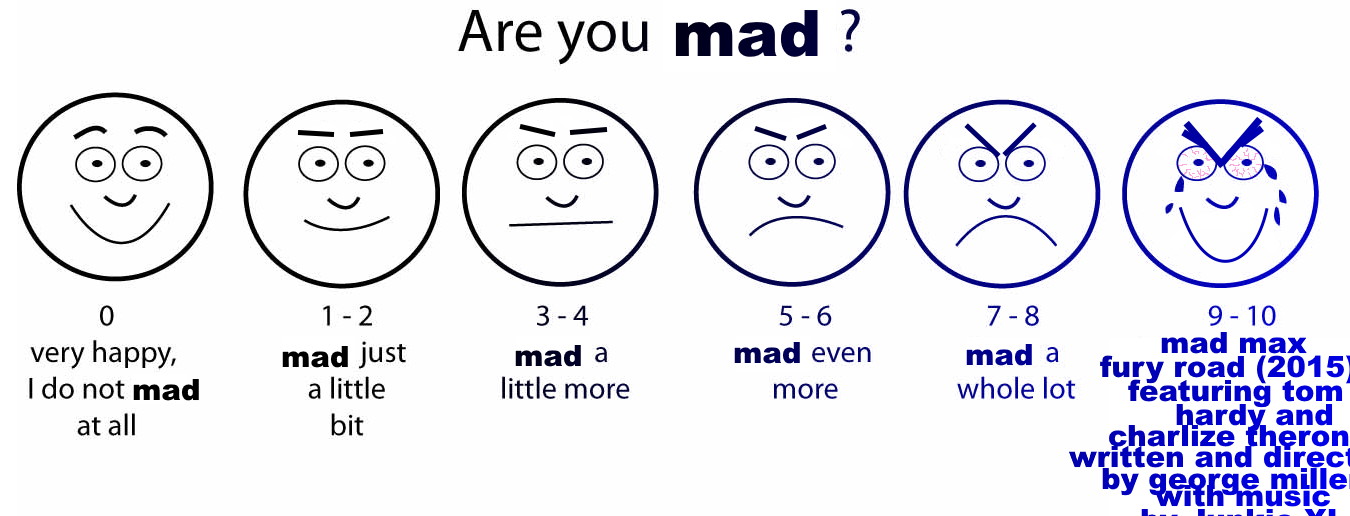
' Known the two terms 3 and 6, and the relation of 3 to 6, not only the rela- tion of 6 to some other number is given, but that number itself, 12, is given, that is, it is constructed. Therefore 3:6—6: 12.— 2V.
* Given a known effect, a known cause, and another known effect, we rea- son, by analogy, to an unknown cause, which we do not cognize, but whose relation to the known effect we know from the comparison of the three given terms. Thus, our own known actions : our own known motives — the known actions of others : x, that is, the motives of others which we cannot immediately cognize.— Tr.
perience, and a mark to assist me in discovering it. An analogy of experience is therefore only a rule according to which unity of experience must arise out of perceptions in respect to objects (phenomena) not as a constitutive, but merely as a regulative principle. The same holds good also of the postulates of empirical thought in general, which re- late to the synthesis of mere intuition (which concerns the form of phenomena), the synthesis of perception (which con- cerns the matter of phenomena), and the synthesis of expe- rience (which concerns the relation of these perceptions). For they are only regulative principles, and clearly dis- tinguishable from the mathematical, which are constitutive, not indeed in regard to the certainty which both possess a priori, but in the mode of evidence thereof, consequently also in the manner of demonstration.
But what has been observed of all synthetical proposi- tions, and must be particularly remarked in this place, is this, that these analogies possess significance and validity, not as principles of the transcendental, but only as princi- ples of the empirical use of the understanding, and their truth can therefore be proved only as such, and that con- sequently the phenomena must not be subjoined directly under the categories, but only under their schemata. For if the objects to which those principles must be applied were things in themselves, it would be quite impossibleto cognize aught concerning them synthetically a priori. But they are nothing but phenomena; a complete knowledge of which — a knowledge to which all principles a priori must at last re- late — is the only possible experience. It follows that these principles can have nothing else for their aim than the con- ditions of the unity of empirical cognition in the synthesis of phenomena. But this synthesis is cogitated only in the schema of the pure conception of the understanding, of whose unity, as that of a synthesis* in general, the category contains the function unrestricted by any sensuous condi- tion. These principles will therefore authorize us to con- nect phenomena according to an analogy, with the logical
and universal unity of conceptions, and consequently to em- ploy the categories in the principles themselves; but in the application of them to experience, we shall use only their schemata, as the key to their proper application, instead of the categories, or rather the latter as restricting conditions, under the title of formulae of the former.
All phenomena exist in time, wherein alone as substratum, that is, as the permanent form of the internal intuition, co- existence and succession can be represented. Consequently time, in which all changes of phenomena must be cogitated, remains and changes not, because it is that in which succes- sion and coexistence can be represented only as determina- tions thereof. Now, time in itself cannot be an object of perception. It follows that in objects of perception, that is, in phenomena, there must be found a substratum which represents time in general, and in which all change or co- existence can be perceived by means of the relation of phe- nomena to it. But the substratum of all reality, that is, of all that pertains to the existence of things, is substance; all that pertains to existence can be cogitated only as a determination of substance. Consequently, the permanent, in relation to which alone can all relations of time in phe- nomena be determined, is substance in the world of phenom- ena, that is, the real in phenomena, that which, as the sub- stratum of all change, remains ever the same. Accordingly, as this cannot change in existence, its quantity in nature can neither be increased nor diminished.
always successive, is consequently always changing. By it alone we could, therefore, never determine whether this manifold, as an object of, experience, is coexistent or suc- cessive, unless it had for a foundation something that exists always, that is* something fixed and permanent, of the ex- istence of which all succession and coexistence are nothing but so many modes (modi of time). Only in the permanent, then, are relations of time possible (for simultaneity and suc- cession are the only relations in time); that is to say, the permanent is the substratum of our empirical representation of time itself, in which alone all determination of time is possible. Permanence is, in fact, just another expression for time, as the abiding correlate of all existence of phenom- ena, and of all change, and of all coexistence. For change does not affect time itself, but only the phenomena in time (just as coexistence cannot be regarded as a modus of time itself, seeing that in time no parts are coexistent, but all successive). 1 If we were to attribute succession to time it- self, we should be obliged to cogitate another time, in which this succession would be possible. It is only by means of the permanent that existence in different parts of the suc- cessive series of time receives a quantity, which we entitle duration. For in mere succession, existence is perpetually vanishing and recommencing, and therefore never has even the least quantity. Without the permanent, then, no rela- tion in time is possible. Now, time in itself is not an object of perception; consequently the permanent in phenomena must be regarded as the substratum of all determination of time, and consequently also as the condition of the possibil- ity of all synthetical unity of perceptions, that is, of experi- ence; and all existence and all change in time can only be regarded as a mode in the existence of that which abides unchangeably. Therefore, in all phenomena, the permanent is the object in itself, that is, the substance (phenomenon); 1
1 The latter part of this sentence seems to contradict the former. The sequel will explain. — TV.
bat all that changes or can change belongs only to the mode of the existence of this substance or substances, consequently to its determinations.
I find that in all ages not only the philosopher, but even the common understanding, has preposited this permanence as a substratum of all change in phenomena; indeed, lam compelled to believe that they will always accept this as an indubitable fact. Only the philosopher expresses himself in a more precise and definite manner, when he says: "In all changes in the world, the substance remains, and the acci- dents alone are changeable." But of this decidedly synthet- ical proposition, I nowhere meet with even an attempt at proof; nay, it very rarely has the good fortune to stand, as it deserves to do, at the head of the pure and entirely a priori laws of nature. In truth, the statement that sub- stance is permanent is tautological. For this very perma- nence is the ground on which we apply the category of sub- stance to the phenomenon; and we should have been obliged to prove that in all phenomena there is something perma- nent, of the existence of which the changeable is nothing bat a determination. But because a proof of this nature cannot be dogmatical, that is, cannot be drawn from con- ceptions, inasmuch as it concerns a synthetical proposition a priori, and as philosophers never reflected that such prop- ositions are valid only in relation to possible experience, and therefore cannot be proved except by means of a deduction ofthe possibility of experience, it is no wonder that while it has served as the foundation of all experience (for we feel the need of it in empirical cognition), it has never been supported by proof.
-grombo
A philosopher was asked, "What is the weight of smoke ?" He answered, "Subtract from the weight of the burned wood the weight of the remaining ashes, and you will have the weight of the smoke.' ' Thus he presumed it to be incontrovertible that even in fire the matter (sub- stance) does not perish, but that only the form of it under- goes a ohange. In like manner was the saying, "From XI — Somkot— 9
nothing comes nothing," only another inference from the principle of permanence, or rather of the ever-abiding ex- istence of the true subject in phenomena. For if that in the phenomenon which we call substance is to be the proper substratum of all determination of time, it follows that all existence, in past as well as in future time, must be deter- minable by means of it alone. Hence we are entitled to apply the term substance to a phenomenon, only because we suppose its existence in all time, a notion which the word permanence does not fully express, as it seems rather to be referable to future time. However, the internal necessity perpetually to be, is inseparably connected with the neces- sity always to have been, and so the expression may stand as it is. "Gigni de nihih nihil 11 — "in nihilum nil posse reverti" are two propositions which the ancients never parted, and which people nowadays sometimes mistakenly disjoin, because they imagine that the propositions apply to objects as things in themselves, and that the former might be inimical to the dependence (even in respect of its sub- stance also) of the world upon a supreme cause. But this apprehension is entirely needless, for the question in this case is only of phenomena in the sphere of experience, the unity of which never could be possible, if we admitted the possibility that new things (in respect of their substance) should arise. For in that c#se, we should lose altogether that which alone can represent the unity of time, to wit, the identity of the substratum, as that through which alone all change possesses complete and thorough unity. This per- manence is, however, nothing but the manner in which we represent to ourselves the existence of things in the phe- nomenal world.
The determinations of a substance, which are only par- ticular modes of its existence, are called accidents. They are always real, because they concern the existence of sub- stance (negations are only determinations, which express the non-existence of something in the substance). Now, if to this real in the substance we ascribe a particular existence
(for example, to motion as an accident of matter), this existence is called inherence, in contradistinction to the ex- istence of substance, which we call subsistence. But hence arise many misconceptions, and it would be a more accurate and just mode of expression to designate the accident only as the mode in which the existence of a substance is posi- tively determined. Meanwhile, by reason of the conditions of the logical exercise of our understanding, it is impossible to avoid separating, as it were, that which in the exist- ence of a substance is subject to change, while the substance remains, and regarding it in relation to that which is prop- erly permanent and radical. On this account, this category of substance stands under the title of relation, rather be- cause it is the condition thereof than because it contains in itself any relation.
Now, upon this notion of permanence rests the proper notion of the conception change. Origin and extinction are not changes of that which originates or becomes extinct. Change is but a mode of existence, which follows on another mode of existence of the same object; hence all that changes is permanent, and only the condition thereof changes. Now since this mutation affects only determinations, which can have a beginning or an end, we may say, employing an expression which seems somewhat paradoxical, "Only the permanent (substance) is subject to change; the mutable suffers no change, but rather alternation, that is, when certain determinations cease, others begin."
Change, then, cannot be perceived by us except in sub- stances, and origin or extinction in an absolute sense, that does not concern merely a determination of the permanent, cannot be a possible perception, for it is this very notion of the permanent which renders possible the representation of a transition from one state into another, and from non- being to being, which, consequently, can be empirically cognized only as alternating determinations of that which is permanent. Grant that a thing absolutely begins to be; we must then have a point of time in which it was not. But
how and by what can we fix and determine this point of time, unless by that which already exists ? For a void time — preceding — is not an object of perception ; but if we con- nect this beginning with objects which existed previously, and which continue to exist till the object in question begins to be, then the latter can only be a determi- nation of the former as the permanent. The same holds good of the notion of extinction, for this presupposes the empirical representation of a time, in which a phenomenon no longer exists.
Substances (in the world of phenomena) are the sub- stratum of all determinations of time. The beginning of some, and the ceasing to be of other substances, would ut- terly do away with the only condition of the empirical unity of time;, and in that case phenomena would relate to two different times, in which, side by side, existence would pass; which is absurd. For there is only one time in which all different times must be placed, not as coexistent, but as successive.
Accordingly, permanence is a necessary condition under which alone phenomena, as things or objects, are determin- able in a possible experience. But as regards the empirical criterion of this necessary permanence, and with it of the substantiality of phenomena, we shall find sufficient oppor- tunity to speak in the sequel.
PRINCIPLE OF THE SUCCESSION OF TIME ACCORDING TO THE LAW OF CAUSALITY
HOLY SHIT THIS WAS SO COOL
All changes take place according to the law of the connection oj Cause and Effect
Proof (That all phenomena in the succession of time are only changes, that is, a successive being and non-being of the determinations of substance, which is permanent; conse-
qnently that a being of substance itself which follows on the non-being thereof, or a non-being of substance which follows on the being thereof, in other words, that the origin or extinction of substance itself, is impossible — all this has been fully established in treating of the foregoing principle. This principle might have been expressed as follows: * 4 All alteration (succession) of phenomena is merely change" ; for the changes of substance are not origin or extinction, be- cause the conception of change presupposes the same subject as existing with two opposite determinations, and conse- quently as permanent. After this premonition, we shall proceed to the proof.)
I. perceive that phenomena succeed one another, that is to say, a state of things exists at one time, the opposite of which existed in a former state. In this case, then, I really connect together two perceptions in time. Now connection is not an operation of mere sense and intuition, but is the product of a synthetical faculty of imagination, which deter- mines the internal sense in respect of a relation of time. But imagination can connect these two states in two ways, so that either the one or the other may antecede in time; for time in itself cannot be an object of perception, and what in an object precedes and what follows cannot be empirically determined in relation to it. I am only conscious, then, that my imagination places one state before, and the other after;* not that the one state antecedes the other in the object. In other words, the objective relation of the successive phe- nomena remains quite undetermined by means of mere per- ception. Now in order that this relation may be cognized as determined, the relation between the two states must be so cogitated that it is thereby determined as necessary which of them must be placed before and which after, and not conversely. But the conception which carries with it a necessity of synthetical unity, can be none other than a pure conception of the understanding which does not lie in mere perception; and in this case it is the conception of the relation of cause and effect, the former of which determines
the latter in time, as its necessary consequence, and not as something which might possibly antecede (or which might in some cases not be perceived to follow). It follows that it is only because we subject the sequence of phenomena, and consequently all change, to the law of causality, that expe- rience itself, that is, empirical cognition of phenomena, be- comes possible; and consequently,- that phenomena them- selves, as objects of experience, are possible only by virtue of this law.
Our apprehension of the manifold of phenomena is al- ways successive. The representations of parts succeed one another. Whether they succeed one another in the object also, is a second point for reflection, which was not con- tained in the former. Now we may certainly give the name of object to everything, even to every representation, so far as we are conscious thereof; but what this word may mean in the case of phenomena, not merely in so far as they (as representations) are objects, but only in so far as they indi- cate an object, is a question requiring deeper consideration. In so far aa they, regarded merely as representations, are at the same time objects of consciousness, they are not to be distinguished from apprehension, that is, reception into the synthesis of imagination, and we must, therefore say: 4 'The manifold of phenomena is always produced succes- sively in the mind." If phenomena were things in them- selves, no man would be able to conjecture from the succession of our representations how this manifold is connected in the object; for we have to do only with our representations. How things may be in themselves, with- out regard to the representations through which they affect us, is utterly beyond the sphere of our cognition. Now although phenomena are not things in themselves, and are nevertheless the only thing given to us to be cognized, it is my duty to show what sort of connection in time belongs to the manifold in phenomena themselves, while the repre- sentation of this manifold in apprehension is always suc- cessive. For example, the apprehension of the manifold
in the phenomenon of a house which stands before me is successive. Now comes the question, whether the manifold of this house is in itself also successive; — which no one will be at all willing to grant. But, so soon as I raise my con- ception of an object to the transcendental signification thereof, I find that the house is not a thing in itself, but only a phenomenon, that is, a representation, the transcen- dental object of which remains utterly unknown. What then am I to understand by the question, How can the manifold be connected in the phenomenon itself — not con- sidered as a thing in itself, but merely as a phenomenon ? Mere that which lies in my successive apprehension is re- garded as representation, while the phenomenon which is given me, notwithstanding that it is nothing more than a complex of these representations, is regarded as the object thereof, with which my conception, drawn from the repre- sentations of apprehension, must harmonize. It is very soon seen that, as accordance of the cognition with its object constitutes truth, the question now before us can only relate to the formal conditions of empirical truth, and that the phenomenon, in opposition to the representations of appre- hension, can only be distinguished therefrom as the object of them, if it is subject to a rule, which distinguishes it from every other apprehension, and which renders necessary a mode of connection of the manifold. That in the phe- nomenon which contains the condition of this necessary rule of apprehension is the object.
Let us now proceed to our task. That something hap- pens, that is to say, that something or some state exists which before was not, cannot be empirically perceived, un- less a phenomenon precedes, which does not contain in itself this state. For a reality which should follow upon a void time, in other words, a beginning, which no state of things precedes, can just as little be apprehended as the void time itself. Every apprehension of an event is therefore a per- ception which follows upon another perception. But as this is the case with all synthesis of apprehension, as I have
shown above in the example of a house, my apprehen- sion of an event is not yet sufficiently distinguished from other apprehensions. But I remark also, that if, in a phe- nomenon which contains an occurrence, I call the antecedent state of my perception, A, and the following state, B, the perception B can only follow A in apprehension, and the perception A cannot follow B, but only precede it. For example, I see a ship float down the stream of a river. My perception of its place lower down follows upon my perception of its place higher up the course of the river, and it is impossible that in the apprehension of this phenomenon the vessel should be perceived first below and afterward higher up the stream. Here, therefore, the order in the sequence of perceptions in apprehension is determined; and by this order apprehension is regulated. In the former example, my perceptions in the apprehension of a house, might begin at the roof and end at the foundation, or vice versd; or I might apprehend the manifold, in this empirical intuition by going from left to right, and from right to left. Accordingly, in the series of these perceptions, there was no determined order, which necessitated my beginning at a certain point, in order empirically to connect the manifold. But this rule is always to be met with in the perception of that which happens, and it makes the order of the successive perceptions in the apprehension of such a phenomenon necessary.
I must therefore, in the present case, deduce the subjec- tive sequence of apprehension from the objective sequence of phenomena, for otherwise the former is quite undetermined, and one phenomenon is not distinguishable from another. The former alone proves nothing as to the connection of the manifold in an object, for it is quite arbitrary. The latter must consist in the order of the manifold in a phenomenon, according to which order the apprehension of one thing (that which happens) follows that of another thing (which precedes), in conformity with a rule. In this way alone can 1 be authorized to say of the phenomenon itself, and not
THERE WERE FUCKING VROOMERS
merely of my own apprehension, that a certain order or sequence is to be found therein. That is, in other words, I cannot arrange my apprehension otherwise than in this order.
In conformity with this rule, then, it is necessary that in that which antecedes an event there be found the condition of a rule, according to which this event follows always and necessarily; but I cannot reverse this and go back from the event, and determine (by apprehension) that which antecedes it. For no phenomenon goes back from the succeeding point of time to the preceding point, although it does cer- tainly relate to a preceding point of time; from a given time, on the other hand, there is always a necessary pro- gression to the determined succeeding time. Therefore, because there certainly is something that follows, I must of necessity connect it with something else, which antecedes, and upon which it follows, in conformity with a rule, that is necessarily, so that the event, as conditioned, affords certain indication of a condition, and this condition determines the event.
Let us suppose that nothing precedes an event, upon which this event must follow in conformity with a rule. All sequence of perception would then exist only in appre- hension, that is to say, would be merely subjective, and it could not thereby be objectively determined what thing ought to precede, and what ought to follow in perception. In such a case, we should have nothing but a play of repre- sentations, which would possess no application to any object. That is to say, it would not be possible through perception to distinguish one phenomenon from another, as regards relations of time; because the succession in the act of ap- prehension would always be of the same sort, and therefore there would be nothing in the phenomenon to determine the succession, and to render a certain sequence objectively necessary. And, in this case, I cannot say that two states in a phenomenon follow one upon the other, but only that one apprehension follows upon another. But this is merely
subjective, and does not determine an object, and conse- quently cannot be held to be cognition of an object — not even in the phenomenal world.
Accordingly, when we know in experience that some- thing happens, we always presuppose that something pre- cedes, whereupon it follows in conformity with a rule. For otherwise I could not say of the object, that it follows; be- cause the mere succession in my apprehension, if it be not determined by a rule in relation to something preceding, does not authorize succession in the object. Only therefore, in reference to a rule, according to which phenomena are determined in their sequence, that is, as they happen, by the preceding state, can I make my subjective synthesis (of apprehension) objective, and it is only under this pre- supposition that even the experience of an event is possible.
No doubt it appears as if this were in thorough contra- diction to all the notions which people have hitherto entertained in regard to the procedure of the human under- standing. According to these opinions, it is by means of the perception and comparison of similar consequences fol- lowing upon certain antecedent phenomena, that the under- standing is led to the discovery of a rule, according to which certain events always follow certain phenomena, and it is only by this process that we attain to the conception of cause. Upon such a basis, it is clear that this conception must be merely empirical, and the rule which it furnishes us with — "Everything that happens must have a cause" — would be just as contingent as experience itself. The uni- versality and necessity of the rule or law would be perfectly spurious attributes of it. Indeed, it could not possess universal validity, inasmuch as it would not in this case be a priori, but founded on deduction. But the same is the case with this law as with other pure d priori representations (e.g., space and time), which we can draw in perfect clear- ness and completeness from experience, only because we had already placed them therein, and by that means, and by that alone, had rendered experience possible. Indeed, the
logical clearness of this representation of a rule, determining the series of events, is possible only when we have made use thereof in experience. Nevertheless, the recognition of this rale, as a condition of the synthetical unity of phenomena in time, was the ground of experience itself, and consequently preceded it a priori.
It is now our duty to show by an example, that we never, .even in experience, attribute to an object the notion of suc- cession or effect (of an event — that is, the happening of something that did not exist before), and distinguish it from the subjective succession of apprehension, unless when a rule lies at the foundation, which compels us to observe this order of perception in preference to any other, and that, indeed, it is this necessity which first renders possible the representation of a succession in the object.
We have representations within us, of which also we can be conscious. But, however widely extended, however ac- curate and thoroughgoing this consciousness may be, these representations are still nothing more than representations, that is, internal determinations of the mind in this or that relation of time. Now how happens it, that to these repre- sentations we should set an object, or that, in addition to their subjective reality, as modifications, we should still further attribute to them a certain unknown objective real- ity ? It is clear that objective significancy cannot consist in a relation to another representation (of that which we desire to term object), for in that case the question again arises: "How does this other representation go out of itself, and obtain objective significancy over and above the subjective, which is proper to it, as a determination of a state of mind?" If we try to discover what sort of new property the relation to an object gives to our subjective representa- tions, and what new importance they thereby receive, we shall find that this relation has no other effect than that of rendering necessary the connection of our representations in a certain manner, and of subjecting them to a rule; and that conversely, it is only because a certain order is necessary
in the relations of time of our representations, that objective significancy is ascribed to them.
CAR VROOMERS
In the synthesis of phenomena, the manifold of our representations is always successive. Now hereby is not represented an object, for by means of this succession, which is common to all apprehension, no one thing is distinguished from another. But so soon as I perceive or assume, that in this succession there is a relation to a state antecedent, from which the representation follows in accordance with a rule, so soon do I represent something as an event, or as a thing that happens; in other words, I cognize an object to which I must assign a certain determinate position in time, which cannot be altered, because of the preceding state in the ob- ject. When, therefore, I perceive that something happens, there is contained in this representation, in the first place, the fact, that something antecedes; because it is only in relation to this, that the phenomenon obtains its proper relation of time, in other words, exists after an antecedent time, in which it did not exist. But it can receive its deter- mined place in time, only by the presupposition that some- thing existed in the foregoing state, upon which it follows inevitably and always, that is, in conformity with a rule. From all this it is evident that, in the first place, I cannot reverse the order of succession, and make that which hap- pens precede that upon which it follows; and that, in the second place, if the antecedent state be posited, a certain determinate event inevitably and necessarily follows. Hence it follows that there exists a certain order in our representa- tions, whereby the present gives a sure indication of some previously existing state, as a correlate, though still under- termined, of the existing event which is given — a correlate which itself relates to the . event as its consequence, condi- tions it, and connects it necessarily with itself in the series of time.
If then it be admitted as a necessary law of sensibility, and consequently a formal condition of all perception, that the preceding necessarily determines the succeeding time
(inasmuch as I cannot arrive at the succeeding except through the preceding), it must likewise be an indispensable law of empirical representation of the series of time, that the phenomena of the past determine all phenomena in the succeeding time, and that the latter, as events, cannot take place, except in so far as the former determine their exist- ence in time, that is to say, establish it according to a rule. For it is of course only in phenomena that we can empiri- cally cognize this continuity in the connection of times.
For all experience and for the possibility of experience, understanding is indispensable, and the first step which it takes in this sphere is not to render the representation of objects clear, 1 but to render the representation of an object in general, possible. It does this by applying the order of time to phenomena, and their existence. In other words, it assigns to each phenomenon, as a consequence, a place in relation to preceding phenomena, determined a priori in time, without which it could not harmonize with time itself, which determines a place a priori to all its parts. This determination of place cannot be derived from the relation of phenomena to absolute time (for it is not an object of perception); but, on the contrary, phenomena must recipro- cally determine the places in time of one another, and render these necessary in the order of time. In other words, what- ever follows or happens must follow, in conformity with a universal rule, upon that which was contained in the fore- going state. Hence arises a series of phenomena, which, by means of the understanding, produces and renders necessary exactly the same order and continuous connection in the series of our possible perceptions, as is found a priori in the form of internal intuition (time), in which all our per- ceptions must have place.
That something happens, then, is a perception which belongs to a possible experience, which becomes real, only because I look upon the phenomenon as determined in re- gard to its place in time, consequently as an object, which
can always be found by means of a rule in the connected series of my perceptions. But this rule of the determination of a thing according to succession in time is as follows: "In what precedes may be found the condition, under which an event always (that is, necessarily) follows. ' ' From all this it is obvious that the principle of cause and effect is the principle of possible experience, that is, of objective cog- nition of phenomena, in regard to their relations in the succession of time.
The proof of this fundamental proposition rests entirely on the following momenta of argument. To all empirical cognition belongs the synthesis of the manifold by the imagination, a synthesis which is always successive, that is, in which the representations therein always follow one another. Bat the order of succession in imagination is not determined, and the series of successive representations may be taken retrogressively as well as progressively. But if this synthesis is a synthesis of apprehension (of the manifold of a given phenomenon), then the order is determined in the object, or, to speak more accurately, there is therein an order of successive synthesis which determines an object, and according to which something necessarily precedes, and when this is posited, something else necessarily follows. If, then, my perception is to contain the cognition of an event, that is, of something which really happens, it must be an empirical judgment, wherein we think that the succession is determined ; that is, it presupposes another phenomenon, upon which this event follows necessarily, or in conformity with a rule. If, on the contrary, when I posited the ante- cedent, the event did not necessarily follow, I should be obliged to consider it merely as a subjective play of my imagination, and if in this I represented to myself anything as objective, I must look upon it as a mere dream. Thus, the relation of phenomena (as possible perceptions), accord- ing to which that which happens is, as to its existence, necessarily determined in time by something which ante- cedes, in conformity with a rule — in other words, the rela-
tion of cause and effect — is the condition of the objective validity of oar empirical judgments in regard to the sequence of perceptions, consequently of their empirical truth, and therefore of experience. The principle of the relation of causality in the succession of phenomena is therefore valid for all objects of experience, because it is itself the ground of the possibility of experience.
Here, however, a difficulty arises, which must be resolved. The principle of the connection of causality among phenom- ena is limited in our formula to the succession thereof, al- though in practice we find that the principle applies also when the phenomena exist together in the same time, and that cause and effect may be simultaneous. For example, there is heat in a room, which does not exist in the open air. I look about for the cause, and find it to be the fire. Now the fire, as the cause, is simultaneous with its effect, the heat of the room. In this case, then, there is no succession, as regards time, between cause and effect, but they are simul- taneous; and still the law holds good. The greater part of operating causes in nature are simultaneous with their effects, and the succession in time of the latter is produced only be- cause the cause cannot achieve the total of its effect in one moment. But at the moment when the effect first arises, it is always simultaneous with the causality of its cause, be- cause if the cause had but a moment before ceased to be, the effect could not have arisen. Here it must be specially re- membered, that we must consider the order of time, and not the lapse thereof. The relation remains, even though no time has elapsed. The time between the causality of the cause and its immediate effect may entirely vanish, and the cause and effect be thus simultaneous, but the relation of the one to the other remains always determinable according to time. If, for example, I consider a leaden ball, which lies upon a cushion and makes a hollow in it, as a cause, then it is simultaneous with the effect. But I distinguish the two through the relation of time of the dynamical connection of both. For if I lay the ball upon the cush-
ion, then the hollow follows upon the before smooth surface; but supposing the cushion has, from some cause or another, a hollow, there does not thereupon follow a leaden ball.
TRUCK VROOMERS
Thus, the law of succession of time is in all instances the only empirical criterion of effect in relation to the causality of the antecedent cause. The glass is the cause of the ris- ing of the water above its horizontal surface, although the two phenomena are contemporaneous. For, as soon as I draw some water with the glass from a large vessel, an effect follows thereupon, namely, the change of the horizontal state which the water had in the large vessel into a concave, which it assumes in the glass.
This conception of causality leads us to the conception of action; that of action, to the conception of force; and through it, to the conception of substance. As I do not wish this critical essay, the sole purpose of which is to treat of the sources of our synthetical cognition a priori, to be crowded with analyses which merely explain, but do not enlarge the sphere of our conceptions, I reserve the de- tailed explanation of the above conceptions for a future sys- tem of pure reason. Such an analysis, indeed, executed with great particularity, may already be found in well-known works on this subject. But I cannot at present refrain from making a few remarks on the empirical criterion of a sub- stance, in so far as it seems to be more evident and more easily recognized through the conception of action, than through that of the permanence of a phenomenon.
Where action (consequently activity and force) exists, substance also must exist, and in it alone must be sought the seat of that fruitful source of phenomena. Very well. But if we are called upon to explain what we mean by sub- stance, and wish to avoid the vice of reasoning in a circle, the answer is by no means so easy. How shall we conclude immediately from the action to the permanence of that which acts, this being nevertheless an essential and peculiar cri- terion of substance (phenomenon) ? But after what has been said above, the solution of this question becomes easy enough,
although by the common mode of procedure — merely analyz- ing our conceptions — it would be quite impossible. The conception of action indicates the relation of the subject of causality to the effect. Now because all effect consists in that which happens, therefore in the changeable, the last subject thereof is the permanent, as the substratum of all that changes, that is, substance. For according to the prin- ciple of causality, actions are always the first ground of all change in phenomena, and consequently cannot be a prop- erty of a subject which itself changes, because, if this were the case, other actions and another subject would be neces- sary to determine this change. From all this it results that action alone, as an empirical criterion, is a sufficient proof of the presence of substantiality, without any necessity on my part of endeavoring to discover the permanence of substance by a comparison. Besides, by this mode of induction we could not attain to the completeness which the magnitude and. strict universality of the conception requires. For that the primary subject of the causality of all arising and pass- ing away, all origin and extinction, cannot itself (in the sphere of phenomena) arise and pass away, is a sound and safe conclusion, a conclusion which leads us to the con- ception of empirical necessity and permanence in exist- ence, and consequently to the conception of a substance as phenomenon.
When something happens, the mere fact of the occur- rence, without regard to that which occurs, is an object requiring investigation. The transition from the non-being of a state into the existence of it, supposing that this state contains no quality which previously existed in the phe- nomenon, is a fact of itself demanding inquiry. Such an event, as has been shown in No. A, does not concern sub- stance (for substance does not thus originate), but its condi- tion or state. It is therefore only change, and not origin from nothing. If this origin be regarded as the effect of a foreign cause, it is termed creation, which cannot be ad- mitted as an event among phenomena, because the very
possibility of it would annihilate the unity of experience. If, however, I regard all things not as phenomena, but as things in themselves, and objects of understanding alone, they, although substances, may be considered as dependent, in respect of their existence, on a foreign cause. But this would require a very different meaning in the words, a meaning which could not apply to phenomena as objects of possible experience.
How a thing can be changed, how it is possible that upon one state existing in one point of time, an opposite state should follow in another point of time— of this we have not the smallest conception a priori. There is requisite for this the knowledge of real powers, which can only be given em- pirically; for example, knowledge of moving forces, or, in other words, of certain successive phenomena (as move- ments) which indicate the presence of such forces. But the form of every change, the condition under which alone it can take place as the coming into existence of another state (be the content of the change, that is, the state which is changed, what it may), and consequently the succession of the states themselves, can very well be considered a priori, in relation to the law of causality and the conditions of time. 1
When a substance passes from one state, a, into another state, 5, the point of time in which the latter exists is differ- ent from, and subsequent to, that in which the former existed. In like manner, the second state, as reality (in the phenome- non), differs from the first, in which the reality of the second did not exist, as b from zero. That is to say, if the state, i, differs from the state, a, only in respect to quantity, the change is a coming into existence of b — a, which in the former state did not exist, and in relation to which that state is=0.
1 It must be remarked, that I do not speak of the change of certain rela- tions, but of the change of the state. Thus, when a body moves in a uniform manner, it does not change its state (of motion); but only when its motion increases or decreases.
state=a, into another state =6. Between two moments there is always a certain time, and between two states existing in these moments there is always a difference having a certain quantity (for all parts of phenomena are in their turn quan- tities). Consequently, every transition from one state into another is always effected in a time contained between two moments, of which the first determines the state which the thing leaves, and the second determines the state into which the thing passes. Both moments, then, are limitations of the time of a change, consequently of the intermediate state between both, and as such they belong to the total of the change. Now every change has a cause, which evidences its causality in the whole time during which the change takes place. The cause, therefore, does not produce the change all at once or in one moment, but in a time, so that, as the time gradually inoreases from the commencing instant, a, to its completion at 6, in like manner also, the quantity of the reality (b — a) is generated through the lesser degrees which are contained between the first and last. All change is therefore possible only through a continuous action of the causality, which, in so far as it is uniform, we call a mo- mentum. The change does not consist of these momenta, but is generated or produced by them as their effect.
TWO WHEELED VROOMERS
Such is the law of the continuity of all change, the ground of which is, that neither time itself nor any phe- nomenon in time consists of parts which are the smallest possible, but that, notwithstanding, the state of a thing passes in the process of a change through all these parts, as elements, to its second state. There is no smallest de- gree of reality in a phenomenon, just as there is no smallest degree in the quantity of time; and so the new state of the reality grows up out of the former state, through all the infinite degrees thereof, the differences of which one from another, taken all together, are less than the difference between and a.
It is not our business to inquire here into the utility of this principle in the investigation of nature. But how such
a proposition, which appears so greatly to extend our knowl- edge of nature, is possible completely a priori, is indeed a question which deserves investigation, although the first view seems to demonstrate the truth and reality of the principle, and the question, how it is possible, may be considered superfluous. For there are so many ground- less pretensions to the enlargement of our knowledge by pure reason, that we must take it as a general rule to be mistrustful of all such, and without a thorough-going and radical deduction, to believe nothing of the sort even on the clearest dogmatical evidence.
Every addition to our empirical knowledge, and every advance made in the exercise of our perception, is nothing more than an extension of the determination of the internal sense, that is to say, a progression in time, be objects them- selves what they may, phenomena, or pure intuitions. This progression in time determines everything, and is itself de- termined by nothing else. That is to say, the parts of the progression exist only in time, and by means of the synthe- sis thereof, and are not given antecedently to it. For this reason, every transition in perception to anything which fol- lows upon another in time, is a determination of time by means of the production of this perception. And as this determination of time is, always and in all its parts, a quan- tity, the perception produced is to be considered as a quan- tity which proceeds through all its degrees — no one of which is the smallest possible — from zero up to its determined de- gree. From this we perceive the possibility of- cognizing a priori a law of changes — a law, however, which concerns their form merely. We merely anticipate our own appre- hension, the formal condition of which, inasmuch as it is itself to be found in the mind antecedently to all given phenomena, must certainly be capable of being cognized a priori.
Thus, as time contains the sensuous condition a priori of the possibility of a continuous progression of that which exists to that which follows it, the understanding, by virtue
of the unity of apperception, contains the condition a priori of the possibility of a continuous determination of the posi- tion in time of all phenomena, and this by means of the series of causes and effects, the former of which necessitate the sequence of the latter, and thereby render universally and for all time, and, by consequence, objectively, valid the empirical cognition of the relations of time.
PRINCIPLE OP COEXISTENCE, ACCORDING TO THE LAW OP RECIPROCITY OR COMMUNITY
All substances, in so far as they can be perceived in space at the same time, exist in a state of complete reciprocity of action
Proof Things are coexistent, when in empirical intuition the perception of the one can follow upon the perception of the other, and vice versd — which cannot occur in the suc- cession of phenomena, as we have shown in the explanation of the second principle. Thus I can perceive the moon and then the earth, or conversely, first the earth and then the moon ; and for the reason that my perception of these objects can reciprocally follow each other, I say, they exist con- temporaneously. Now coexistence is the existence of the manifold in the same time. But time itself is not an object of perception; and therefore we cannot conclude, from the fact that things are placed in the same time, the other fact, that the perceptions of these things can follow each other reciprocally. The synthesis of the imagination in apprehen- sion would only present to us each of these perceptions as present in the subject when the other is not present, and contrariwise; but would not show that the objects are co- existent, that is to say, that, if the one exists, the other also exists in the same time, and that this is necessarily so, in order that the perceptions may be capable of following each other reciprocally. It follows that a conception of the
understanding or category of the reciprocal sequence of the determinations of phenomena (existing, as they do, apart from each other, and yet contemporaneously), is requisite to justify us in saying that the reciprocal succession of percep- tions has its foundation in the object, and to enable us to represent coexistence as objective. But that relation of substances in which the one contains determinations the ground of which is in the other substance, is the relation of influence. And, when this influence is reciprocal, it is the relation of community or reciprocity. Consequently the coexistence of substances in space cannot be cognized in experience otherwise than under the precondition of their reciprocal action. This is therefore the condition of the possibility, of things themselves as objects of ex- perience.
TREADED VROOMERS
Things are coexistent, in so far as they exist in one and the same time. But how can we know that they exist in one and the same time ? Only by observing that the order . in the synthesis of apprehension of the manifold is arbi- trary and a matter of indifference, that is to say, that it can proceed from A, through B, C, D, to B, or contrari- wise from E to A. For if they were successive in time (and in the order, let us suppose, which begins with A), it is quite impossible for the apprehension in percep- tion to begin with E and go backward to A, inasmuch as A belongs to past time, and therefore cannot be an object of apprehension.
Let us assume that in a number of substances considered as phenomena each is completely isolated, that is, that no one acts upon another. Then I say that the coexistence of these cannot be an object of possible perception, and that the existence of one cannot, by any mode of empirical syn- thesis, lead us to the existence of another. For we imagine them in this case to be separated by a completely void space, and thus perception, which proceeds from the one to the other in time, would indeed determine their existence by means of a following perception, but would be quite unable
to distinguish whether the one phenomenon follows objec- tively upon the first, or is coexistent with it.
Besides the mere fact of existence then, there must be something by means of which A determines the position of B in time, and, conversely, B the position of A; because only under this condition can substances be empirically rep- resented as existing contemporaneously. Now that alone determines the position of another thing in time, which is the cause of it or of its determinations. Consequently every substance (inasmuch as it can have succession predicated of it only in respect of its determinations) must contain the causality of certain determinations in another substance, and at the same time the effects of the causality of the other in itself. That is to say, substances must stand (mediately or immediately) in dynamical community with each other, if coexistence is to be cognized in any possible experience. But, in regard to objects of experience, that is absolutely necessary, without which the experience of these objects would itself be impossible. Consequently it is absolutely necessary that all substances in the world of phenomena, in so far as they are coexistent, stand in a relation of complete community of reciprocal action to each other.
The word community has in our language 1 two meanings, and contains the two notions conveyed in the Latin com- munio, and commercium. We employ it in this place in the latter sense — that of a dynamical community, without which even the community of place (communio spatii) could not be empirically cognized. In our experiences it is easy to ob- serve, that it is only the continuous influences in all parts of space that can conduct our senses from one object to another; that the light which plays between our eyes and the heavenly bodies produces a mediating community be- tween them and us, and thereby evidences their coexistence with us; that we cannot empirically change our position (perceive this change), unless the existence of matter
throughout the whole of space rendered possible the per- ception of the positions we occupy ; and that this perception can prove the contemporaneous existence of these places only through their reciprocal influence, and thereby also the coexistence of even the most remote objects — although in this case the proof is only mediate. Without community, every perception (of a phenomenon in space) is separated from every other and isolated, and the chain of empirical representations, that is, of experience, must, with the ap- pearance of a new object, begin entirely de novo, without the least connection with preceding representations, and without standing toward these even in the relation of time. My intention here is by no means to combat the notion of empty space; for it may exist where oar perceptions cannot exist, inasmuch as they cannot reach thereto, and where, therefore, no empirical perception of coexistence takes place. But in this case it is not an object of possible experience.
The following remarks may be useful in the way of explanation. In the mind, all phenomena, as contents of a possible experience, must exist in community (communio) of apperception or -consciousness, and in so far as it is requisite that objects be represented as coexistent and con- nected, in so far must they reciprocally determine the posi- tion in time of each other, and thereby constitute a whole. If this subjective community is to rest upon an objective basis, or to be applied to substances as phenomena, the per- ception of one substance must render possible the perception of another, and conversely. For otherwise succession, which is always found in perceptions as apprehensions, would be predicated of external objects, and their representation of their coexistence be thus impossible. But this is a recipro- cal influence, that is to say, a real community (commercium) of substances, without which therefore the empirical relation of coexistence would be a notion beyond the reach of our minds. By virtue of this commercium, phenomena, in so far as they are apart from, and nevertheless in connec- tion with each other, constitute a compositum reale. Such
composite are possible in many different ways. The three dynamical relations then, from which all others spring, are those of Inherence, Consequence, and Composition.
These, then, are the three analogies of experience. They are nothing more than principles of the determination of the existence of phenomena in time, according to the three modi of this determination; to wit, the relation to time itself as a quantity (the quantity of existence, that is, duration), the relation in time as a series or succession, finally, the relation in time as the complex of all existence (simultaneity). This unity of determination in regard to time is thoroughly dynam- ical; that is to say, time is not considered as that in which experience determines immediately to every existence its position; for this is impossible, inasmuch as absolute time is not an object of perception, by means of which phenomena can be connected with each other. On the contrary, the rule of the understanding, through which alone the exist- ence of phenomena can receive synthetical unity as regards relations of time, determines for every phenomenon its posi- tion in time, and consequently d priori, and with validity, for all and every time.
By nature, in the empirical sense of the word, we under- stand the totality of phenomena connected, in respect of their existence, according to necessary rules, that is, laws. There are therefore certain laws (which are moreover d priori) which make nature possible; and all empirical laws can exist only by means of experience, and by virtue of those primitive laws through which experience itself be- comes possible. The purpose of the analogies is therefore to represent to us the unity of nature in the connection of all phenomena under certain exponents, the only business of which is to express the relation of time (in so far as it contains all existence in itself) to the unity of apperception, which can exist in synthesis only according to rules. The combined expression of all is this: All phenomena exist in one nature, and must so exist, inasmuch as without this XI — Science — 10
AND THEY WENT VROOOOOOOOOOOOOOOOOOOOOM VROOM VROOM VROOOOOOOOOOOOOM VROOM VROOOOOM VROOOOOOOOOOOOOOM VROOM VROOOOOOOOOOOOM VROOOOOOOOOOOOOOOOOOOOOOOOM VROOOOOOOOOOOOOOOOOOOM VROOOOOOOM and yea it was so cool. There was also some shit with like oil and water and like themes or smth but like that was a means to an end. The end being the vroomers. VROOOOOOOOOOOOOOOM VROOM VROOM VROOOOOOOOM The main moral of the story is that a vroomer is cool and fucking badass. It made me want to sit in my own vroomer (a fiat 500c) but then i realized the battery was dead BUT IT WAS STILL SO COOL TO SIT IN A REAL LIFE CAR IT WAS JUST LIKE MAD MAX
a priori unity, no unity of experience, and consequently no determination of objects in experience, is possible.
As regards the mode of proof which we have employed in treating of these transcendental laws of nature, and the peculiar character of it, we must make one remark, which will at the same time be important as a guide in every other attempt to demonstrate the truth of intellectual and likewise synthetical propositions a priori. Had we endeavored to prove these analogies dogmatically, that is, from concep- tions; that is to say, had we employed this method in at- tempting to show that everything which exists, exists only in that which is permanent — that everything or event pre- supposes the existence of something in a preceding state, upon which it follows in conformity with a rule — lastly, that in the manifold, which is coexistent, the states coexist in connection with each other according to a rule — all our labor would have been utterly in vain. For mere conceptions of things, analyze them as we may, cannot enable us to con- clude from the existence of one object to the existence of another. What other course was left for us to pursue? This only, to demonstrate the possibility of experience as a cognition in whiQh at last all objects must be capable of being presented to us, if the representation of them is to possess any objective reality. Now in this third, this me- diating term, the essential form of which consists in the synthetical unity of the apperception of all phenomena, we found a priori conditions of the universal and necessary determination as to time of all existences in the world of phenomena, without which the empirical determination thereof as to time would itself be impossible, and we also discovered rules of synthetical unity a priori, by means of which we could anticipate experience. For want of this method, and from the fancy that it was possible to discover a dogmatical proof of the synthetical propositions which are requisite in the empirical employment of the understanding, has it happened, that a proof of the principle of sufficient reason has been so often attempted, and always in vain.
The other two analogies nobody has ever thought of, al- though they have always been silently employed by the mind, 1 because the guiding thread furnished by the cate- gories was wanting, the guide which alone can enable us to discover every hiatus, both in the system of conceptions and of principles.
1. That which agrees with the formal conditions (intui- tion and conception) of experience, is possible.
2. That which coheres with the material conditions of experience (sensation), is real.
The categories of modality possess this peculiarity, that they do not in the least determine the object, or enlarge the conception to which they are annexed as predicates, but only express its relation to the faculty of cognition. Though my conception of a thing is in itself complete, I am still entitled to ask whether the object of it is merely possible, or whether it is also real, or, if the latter, whether it is also necessary. But hereby the object itself is not more definitely determined in thought, but the question is only in what relation it, including all its determinations, stands to the understanding and its employment in experience, to the em- pirical faculty of judgment, and to the reason in its applica- tion to experience.
1 The unity of the universe, in which all phenomena must be connected, is evidently a mere consequence of the tacitly admitted principle of the community of all substances which are coexistent For were substances isolated, they could not as parts constitute a whole, and were their connection (reciprocal action of the manifold) not necessary from the very fact of coexistence, we could not conclude from the fact of the latter as a merely ideal relation to the former as a real one. We have, however, shown in its place, that community is the proper ground of the possibility of an empirical cognition of coexistence, and that we may therefore properly reason from the latter to the former as its condition.
nothing more than explanations of the conceptions of possi- bility, reality, and necessity, as employed in experience, and at the same time, restrictions of all the categories to empiri- cal use alone, not authorizing the transcendental employment of them. For if they are to have something more than a merely logical significance, and to be something more than a mere analytical expression of the form of thought, and to have a relation to things and their possibility, reality or necessity, they must concern possible experience and its synthetical unity, in which alone objects of cognition can be given.
The postulate of the possibility of things requires also, that the conception of the things agree with the formal con- ditions of our experience in general. But this, that is to say, the objective form of experience, contains all the kinds of synthesis which are requisite for the cognition of objects. A conception which contains a synthesis must be regarded as empty and without reference to an object, if its synthesis does not belong to experience — either as borrowed from it, and in this case it is called an empirical conception, or such as is the ground and a priori condition of experience (its form), and in this case it is a pure conception, a conception which nevertheless belongs to experience, inasmuch as its object can be found in this alone. For where shall we find the criterion of character of the possibility of an object which is cogitated by means of an d priori synthetical conception, if not in the synthesis which constitutes the form of empiri- cal cognition of objects? That in such a conception no contradiction exists is indeed a necessary logical condition, but very far from being sufficient to establish the objective reality of the conception, that is, the possibility of such an object as is thought in the conception. Thus, in the concep- tion of a figure which is contained within two straight lines, there is no contradiction, for the conceptions of two straight lines and of their junction contain no negation of a figure. The impossibility in such a case does not rest upon the con- ception in itself, but upon the construction of it in space,
that is to say, upon the conditions of spaoe and its determi- nations. But these have themselves objective reality, that is, they apply to possible things, because they contain a priori the form of experience in general.
10 wheels on twelve vroomers, would oil again
And now we shall proceed to point out the extensive utility and influence of this postulate of possibility. When I represent to myself a thing that is permanent, so that everything in it which changes belongs merely to its state or condition, from such a conception alone I never can cognize that such a thing is possible. Or, if I represent to myself something which is so 'constituted that, when it is posited, something else follows always and infallibly, my thought contains no self-contradiction ; but whether such a property as causality is to be found in any possible thing, my thought alone affords no means of judging. Finally, I can represent to myself different things (substances) which are so consti- tuted, that the state or condition of one causes a change in the state of the other, and reciprocally; but whether such a relation is a property of things cannot be perceived from these conceptions, which contain a merely arbitrary syn- thesis. Only from the fact, therefore, that these conceptions express a priori the relations of perceptions in every experi- ence, do we know that they possess objective reality, that is, transcendental truth; and that independent of experience, though not independent of all relation to the form of an ex- perience in general and its synthetical unity, in which alone objects can be empirically cognized.
But when we fashion to ourselves new conceptions of substances, forces, action and reaction, from the material presented to us by perception, without following the ex- ample of experience in their connection, we create mere chimeras, of the possibility of which we cannot discover any criterion, because we have not taken experience for our in- structress, though we have borrowed the conceptions from her. Such fictitious conceptions derive their character of possibility not, like the categories, a priori, as conceptions on which all experience depends, but only, a posteriori^ as
conceptions given by means of experience itself, and their possibility must either be cognized a posteriori and empiri- cally, or it cannot be cognized at all. A substance, which is permanently present in spaoe, yet without filling it (like that tertium quid between matter and the thinking subject which some have tried to introduce into metaphysics), or a peculiar fundamental power of the mind of intuiting the future by anticipation (instead of merely inferring from past and present events), or, finally, a power of the mind to place itself in community of thought with other men, however dis- tant they may be — these are conceptions, the possibility of which has no ground to rest upon. For they are not based upon experience and its known laws ; and without experience, they are a merely arbitrary conjunction of thoughts, which, though containing no internal contradiction, has no claim to objective reality, neither, consequently, to the possibility of such an object as is thought in these conceptions. As far as concerns reality, it is self-evident that we cannot cogitate such a possibility in concrete without the aid of experience ; because reality is concerned only with sensation, as the matter of experience, and not with the form of thought, with which we can no doubt indulge in shaping fancies.
But I pass by everything which derives its possibility from reality in experience, and I purpose treating here merely of the possibility of things by means of a priori conceptions. I maintain, then, that the possibility of things is not derived from such conceptions per se, but only when considered as formal and objective conditions of an experience in general.
It seems, indeed, as if the possibility of a triangle could be cognized from the conception of it alone (which is cer- tainly independent of experience); for we can certainly give to the conception a corresponding object completely a priori, that is to say, we can construct it. But as a triangle is only the form of an object, it must remain a mere product of the imagination, and the possibility of the existence of an object corresponding to it must remain doubtful, unless we can dis- cover some other ground, unless we know that the figure can
be cogitated under the conditions upon which all objects of experience rest. Now, the facts that space is a formal con- dition a priori of external experience, that the formative synthesis, by which we construct a triangle in imagination, is the very same as that we employ in the apprehension of a phenomenon for the purpose of making an empirical concep- tion of it, are what alone connect the notion of the possibil- ity of such a thing with the conception of it. In the same manner, the possibility of continuous quantities, indeed of quantities in general, for the conceptions of them are with- out exception synthetical, is never evident from the concep- tions in themselves, but only when they are considered as the formal conditions of the determination of objects in ex- perience. And where, indeed, should we look for objects to correspond to our conceptions, if not in experience, by which alone objects are presented to us? It is, however, true that without antecedent experience we can cognize and characterize the possibility of things, relatively to the formal conditions, under which something is determined in experience as an object, consequently completely a priori. But still this is possible only in relation to experience and within its limits.
The postulate concerning the cognitidh of the reality of things requires perception, consequently conscious sensation, not indeed immediately, that is, of the object itself, whose existence is to be cognized, but still that the object have some connection with a real perception, in accordance with the analogies of experience, which exhibit all kinds of real connection in experience.
From the mere conception of a thing it is impossible to conclude its existence. For, let the conception be ever so complete, and containing a statement of all the deter- minations of the thing, the existence of it has nothing to do with all this, but only with the question — whether such a thing is given, so that the perception of it can in every case precede the conception. For the fact that the concep- tion of it precedes the perception, merely indicates the pos- sibility of its existence; it is perception, which presents mat-
ter to the conception, that is the sole criterion of reality. Prior to the perception of the thing, however, and therefore comparatively a priori, we are able to cognize its existence, provided it stands in connection with some perceptions ac- cording to the principles of the empirical conjunction of these, that is, in conformity with the analogies of percep- tion. For, in this case, the existence of the supposed thing is connected with our perceptions in a possible experience, and we are able, with the guidance of these analogies, to reason in the series of possible perceptions from a thing which we do really perceive to the thing we do not per- ceive. Thus, we cognize the existence of a magnetic matter penetrating all bodies from the perception of the attraction of the steel-filings by the magnet, although the constitution of our organs renders an immediate perception of this matter impossible for us. For, according to the laws of sensibility and the connected context of our perceptions, we should in an experience come also on an immediate empirical intuition of this matter, if our senses were more acute — but this ob- tuseness has no influence upon and cannot alter the/or?^ of possible experience in general. Our knowledge of the existence of things reaches as far as our perceptions, and what may be inferred from them according to empirical laws, extend. If we do not set out from experience, or do not proceed according to the laws of the empirical con- nection of phenomena, our pretensions to discover the ex- istence of a thing which we do not immediately perceive are vain. Idealism, however, brings forward powerful objec- tions to these rules for proving existence mediately. This is, therefore, the proper place for its refutation.
Idealism — I mean material 1 idealism — is the theory which. declares the existence of objects in space without us to be
-recima from minvroom
1 In opposition to formal or critical idealism — the theory of Kant — which denies to us a knowledge of things as things in themselves, and maintains thai we can know only phenomena.— ZK
either (1) doubtful and indemonstrable, or (2) false and im- possible. The first is the problematical idealism of Des Cartes, who admits the undoubted certainty of only one empirical assertion (assertio), to wit, / am. The second is the dogmatical idealism of Berkeley, who maintains that space, together with all the objects of which it is the insep- arable condition, is a thing which is in itself impossible, and that consequently the objects in space are mere products of the imagination. The dogmatical theory of idealism is un- avoidable, if we regard space as a property of things in themselves; for in that case it is, with all to which it serves as condition, a nonentity. But the foundation for this kind of idealism we have already destroyed in the transcendental aesthetic. Problematical idealism, which makes no such as- sertion, but only alleges our incapacity to prove the exist- ence of anything besides ourselves by means of immediate experience, is a theory rational and evidencing a thorough and philosophical mode of thinking, for it observes the rule, not to form a decisive judgment before sufficient proof be shown. The desired proof must therefore demonstrate that we have experience of external things, and not mere fancies. For this purpose, we must prove; that our internal and, to Des Cartes, indubitable experience is itself possible only under the previous assumption of external experience.
The simple but empirically determined consciousness of my own existence proves the existence of external objects in space
I am conscious of my own existence as determined in time. All determination in regard to time presupposes the existence of something permanent in perception. But this permanent something cannot be something in me, for the very reason that my existence in time is itself determined by this permanent something. It follows that the percep- tion of this permanent existence is possible only through a
thing without me, and not through the mere representation of a thing without me. Consequently, the determination of my existence in time is possible only through the existence of real things external to me. Now, consciousness in time is necessarily connected with the consciousness of the possi- bility of this determination in time. Hence it follows, that consciousness in time is necessarily connected also with the existence of things without me, inasmuch as the existence of these things is the condition of determination in time. That is to say, the consciousness of my own existence is at the same time an immediate consciousness of the existence of other things without me.
Remark I. The reader will observe, that in the foregoing proof the game which idealism plays is retorted upon itself, and with more justice. It assumed, that the only immediate experience is internal, and that from this we can only infer the existence of external things. But, as always happens,- when we reason from given effects to determined causes, idealism has reasoned with too much haste and uncertainty, for it is quite possible that the cause of our representations may lie in ourselves, and that we ascribe it falsely to exter- nal things. But our proof shows that external experience is properly immediate, 1 that only by virtue of it — not, in- deed, the consciousness of our own existence, but certainly the determination of our existence in time, that is, internal experience — is possible. It is true, that the representation / awi, which is the expression of the consciousness which can accompany all my thoughts, is that which immediately includes the existence of a subject. But in this representa-
1 The immediate consciousness of the existence of external things is, in the preceding theorem, not presupposed, but proved, be the possibility of this con- sciousness understood by us or not. The question as to the possibility of it would stand thus : Have we an internal sense, but no external sense, and is our belief in external perception a mere delusion ? But it is evident that, in order merely to fancy to ourselves anything as external, that is, to present it to the sense in intuition, we must already possess an external sense, and must thereby distinguish immediately the mere receptivity of an external intuition from the spontaneity which characterizes every act of imagination. For merely to imag- ine also an external sense, would annihilate the faculty of intuition itself which is to be determined by the imagination.
tion we cannot find any knowledge of the subject, and there- fore also no empirical knowledge, that is, experience. For experience contains, in addition to the thought of something existing, intuition, and in this case it must be internal intui- tion, that is, time, in relation to which the subject must be determined. But the existence of external things is abso- lutely requisite for this purpose, so that it follows that inter- nal experience is itself possible only mediately and through externa] experience.
Remark II. Now with this view all empirical use of our faculty of cognition in the determination of time is in perfect accordance. Its truth is supported by the fact, that it is pos- sible to perceive a determination of time only by means of a change in external relations (motion) to the permanent in space (for example, we become aware of the sun's motion, by observing the changes of his relation to the objects of this earth). But this is not all. We find that we possess nothing permanent that can correspond and be submitted to the conception of a substance as intuition, except matter. This idea of permanence is not itself derived from external experience, but is an a priori necessary condition of all de- termination of time, consequently also of the internal sense in reference to our own existence, and that through the ex- istence of external things. In the representation /, the con- sciousness of myself is not an intuition, but a merely intel- lectual representation produced by the spontaneous activity of a thinking subject. It follows, that this / has not any predicate of intuition, which, in its character of permanence, could serve as correlate to the determination of time in the internal sense — in the same way as impenetrability is the cor- relate of matter as an empirical intuition.
Remark III. From the fact that the existence of external things is a necessary condition of the possibility of a deter- mined consciousness of ourselves, it does not follow that every intuitive representation of external things involves the existence of these things, for their representations may very well be the mere products of the imagination (in dreams
it’s a really simple story executed soooooo perfectly. the constant movement in the film reminds me a bit of a multistage rocket, always blowing stuff up and detaching its organs once they’ve overstayed their welcome in order to construct a single pure line of speed
as well as in madness); though, indeed, these are themselves created by the reproduction of previous external perceptions, which, as has been shown, are possible only through the re- ality of external objects. The sole aim of our remarks has, however, been to prove that internal experience in general is possible only through external experience in general. Whether this or that supposed experience be purely imag- inary, must be discovered from its particular determina- tions, and by comparing these with the criteria of all real experience.
Finally, as regards the third postulate, it applies to material necessity in existence, and not to merely formal and logical necessity in the connection of conceptions. Now as we cannot cognize completely a priori the existence of any object of sense, though we can do so comparatively a priori, that is, relatively to some other previously given existence — a cognition, however, which can only be of such an existence as must be contained in the complex of experi- ence, of which the previously given perception is a part — the necessity of existence can never be cognized from con- ceptions, but always, on the contrary, from its connection with that which is an object of perception. But the only existence cognized, under the condition of other given phe- nomena, as necessary, is the existence of effects from given causes in conformity with the laws of causality. It is con- sequently not the necessity of the existence of things (as substances), but the necessity of the state of things that we cognize, and that not immediately, but by means of the existence of other states given in perception, according to empirical laws of causality. Hence it follows, that the criterion of necessity is to be found only in the law of a possible experience — that everything which happens is de- termined a priori in the phenomenon by its cause. Thus we cognize only the necessity of effects in nature, the causes of which are given us. Moreover, the criterion of necessity in existence possesses no application beyond the field of
possible experience, and even in this it is not valid of the existence of things as substances, because these can never be considered as empirical effects, or as something that hap- pens and has a beginning. Necessity, therefore, regards only the relations of phenomena according to the dynamical law of causality, and the possibility grounded thereon, of reasoning from some given existence (of a cause) a priori to another existence (of an effect). Everything that happens is hypothetically necessary, is a principle which subjects the changes that take place in the world to a law, that is, to a rule of necessary existence, without which nature herself could not possibly exist. Hence the proposition, Nothing happens by blind chance {in mundo non datur casus), is an a priori law of nature. The case is the same with the propo- sition, Necessity in nature is not blind, that is, it is condi- tioned, consequently intelligible necessity (non datur fatum). Both laws subject the play of change to a nature of things (as phenomena), or, which is the same thing, to the unity of the understanding, and through the understanding alone can changes belong to an experience, as the synthetical unity of phenomena. Both belong to the class of dynamical princi- ples. The former is properly a consequence of the principle of causality— one of the analogies of experience. The latter belongs to the principles of modality, which to the determi- nation of causality adds the conception of necessity, which is itself, however, subject to a rule of the understanding. The principle of continuity forbids any leap in the series of phe- nomena regarded as changes (in mundo non datur saltus); and likewise, in the complex of all empirical intuitions in space, any break or hiatus between two phenomena (non datur hiatus) — for we can so express the principle, that ex- perience can admit nothing which proves the existence of a vacuum, or which even admits it as a part of an empirical synthesis. For, as regards a vacuum or void, which we may cogitate as out of and beyond the field of possible experience (the world), such a question cannot come before the tribunal of mere understanding, which decides only upon questions
that concern the employment of given phenomena for the construction of empirical cognition. It is rather a problem for ideal reason, which passes beyond the sphere of a possi- ble experience, and aims at forming a judgment of that which surrounds and circumscribes it, and the proper place for the consideration of it is the transcendental dialectic. These four propositions, In mundo non datur hiatus, non datur saltus, non datur casus, non datur fatum, as well as all principles of transcendental origin, we could very easily exhibit in their proper order, that is, in conformity with the order of the categories, and assign to each its proper place. But the already practiced reader will do this for himself, or discover the clew to such an arrangement. But the com- bined result of all is simply this, to admit into the empirical synthesis nothing which might cause a break in or be foreign to the understanding and the continuous connection of all phenomena, that is, the unity of the conceptions of the understanding. For in the understanding alone is the unity of experience, in which all perceptions must have their assigned place, possible.
Whether the field of possibility be greater than that of reality, and whether the field of the latter be itself greater than that of necessity, are interesting enough questions, and quite capable of synthetical solution, questions, however, which come under the jurisdiction of reason alone. For they are tantamount to asking, whether all things as phe- nomena do without exception belong to the complex and connected whole of a single experience, of which every given perception is a part, a part which therefore cannot be conjoined with any other phenomena — or, whether my per- ceptions can belong to more than one possible experience ? The understanding gives to experience, according tp the subjective and formal conditions, of sensibility as well as of apperception, the rules which alone make this experience possible. Other forms of intuition besides those of space and time, other forms of understanding besides the discur- sive forms of thought, or of cognition by means of con-
captions, we can neither imagine nar make intelligible to ourselves; and even if we could, they would still not belong to experience, which is the only mode of cognition by which objects are presented to us. Whether other perceptions be- sides those which belong to the total of oar possible experi- ence, and consequently whether some other sphere of matter exists, the understanding has no power to decide, its proper occupation being with the synthesis of that which is given. Moreover, the poverty of the usual arguments which go to prove the existence of a vast sphere of possibility, of which all that is real (every object of experience) is but a small part, is very remarkable. "All real is possible"; from this follows naturally, according to the logical laws of conver- sion, the particular proposition, "Some possible is real." Now this seems to be equivalent to "Much is possible that is not real." No doubt it does seem as if we ought to con- sider the sum of the possible to be greater than that of the real, from the fact that something must be added to the former to constitute the latter. But this notion of add- ing to the possible is absurd. For that which is not in the sum of the possible, and consequently requires to be added to it, is manifestly impossible. In addition to accordance with the formal conditions of experience, the understanding requires a connection with some perception; but that which is connected with this perception, is real, even although it is not immediately perceived. But that another series of phenomena, in complete coherence with that which is given in perception, consequently more than one all-embracing experience is possible, is an inference which cannot be con- cluded from the data given us by experience, and still less without any data at all. That which is possible only under conditions which are themselves merely possible, is not pos- sible in any respect And yet we can find no more certain ground on which to base the discussion of the question whether the sphere of possibility is wider than that of experience.
of the conception of the understanding there might be no omission of anything that, in the common opinion, belongs to them. In reality, however, the notion of absolute pos- sibility (possibility which is valid in every respect) is not a mere conception of the understanding, which can be employed empirically, but belongs to reason alone, which passes the bounds of all empirical use of the understanding. We have, therefore, contented ourselves with a merely criti- cal remark, leaving the subject to be explained in the sequel.
Before concluding this fourth section, and at the same time the system of all principles of the pure understanding, it seems proper to mention the reasons which induced me to term the principles of modality postulates. This expression I do not here use in the sense which some more recent phi- losophers, contrary to its meaning with mathematicians, to whom the word properly belongs, attach to it — that of a proposition, namely, immediately certain, requiring neither deduction nor proof. For if, in the case of synthetical propositions, however evident they may be, we accord to them without deduction, and merely on the strength of their own pretensions, unqualified belief, all critique of the under- standing is entirely lost; and, as there is no want of bold pretensions, which the common belief (though for the phi- losopher this is no credential) does not reject, the under- standing lies exposed to every delusion and conceit, without the power of refusing its assent to those assertions, which, though illegitimate, demand acceptance as veritable axioms. When, therefore, to the conception of a thing an a priori determination is synthetically added, such a proposition must obtain, if not a proof, at least a deduction of the legitimacy of its assertion.
The principles of modality are, however, not objectively synthetical, for the predicates of possibility, reality, and necessity do not in the least augment the conception of that of which they are affirmed, inasmuch as they contribute nothing to the representation of the object. But as they are, nevertheless, always synthetical, they are so merely
objectively. Thai is to say, they have a reflective power, and apply to the conception of a thing, of which, in other respects, they affirm nothing, the faculty of cognition in which the conception originates and has its seat. So that if the conception merely agree with the formal conditions of experience, its object is called possible; if it is in connection with perception, and determined thereby, the object is real; if it is determined according to conceptions by means of the connection of perceptions, the object is called necessary. The principles of modality therefore predicate of a concep- tion nothing more than the procedure of the faculty of cog- nition which generated it. Now a postulate in mathematics is a practical proposition which contains nothing but the synthesis by which we present an object to ourselves, and produce the conception of it, for example— "With a given line, to describe a circle upon a plane, from a given point" ; and such a proposition does not admit of proof, because the procedure, which it requires, is exactly that by which alone it is possible to generate the conception of such a figure. With the same right, accordingly, can we postulate the prin- ciples of modality, because they do not augment 1 the con- ception of a thing, but merely indicate the manner in which it is connected with the faculty of cognition.
the world is so goofy and well developed. i love how in the end of the world, it’s easier for the characters to imagine the end of the end of the world than the end of capitalism, patriarchy, ownership, whatever. reminds me of the onion video where in the year 2137 the one remaining israeli is at war with the one remaining palestinian
It is very remarkable that we cannot perceive the possi- bility of a thing from the category alone, but must always have an intuition, by which to make evident the objective reality of the pure conception of the understanding. Take, for example, the categories of relation. How (1) a thing can exist only as a subject, and not as a mere determination of other things, that is, can be substance; or how (2), because something exists, some other thing must exist, consequently
1 When I think the reality of a thing, I do really think more than the possi- bility, but not in the thing; for that can never contain more in reality than wag contained in its complete possibility. But while the notion of possibility is merely the notion of a position of a thiug in relation to the understanding (its empirical use), reality is the conjunction of the thing with perception.
how a thing can be a cause; or (8) how, when several things exist, from the fact that one of these things exists, some consequence to the others follows, and reciprocally, and in this way a community of substances can be possible — are questions whose solution cannot be obtained from mere con- ceptions. The very same is the case with the other catego- ries; for example, how a thing can be of the same sort with many others, that is, can be a quantity, and so on. So long as we have not intuition we cannot know, whether we do really think an object by the categories, and where an object can anywhere be found to cohere with them, and thus the truth is established, that the categories are not in themselves cognitions, but mere forms of thought for the construction of cognitions from given intuitions. For the same reason is it true that from categories alone no synthetical proposition can be made. For example, "In every existence there is substance," that is, something that can exist only as a sub- ject and not as mere predicate; or, "everything is a quan- tity" — to construct propositions such as .these, we require something to enable us to go out beyond the given concep- tion and connect another with it. For the same reason the attempt to prove a synthetical proposition by means of mere conceptions, for example, "Everything that exists contin- gently has a cause," has never succeeded. We could never get further than proving that, without this relation to con- ceptions, we could not conceive the existence of the contin- gent, that is, could not a priori through the understanding cognize the existence of such a thing; but it does not hence follow that this is also the condition of the possibility of the thing itself that is said to be contingent. If, according- ly, we look back to our proof of the principle of causality, we shall find that we were able to prove it as valid only of objects of possible experience, and, indeed, only as itself the principle of the possibility of experience, consequently of the cognition of an object given in empirical intuition, and not from mere conceptions. That, however, the proposition, "Everything that is contingent must have a cause," is evi-
dent to every one merely from conceptions, ia not to be denied. But in this case the conception of the contingent is cogitated as involving not the category of modality (as that the non-existence of which can be conceived), but that of re- lation (as that which can exist only as the consequence of something else), and so it is really an identical proposition, "That which can exist only as a consequence has a cause." In fact, when we have to give examples of contingent exist- ence, we always refer to changes, and not merely to the pos- sibility of conceiving the opposite. 1 But change is an event, which, as such, is possible only through a cause, and con- sidered per se its non-existence is therefore possible, and we become cognizant of its contingency from the fact that it can exist only as the effect of a cause. Hence, if a thing is assumed to be contingent, it is an analytical proposition to say, it has a cause.
But it is still more remarkable that, to understand the possibility of things according to the categories, and thus to demonstrate the objective reality of the latter, we require not merely intuitions, but external intuitions. If, for example, we take the pure conceptions of relation, we find that (1) for the purpose of presenting to the conception of substa?ice something permanent in intuition corresponding thereto, and thus of demonstrating the objective reality of this concep- tion, we require an intuition (of matter) in space, because space alone is permanent and determines things as such, while time, and with it all that is in the internal sense, is in a state of continual flow; (2) in order to represent change as
1 We can easily conceive the non-existence of matter; but the ancients did not thence infer its contingency. But even the alternation of the existence and non-existence of a given state in a thing, in which all change consists, by no means proves the contingency of that state — the ground of proof being the reality of its opposite. For example, a body is in a state of rest after motion, but we cannot infer the contingency of the motion from the fact that the former is the opposite of the latter. For this opposite is merely a logical and not a real opposite to the other. If we wish to demonstrate the contingency of the motion, what we ought to prove is, that, instead of the motion which took place in the preceding point of time, it was possible for the body to have been then in rest, not, that it is afterward in rest ; for, in this case, both opposites are per- fectly consistent with each other.
the intuition corresponding to the conception of causality, we require the representation of motion as change in space; in fact, it is through it alone that changes, the possibility of which no pure understanding can perceive, are capable of being intuited. Change is the connection of determinations contradictorily opposed to each other in the existence of one and the same thing. Now, how it is possible that out of a given state one quite opposite to it in the same thing should follow, reason without an example cannot only not con- ceive, but cannot even make intelligible without intuition; and this intuition is the motion of a point in space; the existence of which in different spaces (as a consequence of opposite determinations) alone makes the intuition of change possible. For, in order to make even internal change cogi- table, we require to represent time, as the form of the in- ternal sense, figuratively by a line, and the internal change by the drawing of that line (motion), and consequently are obliged to employ external intuition to be able to represent the successive existence of ourselves in different states. The proper ground of this fact is, that all change to be per- ceived as change presupposes something permanent in intui- tion, while in the internal sense no permanent intuition is to be found. Lastly, the objective possibility of the category of community cannot be conceived by mere reason, and con- sequently its objective reality cannot be demonstrated with- out an intuition, and that external in space. For how can we conceive the possibility of community, that is, when several substances exist, that some effect on the existence of the one follows from the existence of the other, and recipro- cally, and therefore that, because something exists in the latter, something else must exist in the former, which could not be understood from its own existence alone ? For this is the very essence of community — which is inconceivable as a property of things which are perfectly isolated. Hence, Leibnitz, in attributing to the substances of the world — as cogitated by the understanding alone — a community, re- quired the mediating aid of a divinity; for, from their
existence, such a property seemed to him with justice inconceivable. But we can very easily conceive the possi- bility of community (of substances as phenomena) if we represent them to ourselves as in space, consequently in external intuition. For external intuition contains in itself a priori formal external relations, as the conditions of the possibility of the real relations of action and reaction, and therefore of the possibility of community. With the same ease can it be demonstrated, that the possibility of things as quantities, and consequently the objective reality of the category of quantity, can be grounded only in external intui- tion, and that by its means alone is the notion of quantity appropriated by the internal sense. But I must avoid pro- lixity, and leave the task of illustrating this by examples to the reader's own reflection.
The above remarks are of the greatest importance, not only for the confirmation of our previous confutation of idealism, but still more when the subject of self-cognition by mere internal consciousness and the determination of our own nature without the aid of external empirical intuitions is under discussion, for the indication of the grounds of the possibility of such a cognition.
The result of the whole of this part of the Analytic of Principles is, therefore — All principles of the pure under- standing are nothing more than a priori principles of the possibility of experience, and to experience alone do all a priori synthetical propositions apply and relate — indeed, their possibility itself rests entirely on this relation.
-rachel
TRANSCENDENTAL DOCTRINE OF THE FACULTY OF JUDGMENT, OR ANALYTIC OF PRINCIPLES
OF THE GROUND OF THE DIVISION OF ALL OBJECTS INTO PHENOMENA AND NOUMENA
We have now not only traversed the region of the pure understanding, and carefully surveyed every part of it, but
we have also measured it, and assigned to everything therein its proper place. But this land is an island, and inclosed by nature herself within unchangeable limits. It is the land of truth (an attractive word), surrounded by a wide and stormy ocean, the region of illusion, where many a fog-bank, many an iceberg, seems to the mariner, on his voyage of discovery, a new country, and while constantly deluding him with vain hopes, engages him in dangerous adventures, from which he never can desist, and which yet he never can bring to a ter- mination. But before venturing upon this sea, in order to explore it in its whole extent, and to arrive at a certainty whether anything is to be discovered there, it will not be without advantage if we cast our eyes upon the chart of the land that we are about to leave, and to ask ourselves, first, whether we cannot rest perfectly contented with what it con- tains, or whether we must not of necessity be contented with it, if we can find nowhere else a solid foundation to build upon; and, secondly, by what title we possess this land it- self, and how we hold it secure against all hostile claims? Although, in the course of our analytic, we have already given sufficient answers to these questions, yet a summary recapitulation of these solutions may be useful in strength- ening our conviction, by uniting in one point the momenta of the arguments.
We have seen that everything which the understanding draws from itself, without borrowing from experience, it nevertheless possesses only for the behoof and use of expe- rience. The principles of the pure understanding, whether constitutive a priori (as the mathematical principles), or merely regulative (as the dynamical), contain nothing but the pure schema, as it were, of possible experience. For experience possesses its unity from the synthetical unity which the understanding, originally and from itself, imparts to the synthesis of the imagination in relation to appercep- tion, and in a priori relation to and agreement with which phenomena, as data for a possible cognition, must stand. But although these rules of the understanding are not only
a priori true, but the very source of all truth, that is, of the accordance of our cognition with objects, and on this ground, that they contain the basis of the possibility of experience, as the ensemble 1 of all cognition, it seems to us not enough to propound what is true — we desire also to be told what we want to know. If, then, we learn nothing more by this crit- ical examination than what we should have practiced in the merely empirical use of the understanding, without any such subtle inquiry, the presumption is, that the advantage we reap from it is not worth the labor bestowed upon it. It may certainly be answered, that no rash curiosity is more prejudicial to the enlargement of our knowledge than that which must know beforehand the utility of this or that piece of information which we seek, before we have entered on the needful investigations, and before one could form the least conception of its utility, even though it were placed before our eyes. But there is one advantage in such transcendental inquiries which can be made comprehensible to the dullest and most reluctant learner — this, namely, that the under- standing which is occupied merely with empirical exercise, and does not reflect on the sources of its own cognition, may exercise its functions very well and very successfully, but is quite unable to do one thing, and that of very great impor- tance, to determine, namely, the bounds that limit its em- ployment, and to know what lies within or without its own sphere. This purpose can be obtained only by such pro- found investigations as we have instituted. But if it cannot distinguish whether certain questions lie within its horizon or not, it can never be sure either as to its claims or posses- sions, but must lay its account with many humiliating cor- rections, when it transgresses, as it unavoidably will, the limits of its own territory, and loses itself in fanciful opin- ions and blinding illusions.
1 Inbegriff. The word continent, in the sense of that which contains the content (inhait), if I might be allowed to use an old word in a new sense, would exactly hit the meaning. — Tr.
a priori principles, or even of its conceptions, other than an empirical use, is a proposition which leads to the most important results. A transcendental use is made of a con- ception in a fundamental proposition or principle, when it is referred to things in general and considered as things in themselves; an empirical use, when it is referred merely to phenomena, that is, to objects of a possible experience. That the latter use of a conception is the only admissible one, is evident from the reasons following. For every con- ception are requisite, first, the logical form of a conception (of thought) in general; and, secondly, the possibility of presenting to this an object to which it may apply. Fail- ing this latter, it has no sense, and is utterly void of content, although it may contain the logical function for constructing a conception from certain data. Now object cannot be given to a conception otherwise than by intuition, and, even if a pure intuition antecedent to the object is a priori possible, this pure intuition can itself obtain objective validity only from empirical intuition, of which it is itself but the form. All conceptions, therefore, and with them all principles, however high the degree of their a priori possibility, relate to empirical intuitions, that is, to data toward a possible ex- perience. Without this they possess no objective validity, but are a mere play of imagination or of understanding with images or notions. Let us take, for example, the conceptions of mathematics, and first in its pure intuitions. "Space has three dimensions 1 ' — "Between two points there can be only one straight line," etc. Although all these principles, and the representation of the object with which this science occu- pies itself, are generated in the mind entirely & priori, they would nevertheless have no significance, if we were not al- ways able to exhibit their significance in and by means of phenomena (empirical objects). Hence it is requisite that an abstract conception be made sensuous, that is, that an object corresponding to it in intuition be forthcoming, other- wise the conception remains, as we say, without sense, that is, without meaning. Mathematics fulfils this requirement
by the construction of the figure, which is a phenomenon evident to the senses. The same science finds support and significance in number; this in its turn finds it in the fingers or in counters, or in lines and points. The conception itself is always produced a priori, together with the synthetical principles or formulas from such conceptions; but the proper employment of them, and their application to objects, can exist nowhere but in experience, the possibility of which, as regards its form, they contain a priori.
That this is also the case with all of the categories and the principles based upon them, is evident from the fact, that we cannot render intelligible the possibility of an object corresponding to them, without having recourse to the con- ditions of sensibility, consequently, to the form of phenom- ena, to which, as their only proper objects, their use must therefore be confined; inasmuch as, if this condition is re- moved, all significance, that is, all relation to an object disappears, and no example can be found to make it com- prehensible what sort of things we ought to think under such conceptions.
The conception of quantity cannot be explained except by saying that it is the determination of a thing whereby it can be cogitated how many times one is placed in it. 1 But this "how many times' ' is based upon successive repetition, consequently upon time and the synthesis of the homogene- ous therein. Reality, in contradistinction to negation, can be explained only by cogitating a time which is either filled therewith or is void. If I leave out the notion of perma- nence (which is existence in all time), there remains in the conception of substance nothing but the logical notion of subject, a notion of which I endeavor to realize by repre- senting to myself something that can exist only as a subject. But not only am I perfectly ignorant of any conditions under
1 Kant's meaning is, that we cannot have any conception of the size, quan- tity, etc. , of a thing, without cogitating or constructing arbitrarily a unit, which shall be the standard of measurement. This is observable in weights, measures, etc. Number is the schema of quantity. — Tr.
which this logical prerogative can belong to a thing, I can make nothing out of the notion, and draw no inference from it, because no object to which to apply the conception is de- termined, and we consequently do not know whether it has any meaning at all. In like manner, if I leave out the notion of time, in which something follows upon some other thing in conformity with a rule, I can find nothing in the pure cat- egory, except that there is a something of such a sort that from it a conclusion may be drawn as to the existence of some other thing. But in this case it would not only be im- possible to distinguish between a cause and an effect, but, as this power to draw conclusions requires conditions of which I am quite ignorant, the conception is not determined as to the mode in which it ought to apply to an object. The so- called principle, Everything that is contingent has a cause, comes with a gravity and self-assumed authority that seems to require no support from without. But, I ask, what is meant by contingent ? The answer is, that the non-existence of which is possible. But I should like very well to know, by what means this possibility of non-existence is to be cog- nized, if we do not represent to ourselves a succession in the series of phenomena, and in this succession an existence which follows a non-existence, or conversely, consequently, change. For to say, that the non-existence of a thing is not self-contradictory, is a lame appeal to a logical condition, which is no doubt a necessary condition of the existence of the conception, but is far from being sufficient for the real objective possibility of non-existence. I can annihilate in thought every existing substance without self-contradiction, but I cannot infer from this their objective contingency in existence, that is to say, the possibility of their non-existence in itself. As regards the category of community, it may easily be inferred that, as the pure categories of substance and causality are incapable of a definition and explanation sufficient to determine their object without the aid of intui- tion, the category of reciprocal causality in the relation of substances to each other (commercium) is just as little sus-
ceptible thereof. Possibility, Existence, and Necessity no- body has ever yet been able to explain without being guilty of manifest tautology, when the definition has been drawn entirely from the pure understanding. For the substitution of the logical possibility of the conception — the condition of which is that it be not self -contradictory, for the transcen- dental possibility of things — the condition of which is, that there be an object corresponding to the conception, is a trick which can only deceive the inexperienced. 1
It follows incontestably, that the pure conceptions of the understanding are incapable of transcendental, and must al- ways be of empirical use alone, and that the principles of the pure understanding relate only to the general conditions of a possible experience, to objects of the senses, and never to things in general, apart from the mode in which we in- tuite them. '
Transcendental Analytic has accordingly this important result, to wit, that the understanding is competent to effect nothing a priori, except the anticipation of the form of a possible experience in general, and, that, as that which is not phenomenon cannot be an object of experience, it can never overstep the limits of sensibility, within which alone objects are presented to us. Its principles are merely prin- ciples of the exposition of phenomena, and the proud name of an Ontology, which professes to present synthetical cog- nitions a priori of things in general in a systematic doctrine, must give place to the modest title of analytic of the pure understanding.
Thought is the act of referring a given intuition to an object. If the mode of this intuition is unknown to us, the object is merely transcendental, and the conception of the understanding is employed only transcendentally, that is,
1 In one word, to none of these conceptions belongs a corresponding object, and consequently their real possibility cannot be demonstrated, if we take away sensuous intuition — the only intuition which we possess, and there then remains nothing but the logical possibility, that is, the fact that the conception or thought is possible— which, however, is not the question ; what we want to know being, whether it relates to an object and thus possesses any meaning.
to produce unity in the thought of a manifold in general. Now a pure category, in which all conditions of sensuous intuition — as the only intuition we possess — are abstracted, does not determine an object, but merely expresses the thought of an object in general, according to different modes. Now, to employ a conception, the function . of judgment is required, by which an object is subsumed under the conception, consequently the at least formal condition, under which something can be given in intuition. Failing this condition of judgment (schema), subsuinption is impos- sible; for there is in such a case nothing given, which may be subsumed under the conception. The merely transcen- dental use of the categories is therefore, in fact, no use at all, and has no determined, or even, as regards its form, deter- minable object. Hence it follows, that the pure category is incompetent to establish a synthetical a priori principle, and that the principles of the pure understanding are only of em- pirical and never of transcendental use, and that beyond the sphere of possible experience no synthetical a priori princi- ples are possible.
It may be advisable, therefore, to express ourselves thus. The pure categories, apart from the formal conditions of sensibility, have a merely transcendental meaning, but are nevertheless not of transcendental use, because this is in it- self impossible, inasmuch as all the conditions of any em- ployment or use of them (in judgments) are absent, to wit, the formal conditions of the subsumption of an object under these conceptions. As, therefore, in the character of pure categories, they must be employed empirically, and cannot be employed transcendentally, they are of no use at all, when separated from sensibility, that is, they cannot be ap- plied to an object. They are merely the pure form of the employment of the understanding in respect of objects in general and of thought, without its being at the same time possible to think or to determine any object by their means.