if i don’t start the blog at some point then i won’t start it at any point, and this point is as pointy as any.
Not when the truth is filthy, but when it is shallow, doth the discerning one go unwillingly into its waters.
Verily, there are chaste ones from their very nature; they are gentler of heart, and laugh better and oftener than you.
Is chastity not folly? But the folly came unto us, and not we unto it.
We offered that guest harbour and heart: now it dwelleth with us — let it stay as long as it will!" —
"ONE is always too many about me" — thinketh the anchorite. "Always once one — that maketh two in the long run!"
I and me are always too earnestly in conversation: how could it be endured, if there were not a friend?
The friend of the anchorite is always the third one: the third one is the cork which preventeth the conversation of the two sinking into the depth.
Ah! there are too many depths for all anchorites. Therefore, do they long so much for a friend and for his elevation.
Our faith in others betrayeth wherein we would fain have faith in ourselves. Our longing for a friend is our betrayer.
And often with our love we want merely to overleap envy. And often we attack and make ourselves enemies, to conceal that we are vulnerable.
ground zero
A few weeks ago I wrote about breath and mental illness. However, before I share it, I’d like to draw an analogy from math. I hope that it will help us understand something about positionality.
If you see a megastructure in front of you, and you want to determine how tall it is, anyone who’s graduated high school might remember that you can use a bit of trigonometry. First, you measure the length from you to it, second, you measure the angle from your vantage point on the ground to its top, and then finally you can multiply the first by the tangent of second.
If we think about this process, mathematically it works out with no issues as long as you’re not infinitely close to or far away from the structure. On the other hand, pragmatically we need to worry about the errors in our measurements. If we are very far away from the structure, then we can be really sure that our first measurement is correct, because microscopic changes to our distance cannot affect this macroscopic quantity. However, the opposite is the case for our second measurement—the tangent of a small angle is that angle—which means that we’ll have to measure a microscopic quantity which has a macroscopic impact on our ultimate result. The reverse happens when we are really close to the structure, at ground zero, except it’s even worse, because both measurements are microscopic with macroscopic impacts. You have to assess things from the middle.
And yet…
The question never really was “Just How Tall Is This Ominous Megastructure Exactly?”
All that matters is what we can do about it.
I think it’s very cute to stand back and assess the situation from very far away, figure out exactly how tall you need to be to overcome it, and come up with contrived solutions that will result in the Big Happy Ending.
But when you’re back at ground zero again and again, you start to realize that just out of reach may as well be infinity. Obviously, sometimes you need new strategies, because no strategy is permanent. However, I think the very difficult conceptual zone to exist in, is acting as if the situation is permanent so that you can make it impermanent. I’ve seen this called “blur,” and I think it’s sort of the opposite of hyperstition, in that it’s an unconscious belief which was true, but which makes itself untrue through its conscious belief.
With that being said, here are thoughts on breathing.
"Be at least mine enemy!" — thus speaketh the true rever- ence, which doth not venture to solicit friendship.
If one would have a friend, then must one also be willing to wage war for him: and in order to wage war, one must be capable of being an enemy.
One ought still to honour the enemy in one's friend. Canst thou go nigh unto thy friend, and not go over to him?
In one's friend one shall have one's best enemy. Thou shalt be closest unto him with thy heart when thou withstandest him.
Thou wouldst wear no raiment before thy friend? It is in honour of thy friend that thou showest thyself to him as thou art? But he wisheth thee to the devil on that account!
He who maketh no secret of himself shocketh: so much reason have ye to fear nakedness! Aye, if ye were gods, ye could then be ashamed of clothing!
Thou canst not adorn thyself fine enough for thy friend; for thou shalt be unto him an arrow and a longing for the Superman.
Sawest thou ever thy friend asleep — to know how he looketh? What is usually the countenance of thy friend? It is thine own countenance, in a coarse and imperfect mirror.
Sawest thou ever thy friend asleep? Wert thou not dis- mayed at thy friend looking so? O my friend, man is some- thing that hath to be surpassed.
In divining and keeping silence shall the friend be a master: not everything must thou wish to see. Thy dream shall dis- close unto thee what thy friend doeth when awake.
breathing while sad
When I’m happy, it’s very hollow and thin
like breathing while sad, it’s very thin and light, and the exhales are a lot stronger.
That’s how my happiness feels.
It’s true that I inhale, it’s true that I become happy sporadically, but it’s not like a natural thing for me.
It occurs just so I don’t die.
Breathing while being sad is like this.
The natural state is exhalation.
It’s true that there are breaths sporadically, but they only exist so that the lacuna can continue,
and they’re thin, and not ecstatic, and they’re always immediately followed by a sigh.
If we think about my breathing, and I complain about it, and I mention how I keep sighing, how I feel like I’m always exhausted, like there’s no more I can exhale.
And then you say: oh!
don’t worry!
you’ll breath in again!
This is true.
But the exhale is just an instance of the actual thing that I want to change, which is my sad emotion at the time, the underlying climate which produces the sighs, the exhaustion, the exhalation, and the very thin and lazy breaths.
In the midst of a thin breath,
you can say: oh!
but you’re breathing!
and your lungs are full!
so it’s illusory when you say afterwards that really your breath is thin,
But it is something I really feel in the moment, I’m just unable to express it,
because with each breath, I need it to not be thin,
and only afterwards, as I exhale, am I able to speak.
The same is true for my illness, the underlying climate which produces the character of happiness and sadness, like sadness as an underlying climate which produces the character of inhales and exhales.
When I’m happy, it’s not an expressable thought to say: this happiness is very thin.
If I was expressing that, that would already be an exhalation.
To say that, would be to already be sad.
This is a very difficult position to be in.
I don’t know how much longer I can last.
Let thy pity be a divining: to know first if thy frier i
wanteth pity. Perhaps he loveth in thee the unmoved eye, and the look of eternity.
Let thy pity for thy friend be hid under a hard shell; thou shalt bite out a tooth upon it. Thus will it have delicacy and sweetness.
Art thou pure air and solitude and bread and medicine to thy friend? Many a one cannot loosen his own fetters, but is nevertheless his friend's emancipator.
Art thou a slave? Then thou canst not be a friend. Art thou a tyrant? Then thou canst not have friends.
Far too long hath there been a slave and a tyrant concealed in woman. On that account woman is not yet capable of friend- ship: she knoweth only love.
In woman's love there is injustice and blindness to all she doth not love. And even in woman's conscious love, there is still always surprise and lightning and night, along with the light.
As yet woman is not capable of friendship : women are still cats and birds. Or at the best, cows.
As yet woman is not capable of friendship. But tell me, ye men, who of you is capable of friendship?
Oh! your poverty, ye men, and your sordidness of soul! As much as ye give to your friend, will I give even to my foe, and will not have become poorer thereby.
strategies
I hope that wasn’t too much a downer. I was quite sad when I wrote that, and I was pretty sad today when I decided to finally start the blog part of moth11. I’ll write more about hyperstitions, blur, and (cute)accelerationism when I’m able to metabolize more time into rotpolitics, but for now, I think the most concrete strategy is if a situation seems insurmountable, then maybe don’t try and gaslight yourself into believing that you can deal with it. Instead, accept it as fact and then try to creatively analyze it on both an intellectual and emotional level. Intellectually, it helps you understand the more fundamental situation which is the cause of this situation. Emotionally, it detaches you from your feelings—both when I wrote it the first time, and when I made this blog post, in either case I obviously feel an ounce better, because at least I did something and I can better empathize with myself.
Going forward I should sketch these out on paper because I’m sure there was something else I forgot to say. Oh well!
The last thing I’d like to share is kinda the polar opposite. I made this last spring.
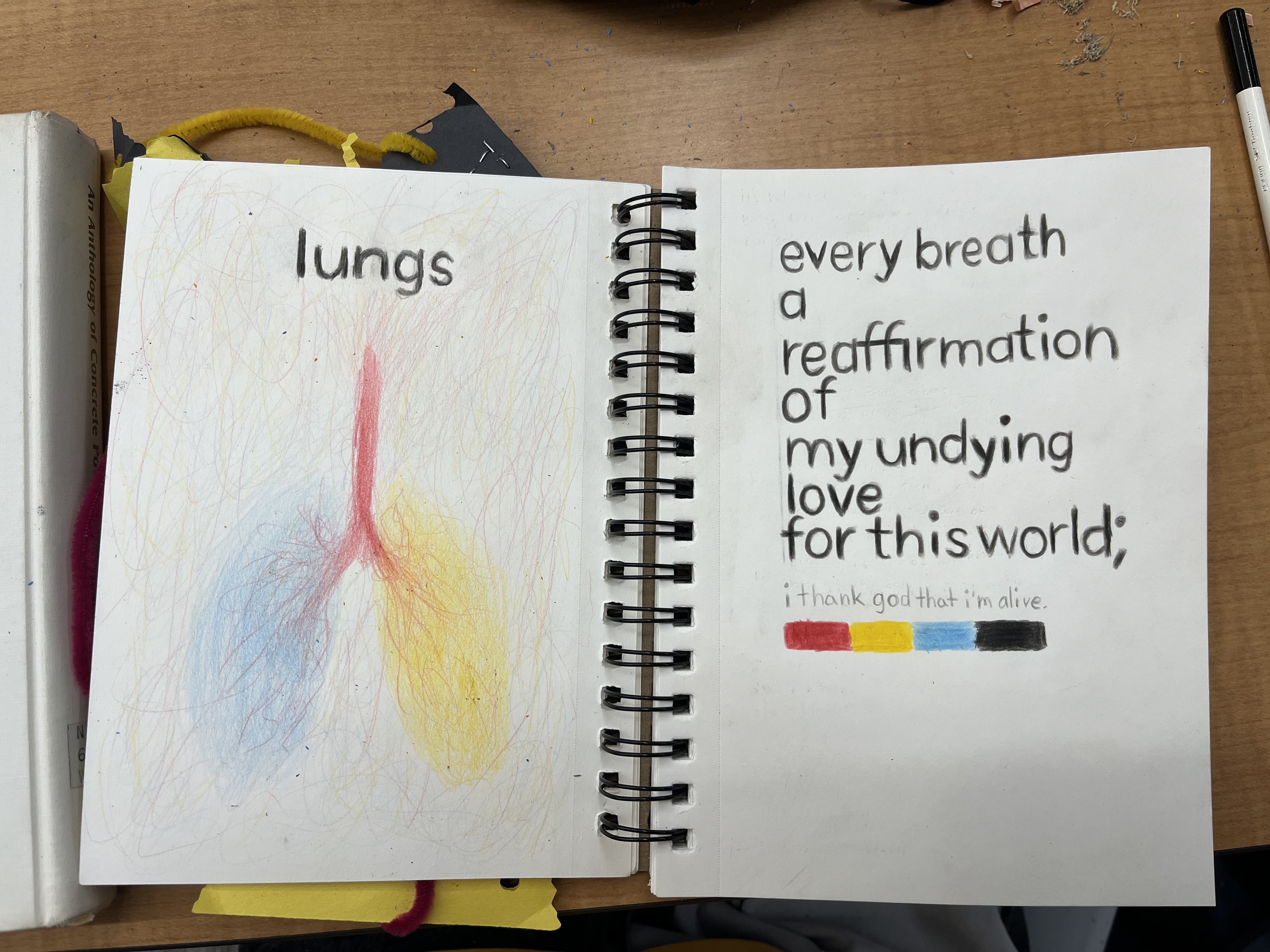
I really need to go to sleep now!
MANY lands saw Zarathustra, and many peoples: thus he dis- covered the good and bad of many peoples. No greater power did Zarathustra find on earth than good and bad.
No people could live without first valuing; if a people will maintain itself, however, it must not value as its neighbour valueth.
Much that passed for good with one people was regarded with scorn and contempt by another: thus I found it. Much found I here called bad, which was there decked with purple honours.
Never did the one neighbour understand the other: ever did his soul marvel at his neighbour's delusion and wickedness.
A table of excellencies hangeth over every people. Lo! it is the table of their triumphs; lo! it is the voice of their Will to Power.
It is laudable, what they think hard; what is indispensable and hard they call good; and what relieveth in the direst dis- tress, the unique and hardest of all, — they extol as holy.
Whatever maketh them rule and conquer and shine, to the dismay and envy of their neighbours, they regard as the high and foremost thing, the test and the meaning of all else.
Verily, my brother, if thou knewest but a people's need, its land, its sky, and its neighbour, then wouldst thou divine the law of its surmountings, and why it climbeth up that ladder to its hope.
"Always shalt thou be the foremost and prominent above others: no one shall thy jealous soul love, except a friend" —
that made the soul of a Greek thrill: thereby went he his way to greatness.
'To speak truth, and be skilful with bow and arrow" — so seemed it alike pleasing and hard to the people from whom cometh my name — the name which is alike pleasing and hard to me.
"To honour father and mother, and from the root of the soul to do their will" — this table of surmounting hung another people over them, and became powerful and permanent there-
'To have fidelity, and for the sake of fidelity to risk honour and blood, even in evil and dangerous courses" — teaching it- self so, another people mastered itself, and thus mastering itself, became pregnant and heavy with great hopes.
Verily, men have given unto themselves all their good and bad. Verily, they took it not, they found it not, it came not unto them as a voice from heaven.
Values did man only assign to things in order to maintain himself — he created only the significance of things, a human- significance! Therefore, calleth he himself "man," that is, the valuator.
Valuing is creating: hear it, ye creating ones! Valuation itself is the treasure and jewel of the valued things.
Through valuation only is there value; and without valua- tion the nut of existence would be hollow. Hear it, ye creating ones!
Change of values — that is, change of the creating ones. Always doth he destroy who hath to be a creator.
Creating ones were first of all peoples, and only in late times individuals; verily, the individual himself is still the latest creation.
Peoples once hung over them tables of the good. Love which